Why Does a Singapore Chicken Pie Have a Boiled Egg?
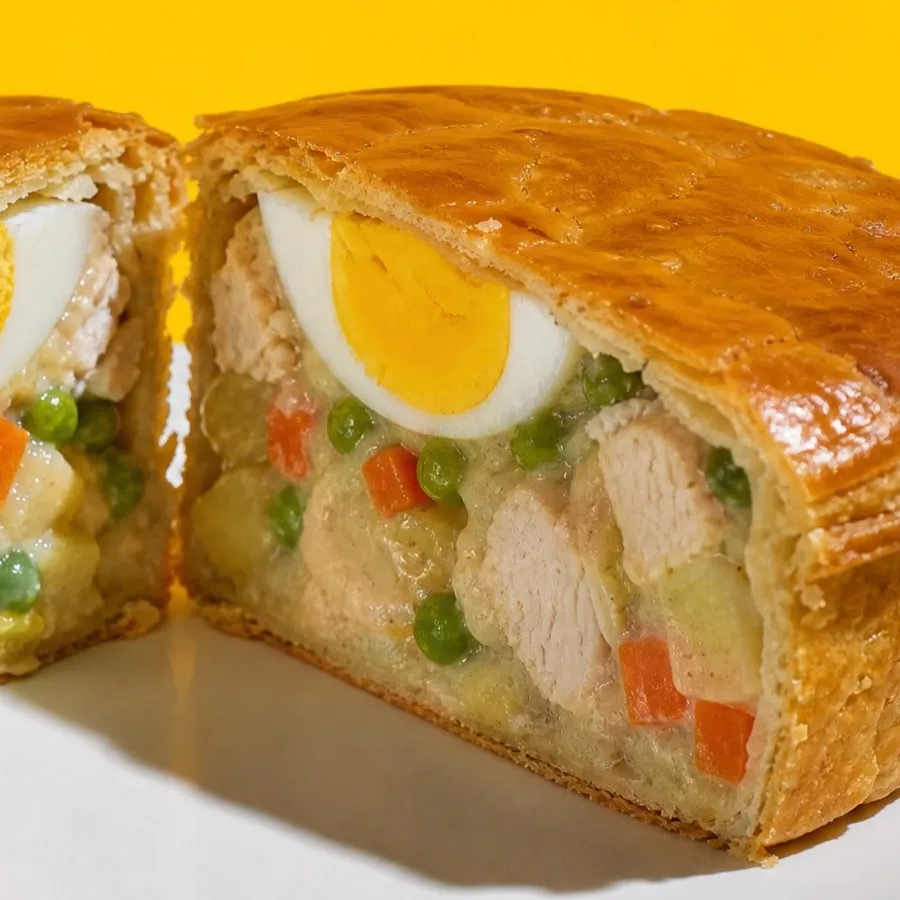
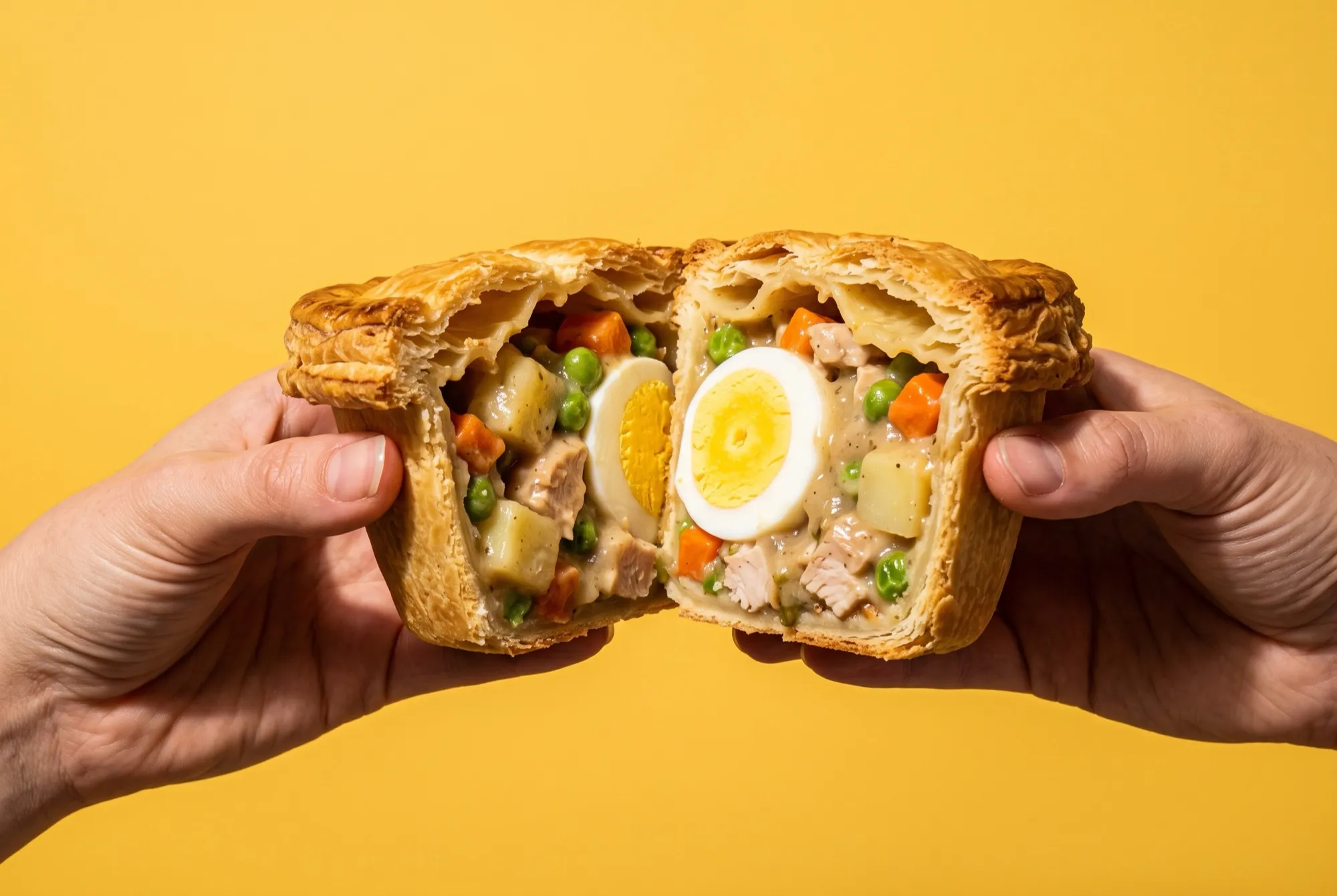
Cut a British chicken pie in half and you find chicken, sauce, maybe leek or mushroom. Cut an old-school Singapore chicken pie in half and something yellow looks back at you. That half a hard-boiled egg is the calling card of the style, and the Don chicken pie wears it proudly. Here is what we know about where the egg comes from, what it actually does in the pie, and how to get it right when you bake your own.
What exactly is inside an old-school Singapore chicken pie?
An old-school Singapore chicken pie is a hand-sized pie with a golden pastry case and a thick, savoury filling of diced chicken, potato and vegetables (usually peas and carrot), seasoned with pepper and a spice blend, plus a piece of hard-boiled egg. The Don chicken pie, baked today under the DonChef name to the recipe Don Pie founder Chef Don Lim created in 1983, follows that pattern: chunky chicken, potato, vegetables, a spice blend and half an egg. The maker calls it the “signature egg”. Our interactive chicken pie anatomy page walks through every layer if you want the full tour.
The egg is not a garnish. Treat the egg as a structural filling element, like the potato. Remove it and the pie eats differently.
Where does the egg habit come from?
Nobody has written down a single origin story we trust, so we will not invent one. What we can say is how the story is commonly told.
Singapore’s “Western food”, the chicken chop, oxtail stew, pork chop and pie culture of old kopitiams and diners, is commonly linked to Hainanese cooks. The usual account goes like this: Hainanese immigrants worked as cooks in British households, ships’ galleys, clubs and hotels in the colonial era, learned European dishes there, and later adapted them for local tables in their own coffee shops and restaurants. Food writers repeat this account often, and it fits the evidence on the plate, but treat it as a well-worn explanation rather than a documented fact for any single dish. For one family’s version of the story, read the kitchen’s own piece on the Hainanese chicken pie and the Purvis Street roots behind the Don pie.
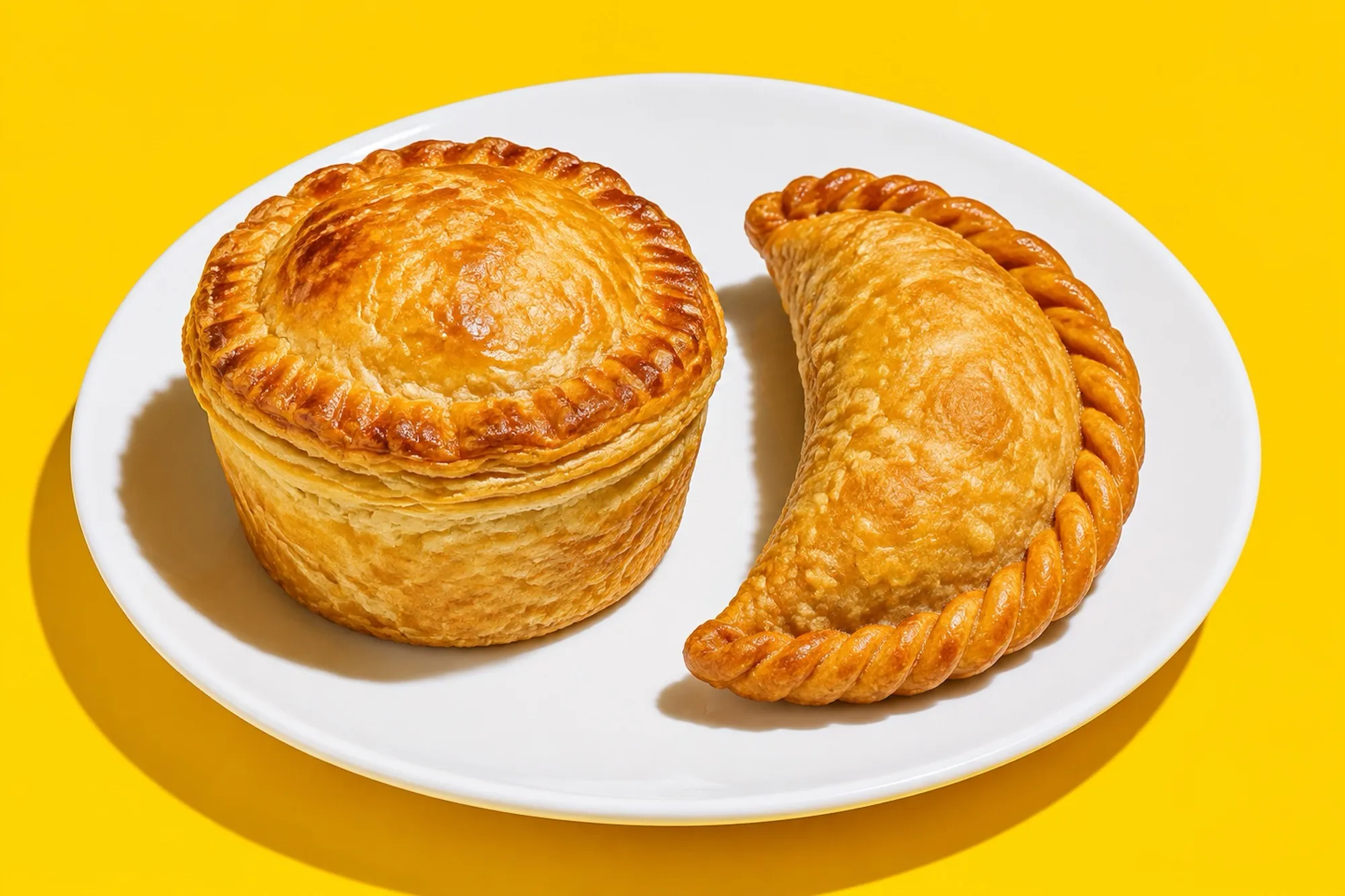
The boiled egg fits that picture neatly. Eggs inside savoury pies are an old British habit too: the gala pie, a long pork pie with hard-boiled eggs running through the middle, is the best-known example. Cooks trained on British menus may well have known the trick, though we cannot prove the link. Singapore then made it its own, the same way the local curry puff picked up its slice of egg. The idea keeps travelling: the DonChef kitchen now bakes a chicken rice pie with a braised egg inside, filled with soya sauce chicken and rice. Our chicken pie vs curry puff comparison covers that cousin in more detail.
What we will not do is put a date on when the first egg went into the first Singapore chicken pie. We have not found a source that can, and neither has the bakers’ own essay on why there is half an egg in a Singapore chicken pie, which is careful in the same way.
What does the egg actually do in a chicken pie?
We have eaten a lot of these pies with our notebooks open. The egg pulls its weight in four ways.
- Richness. The yolk is the secret gravy enhancer. When you bite through it, crumbs of cooked yolk mix into the sauce and make it feel thicker and rounder, a bit like stirring a spoon of mashed yolk into a curry.
- Contrast. Chicken, potato and gravy are all soft. The egg white gives a firm, springy bite that breaks up the texture, so the last mouthful is not the same as the first.
- Stretching the protein. Eggs have long been cheaper than chicken. A half egg makes a hand-sized pie feel substantial without loading in more meat. This is a common explanation for eggs in pies, curry puffs and many other everyday foods, and it makes plain kitchen sense.
- The reveal. Cut the pie and there is a yellow-and-white disc in the middle of a beige filling. People photograph that cross-section. It also tells you, instantly, which style of chicken pie you are holding.
There is a fifth, unofficial job: the egg is a tiny lottery. Some bites hit it, some do not, and everyone has an opinion on whether you save it for last.
Is the boiled egg what makes a pie “Singapore style”?
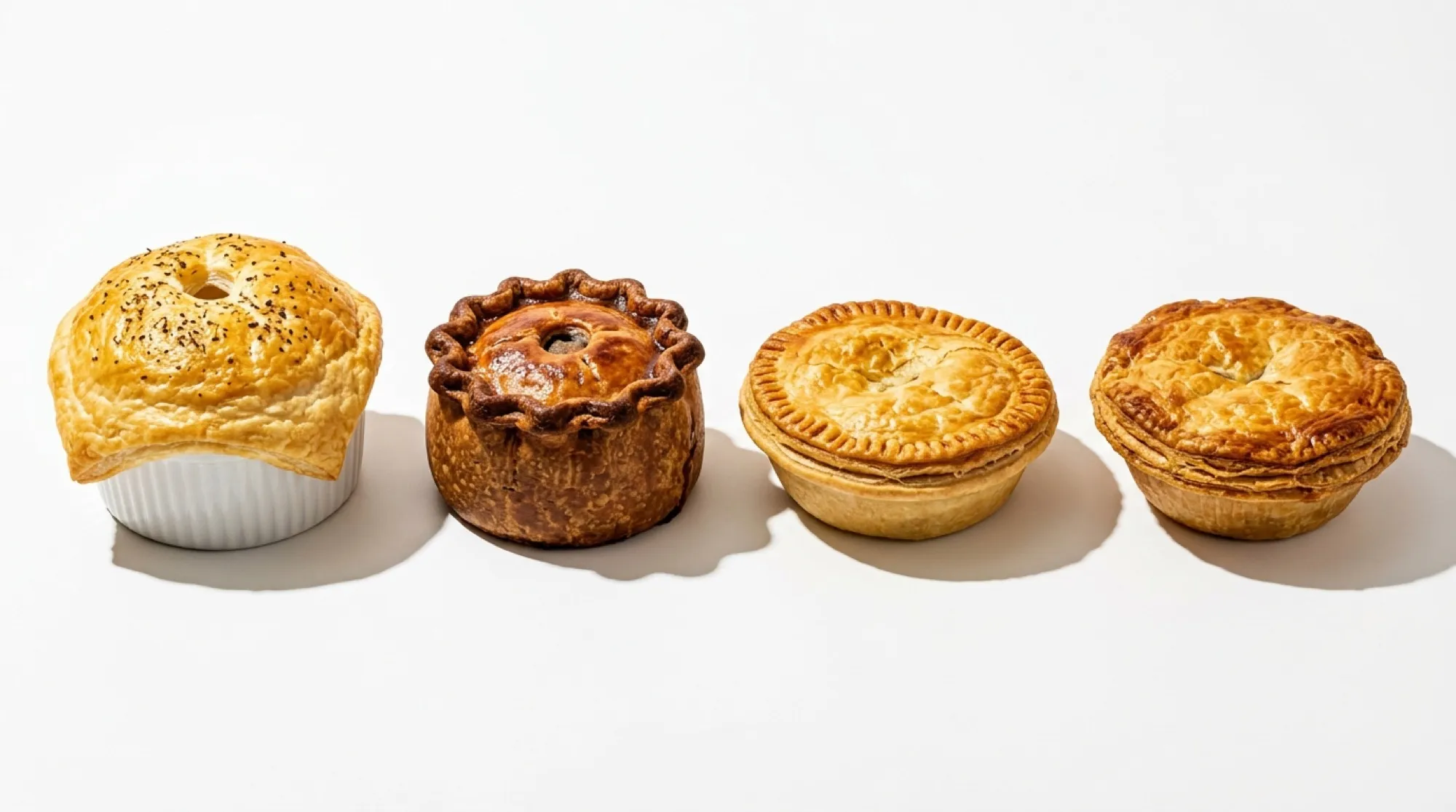
The egg is one of the clearest markers, but not the only one. Potato in the filling, a peppery seasoning, a thick gravy rather than a runny sauce, and a hand-sized single portion all point to the old-school Singapore style. A chicken pot pie, by contrast, is usually a deep dish with a top crust and a creamier, looser sauce, and almost never an egg. We line the styles up side by side in chicken pie styles compared.
How do you cook eggs for chicken pies at home?
If you are baking your own, the egg needs a little planning, because it gets cooked twice: once in the pot, and again inside the pie in the oven. Aim for a firm but not chalky yolk at the boiling stage.
| Step | What to do | Why |
|---|---|---|
| 1. Start cold | Put eggs in a pot, cover with cold water by about 2 cm | Gentler heating means fewer cracked shells |
| 2. Simmer | Bring to the boil, then lower to a steady simmer for 9-10 minutes | Sets the yolk fully without overcooking |
| 3. Shock | Move the eggs straight into iced water for 5 minutes | Stops the cooking and helps prevent the grey-green ring |
| 4. Peel | Tap all over and peel under running water | Cold eggs peel cleaner |
| 5. Halve | Slice lengthways with a sharp, wet knife | Clean halves look better in the cross-section |
| 6. Chill | Keep covered in the fridge until you assemble | Eggs and filling should both be cold when the pie is built |
A few things we have learned the hard way:
- Cold filling, cold egg. Assemble the pies with cooled filling. Warm filling melts pastry fat and gives you a soft base.
- Yolk side up. Sit the half egg on a bed of filling, yolk facing the lid, then spoon a little more filling around it. The egg stays put and the lid sits flatter.
- Do not boil for 15 minutes “to be safe”. The egg gets more heat in the oven. Over-boiled eggs turn rubbery and the yolk dries out.
- Cook the chicken properly. The chicken in the filling should reach 75C before it goes into the pie. Eggs should be cooked until both white and yolk are firm, which the method above does.
Our Don-style chicken pie home recreation uses this exact egg method. It is our own recreation, not the real recipe, which is not public.
Does the egg change how you should reheat a chicken pie?
A little. A whole hard-boiled egg can burst in a microwave as steam builds inside, and while a halved egg buried in filling is far less dramatic, the yolk can still spit and go hard. If you microwave a pie with an egg inside, use medium power in short bursts, rest it, and finish in an oven or air fryer to bring back the crust. Reheat until the pie is piping hot all the way through, 75C at the centre if you own a probe thermometer.
The gentler the reheat, the happier the egg. That is one more reason we lean towards the oven.
Filed in the chicken pie blog, where every post answers one question. New here? The Don chicken pie guide is the place to start.
Quick questions
Does every Don chicken pie have an egg in it?
The Original Don chicken pie is known for half a hard-boiled egg, and the maker calls it the signature egg. Reviewers describe the same thing. Flavours and sizes vary, so if the egg matters to you, ask at the counter before you buy.
Can I take the egg out of a chicken pie for a child with an egg allergy?
No. Picking the egg out does not make the pie egg-free, because the yolk touches the gravy and egg is often used in pastry or glaze. The maker lists eggs among its allergens, alongside nuts, dairy and gluten. Skip the pie if egg is a problem.
Why does the egg in my reheated chicken pie go rubbery?
The egg was cooked once when boiled, again when the pie was baked, and a third time when you reheat it. Each round tightens the white. Gentle reheating, such as a moderate oven rather than long microwave blasts, keeps the egg softer.