Chicken Pie vs Curry Puff: What Is the Difference?
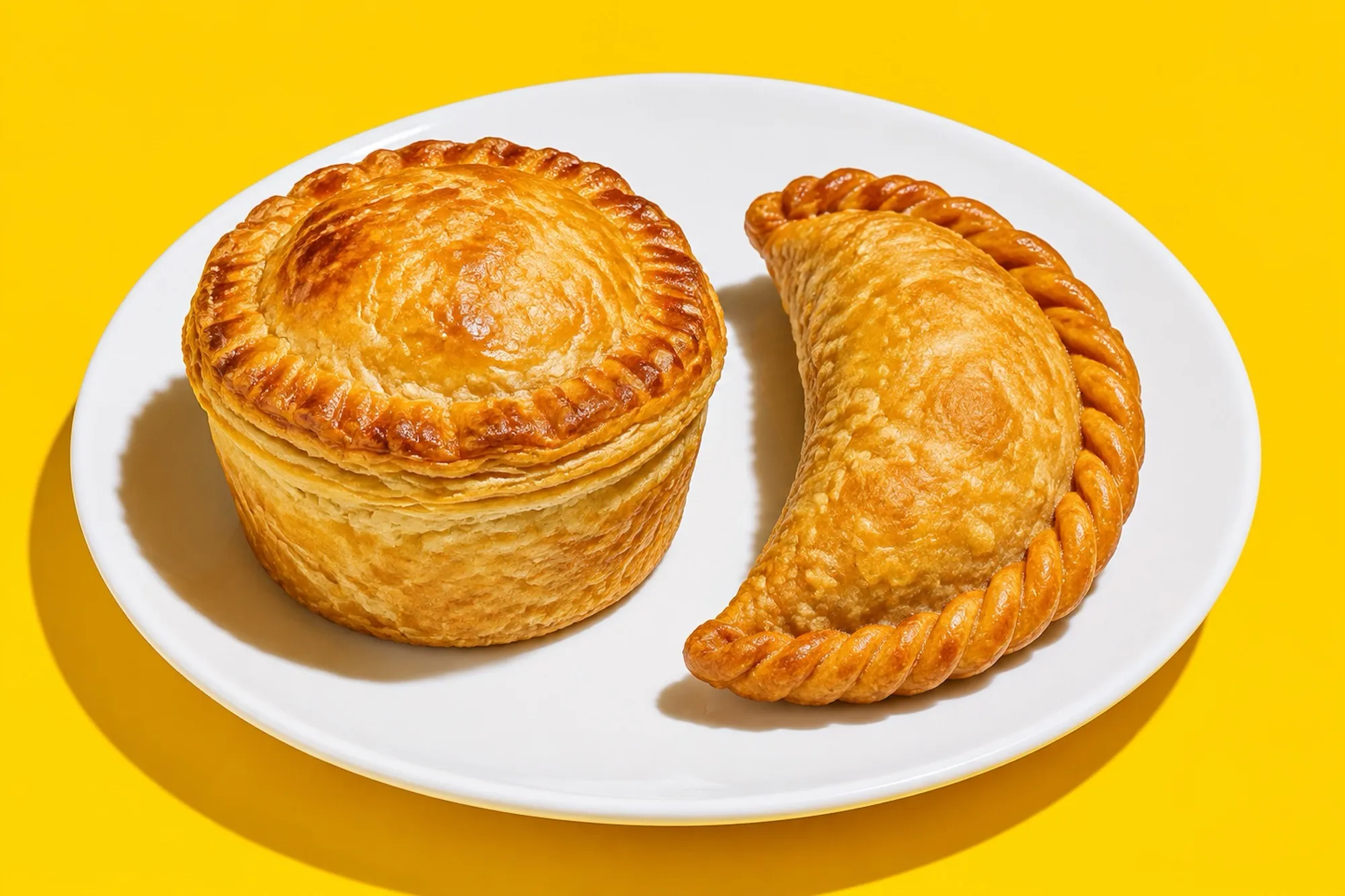
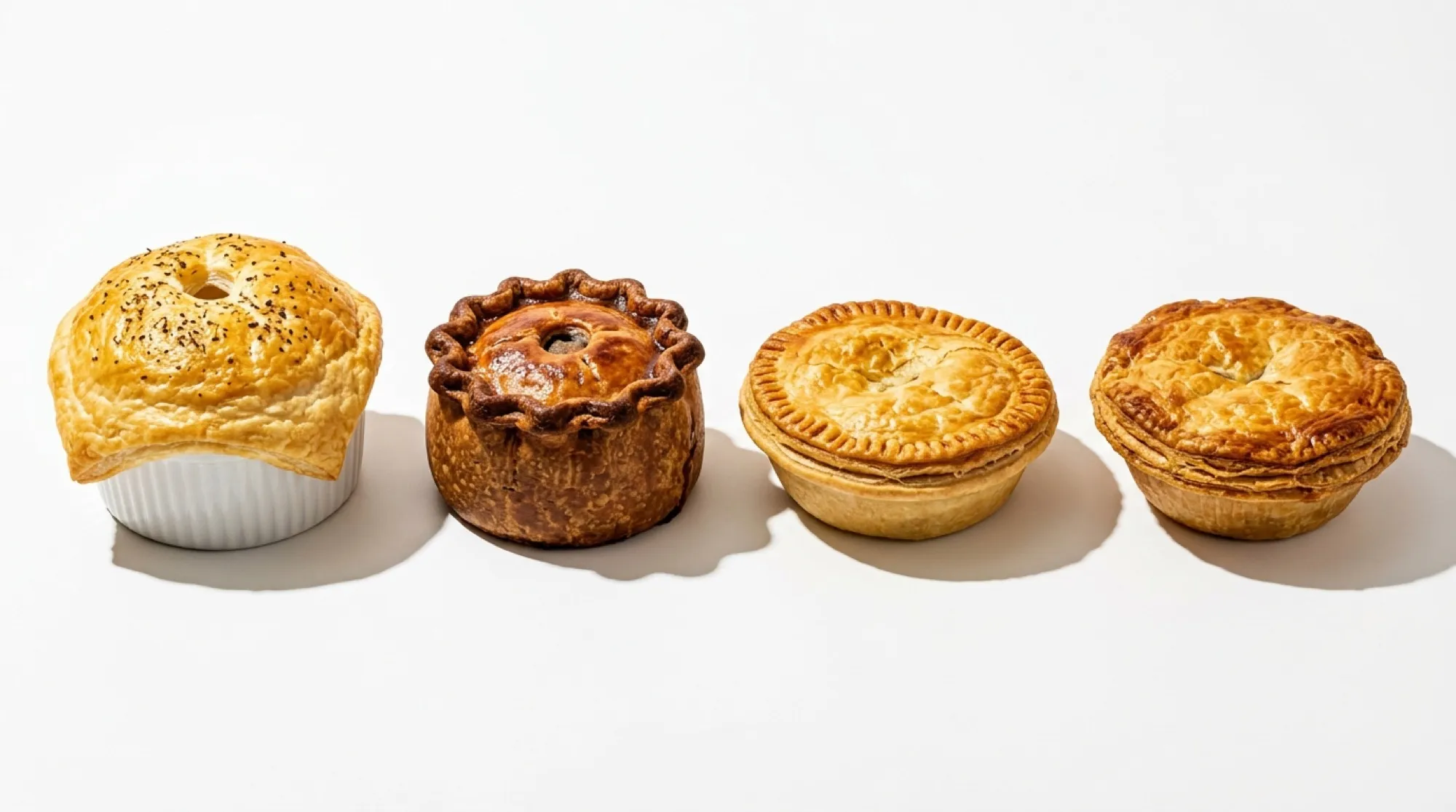
The flip cards above settle the basics: round versus half-moon, gravy versus curry, baked versus usually fried. But anyone who has stood at a bakery counter in Singapore knows the real question is not “what is the difference?” It is “which one do I want right now?” Here is the deeper dive, from where these two pastries come from to which one belongs on your party tray.
Where do chicken pies and curry puffs come from?
Both stories are commonly told rather than tightly documented, so treat them as heritage, not exam answers.
The curry puff is usually described as a colonial-era hybrid: a British-style pastry turnover, similar in idea to a Cornish pasty, filled with the curried potato that cooks across the Malay Peninsula already loved. In Malay it is the karipap, and versions run across Singapore, Malaysia and beyond. Two pastry families developed. One is the spiral or layered curry puff, made by rolling a water dough around an oil dough so the fried pastry shows rings. The other is a short, crumbly dough with a rope-twisted edge. A few bakeries went a third way and baked theirs in butter puff pastry, like the puff pastry curry puff Oven Marvel sold at Sunshine Plaza until 2022.
The Singapore old-school chicken pie is commonly linked to the Hainanese cooks who worked in colonial households, hotels and cafes and went on to run many of the island’s Western-style kitchens. The pie kept the British idea of a lidded pastry, then added local touches: potato, a peppery gravy and that half a hard-boiled egg. One family’s version of that Hainanese thread begins at a chicken rice stall on Purvis Street in 1955; the kitchen behind the Don pies tells it in the Singapore Pie story.
What role does each play in Singapore food life?
The curry puff is the snack of the people. Curry puffs turn up at tea time with kopi, in office pantries, at school canteens, and at specialist stalls that fry them in batches all day. Curry puffs are cheap, quick and best eaten within minutes of leaving the fryer.
The chicken pie sits one step up the meal ladder. A chicken pie is lunch on a busy day, breakfast with teh, or the centrepiece of a family gathering when it comes as a whole pie. Chicken pies also travel further up the price scale, from heartland bakeries to hotel cafes.
When should you choose a chicken pie, and when a curry puff?
Our rules of thumb, which are opinions, lightly tested on our own stomachs:
- Meal or snack? Hungry at noon, pick the chicken pie. Peckish at 4pm, pick the curry puff.
- Walking or sitting? Curry puffs are built for walking; the pastry is folded shut and holds together. A chicken pie is fine in the hand but happier with a plate and a fork, especially once the gravy starts flowing.
- Spice tolerance. Curry puffs can bite back. Chicken pies are gentle and peppery, which makes them the safer bet for kids and spice-shy relatives.
- Party trays. Mini curry puffs and mini chicken pies are both party classics, and a tray with both pleases everyone. Our mini party chicken pies recipe makes the pie half of that tray at home.
- Leftovers. A baked chicken pie reheats well in an oven or air fryer. A fried curry puff can turn greasy and limp when reheated, though a few minutes in a hot air fryer revives it better than a microwave.
Chicken pie vs curry puff vs chicken shepherd’s pie: how do they compare?
The chicken shepherd’s pie deserves a seat at this table because it confuses people. Strictly, shepherd’s pie means lamb, but “chicken shepherd’s pie” is a common name in Singapore for a chicken filling under mashed potato.
| Chicken pie | Curry puff | Chicken shepherd’s pie | |
|---|---|---|---|
| Shape | Round, lidded | Half-moon turnover | Round dish or rectangular tray |
| Top | Pastry lid | Folded pastry | Baked mashed potato |
| Base | Pastry | Pastry | Usually none; the dish holds it |
| Filling | Chicken chunks, potato, peas, carrot, often half a boiled egg | Curried potato, often chicken, sometimes a slice of egg | Chicken in gravy, often with vegetables |
| Sauce | Creamy, peppery gravy | Dry curry, no loose sauce | Gravy under the mash |
| Cooking | Baked | Usually deep-fried, sometimes baked | Baked |
| Spice | Gentle, peppery | Mild to hot | Depends on the filling |
| How it is eaten | Hand or plate | Hand, in a few bites | Fork, from a plate or bowl |
| Best for | Lunch, family meals | Tea time, snacking | Comfort dinners, potlucks |
Where does the Don Curry Pie fit?
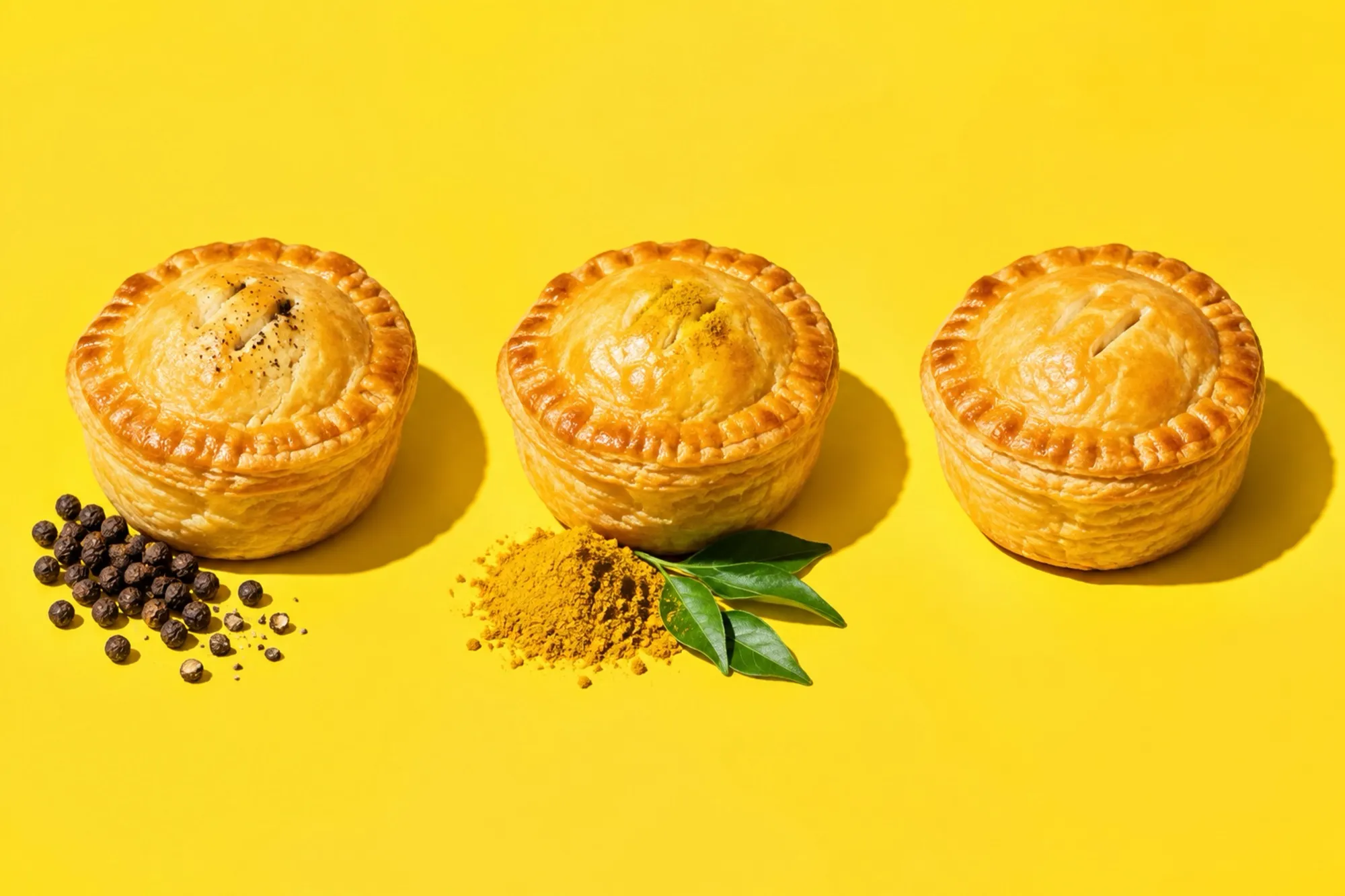
Right in the middle. The Don family includes a Curry Pie, which the maker’s menu describes as curry spices with chicken chunks and potato, pictured with half an egg; the Don Pie Curry Pie page at donpies.com lists its sizes and prices. That puts curry puff flavours inside chicken pie architecture: the round, lidded format and the golden, flaky crust, with a curry filling. If you cannot decide between the two, the Curry Pie is the diplomatic answer. For the Original itself, read what a Don chicken pie is. Our Original vs Black Pepper vs Curry comparison explains how the three flavours differ and who each one suits.
Which has more calories, a chicken pie or a curry puff?
Here is everything we can say honestly. A community nutrition database lists a generic Singapore curry puff at about 176 kcal for an 80g piece, and a mass-market Singapore chicken pie at around 365 kcal per piece. Both entries are user-submitted and unverified. Neither figure is about the Don chicken pie or the Don Curry Pie, and we do not estimate Don figures. The maker’s own figures are the authority.
Notice the units, too: one figure is per 80g, the other per piece of unknown weight, so they are not a fair head-to-head. What actually drives the number is more interesting than the label:
- Frying versus baking. Deep-fried pastry absorbs oil. A fried curry puff and a baked curry puff of the same size are different foods, nutritionally.
- Pastry fat. Butter, margarine or shortening, and how much of it, matters more than the filling.
- Size. A chicken pie is usually a bigger item than a curry puff, so per piece it tends to carry more, even if gram for gram the two are closer.
For the full picture, including protein, salt and how to lighten a home-baked pie, read our chicken pie calories and nutrition explainer.
What should you eat with each?
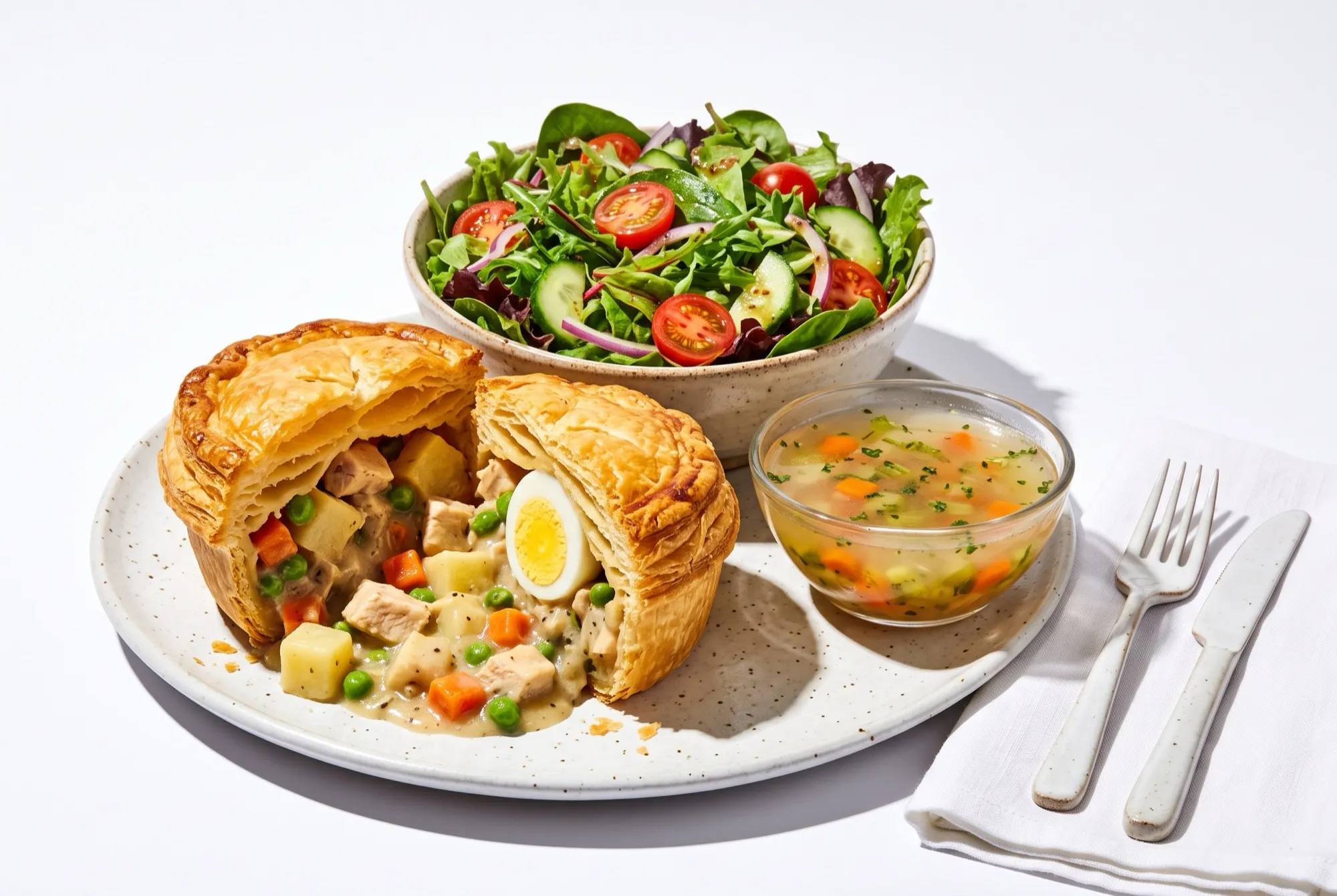
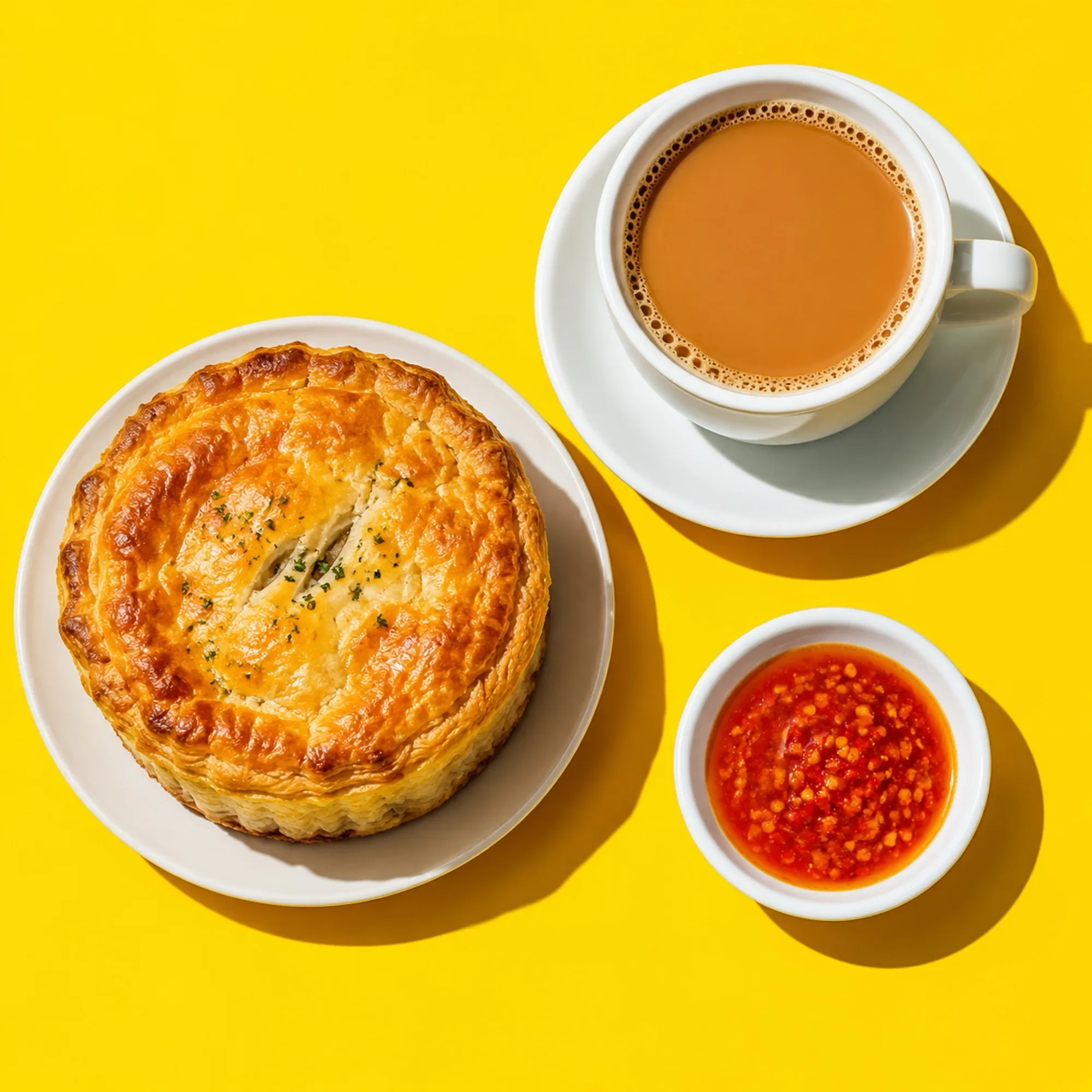
Curry puffs and kopi are a pairing so classic it barely needs saying. Chicken pies are more flexible: chilli sauce, a simple soup, a crisp salad, or a sweet teh. We worked through dips, sides and drinks in our chicken pie sauces and pairings experiment. Our pick is chilli sauce on the side. The mustard faction in our crew would like it noted that they disagree.
Quick questions
Is a curry puff a type of pie?
Loosely, yes: both are pastry wrapped around a savoury filling. In practice Singaporeans treat them as different foods. A curry puff is a folded, hand-held turnover, usually fried. A chicken pie is a round, lidded pastry, baked, with a creamier filling and often half a boiled egg.
Which has more calories, a chicken pie or a curry puff?
Per piece, a chicken pie is usually bigger, so it tends to carry more energy. Per bite, a deep-fried curry puff can be just as rich. Frying, pastry fat and size matter more than the name. Where a maker publishes its own figures, those are the ones to trust.
What is the difference between a chicken pie and a chicken shepherd's pie?
A chicken pie is sealed in pastry top and bottom. A chicken shepherd's pie is topped with baked mashed potato instead of a pastry lid. In the Don family, the maker's menu describes its Chicken Shepherd's Pie as the black pepper filling topped with baked mashed potato.
Are curry puffs always spicy?
No. Curry puffs run from mild and slightly sweet to properly hot, depending on the curry powder and how much chilli goes in. For children or spice-shy guests, ask for the mildest version, or put chicken pies on the table instead.