Don-Style Chicken Pie: Our Home Recreation
- Prep
- 1 h
- Cook
- 1 h
- Chill / rest
- 2 h 30 min
- Makes
- 6 personal pies
- Oven
- 200C, then 180C
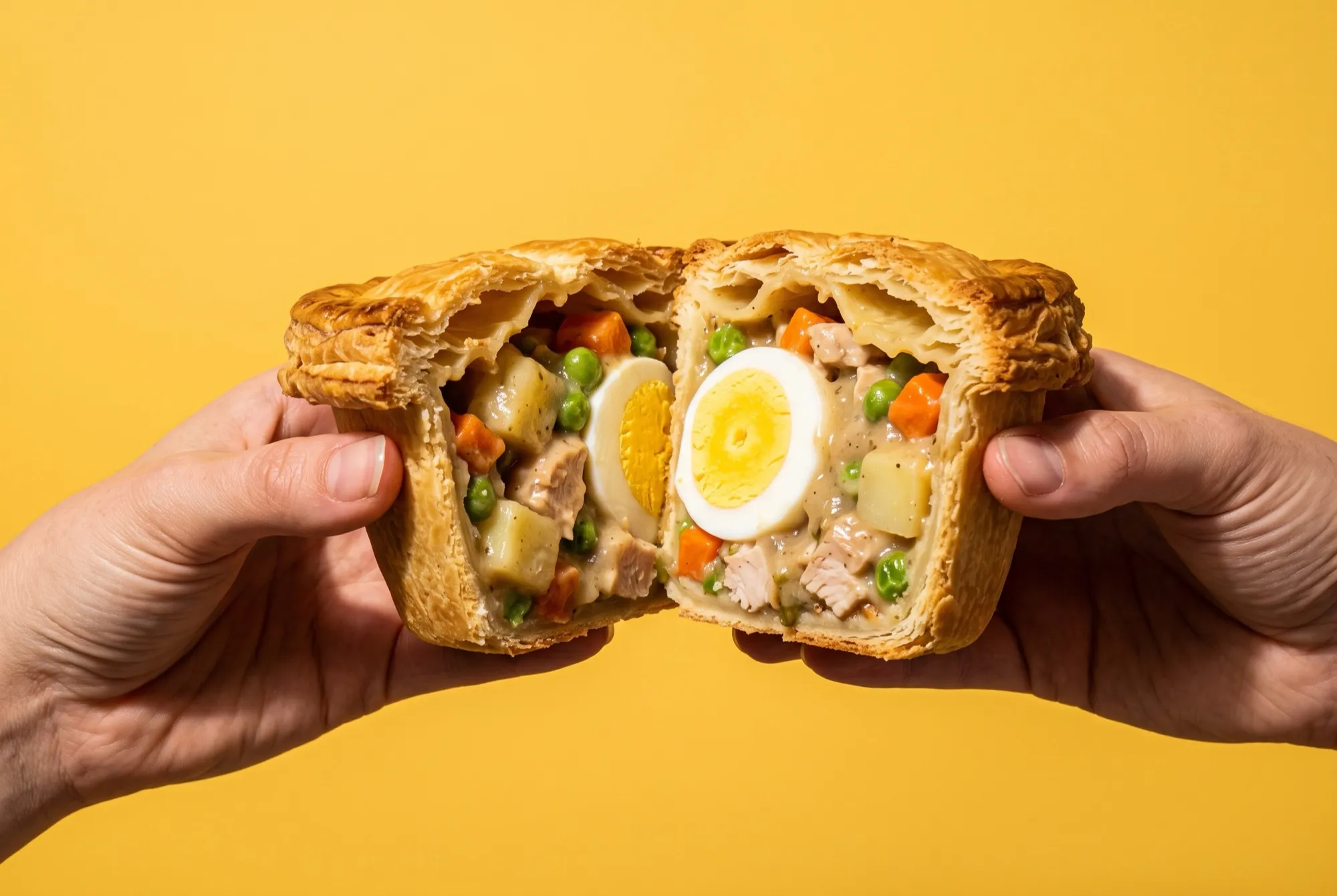
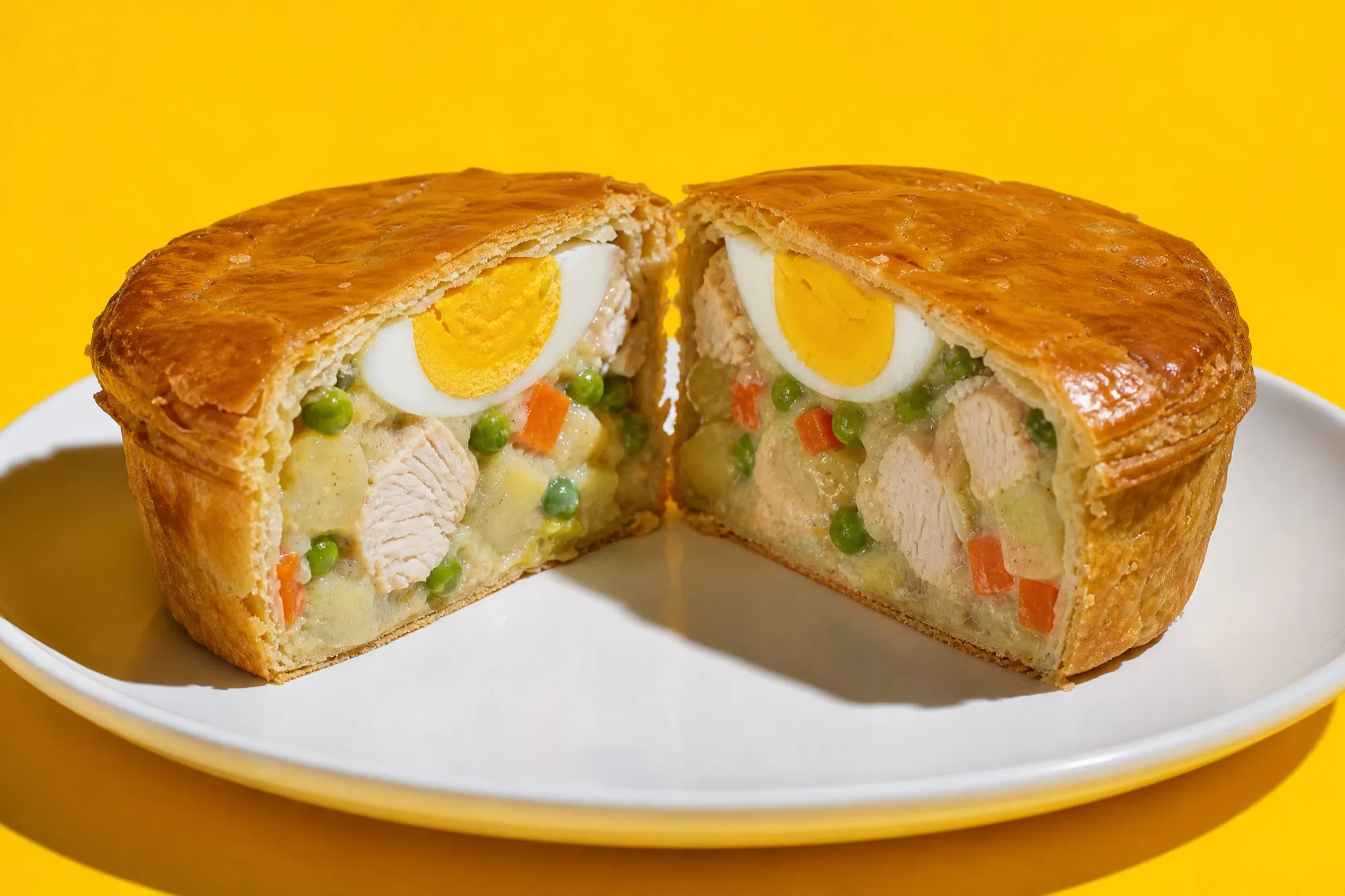
Home recreation, not the real recipe. This is our own attempt to cook something in the spirit of the Don chicken pie, built from tasting and public descriptions. The DonChef recipe, which Chef Don Lim created in 1983, and its spice blend are not public. If you want the real pie, here is where to buy a Don chicken pie.
Ingredients
servings
Base recipe: 6 personal pies. Scaling changes quantities only; check tin sizes and bake times.
Rough-puff pastry
- 350g plain flour, plus extra for rolling
- 1 tsp fine salt
- 280g cold unsalted butter, cut into 1.5cm cubes and chilled
- 160ml ice-cold water, you may need a spoonful or two more
Filling
- 25g unsalted butter
- 120g onion, finely diced
- 2 garlic cloves, finely chopped
- 25g plain flour
- 250ml chicken stock
- 80ml evaporated milk
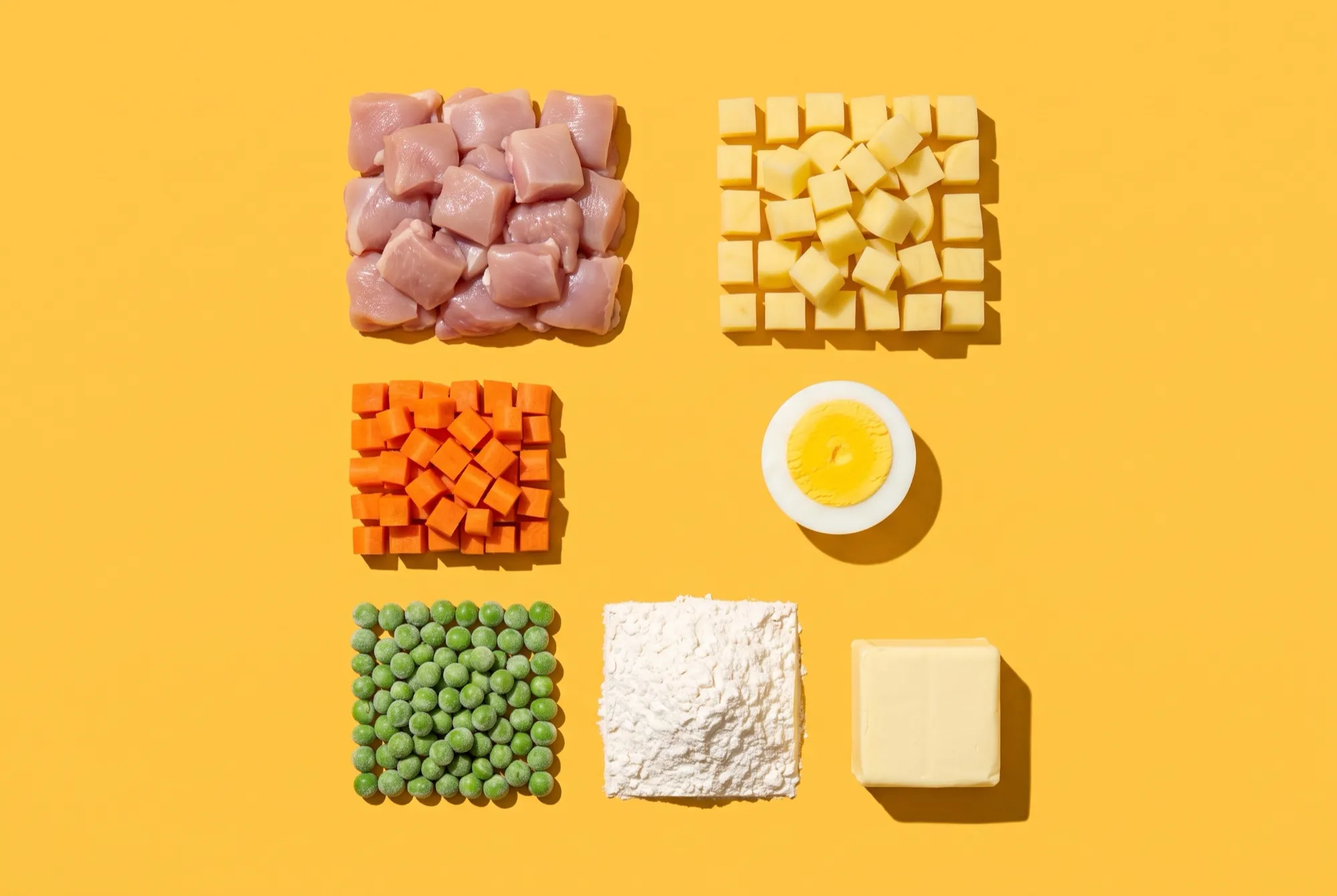
- 450g boneless, skinless chicken thigh, cut into 2-3cm chunks
- 200g waxy potato, peeled, 1.5cm dice
- 80g carrot, 1cm dice
- 1 tsp light soy sauce
- 1/2 tsp sugar
- 1/2 tsp fine salt, plus more to taste
- 60g frozen peas
Our spice blend
- 1 tsp ground white pepper
- 1/2 tsp ground black pepper
- 1/2 tsp ground coriander
- 1/4 tsp ground nutmeg
To finish
- 3 eggs, hard-boiled, peeled and halved lengthways
- 1 egg yolk, beaten with 1 tbsp milk, for glazing
Method
0 of 10 steps ticked
01 Start the rough puff
Mix the flour and salt in a wide bowl. Add the cold butter cubes, toss to coat, then squash each cube flat between your fingertips so you have flakes of butter about the size of a fingernail. Do not rub the butter in. Add 140ml of the water and mix with a table knife into a shaggy dough, adding the rest a spoonful at a time only where it looks dry. Pat into a rough rectangle, wrap and chill for 20 minutes.
02 Roll and fold
On a floured surface, roll the dough into a rectangle about three times as long as it is wide (roughly 45 x 15cm). Fold the bottom third up and the top third down like a letter, turn it 90 degrees and roll and fold again. Wrap and chill for 30 minutes. Repeat twice more (two folds, then a 30-minute chill each time) so the dough has six folds in total. If butter breaks through or the dough turns soft, stop and chill it for 15 minutes before carrying on.
03 Build the sauce base
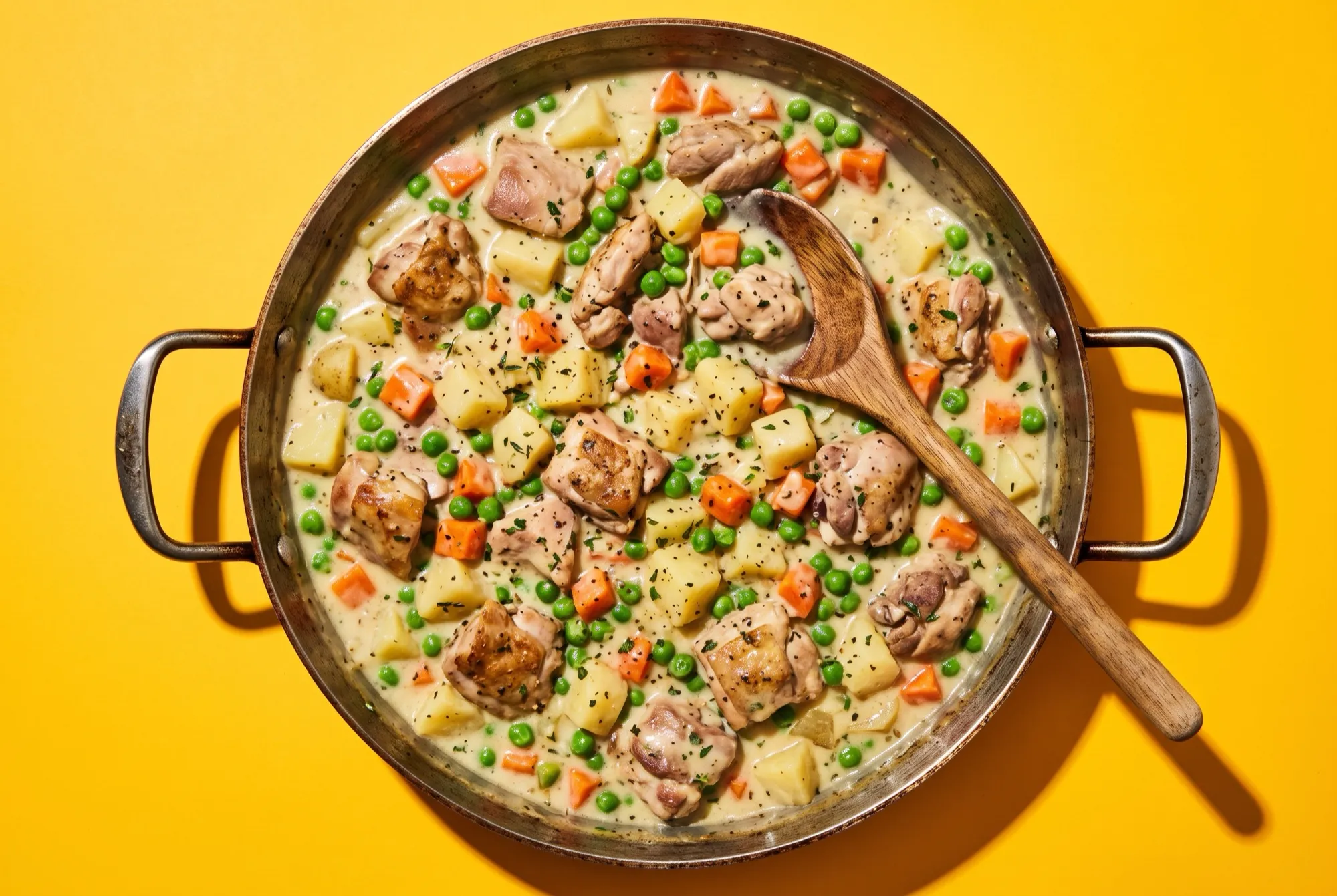
While the dough chills, melt the butter in a wide pan over medium heat. Cook the onion for 5-6 minutes until soft and translucent, add the garlic and the whole spice blend and stir for 1 minute until fragrant. Stir in the flour and cook for 2 minutes to lose the raw taste.
04 Simmer the filling
Whisk in the stock a little at a time, then the evaporated milk, until smooth. Add the chicken, potato, carrot, light soy sauce, sugar and salt. Cover and simmer gently for 15-18 minutes, stirring now and then, until the potato is just tender and the chicken reaches 75C at the centre of the thickest chunk. Stir in the peas and taste for salt and pepper. The sauce should hold a line when you drag a spoon through it; if it is loose, simmer uncovered for a few minutes more.
05 Cool the filling completely
Spread the filling on a shallow tray so it loses heat fast. Once it stops steaming, cover and refrigerate for at least 1 hour, until cold all the way through. Do not leave it at room temperature for more than 2 hours, and less on a hot day.
06 Boil the eggs
Lower the eggs into boiling water and simmer for 10 minutes, then move them to iced water for 5 minutes. Peel, halve lengthways and keep them in the fridge until you assemble.
07 Line the tins
Lightly grease six pie tins about 11cm across the top and 3cm deep. Roll the pastry to about 3mm thick. Cut six 15cm rounds for the bases and six 12cm rounds for the lids, using a bowl or saucer as a guide. If you need to re-roll, stack the scraps flat on top of each other rather than balling them up. Line the tins with a little overhang, then chill the lined tins and the lids for 15 minutes.
08 Fill, add the egg and seal
Spoon the cold filling into each case until it reaches the rim, then press half an egg, cut side up, into the middle. Brush the pastry rim with water, lay on a lid, press the edges together and crimp with a fork or your fingers. Trim the overhang, cut a small steam vent in each lid, brush the tops with egg wash and chill for 20 minutes while the oven heats.
09 Bake hot, then lower
Heat the oven to 200C with a heavy baking tray on the lower-middle shelf. Give the lids a second coat of egg wash, set the tins on the hot tray and bake for 15 minutes. Turn the oven down to 180C and bake for 18-22 minutes more, until the lids are deep golden and the bases look browned when you ease one out with a knife. The filling should be piping hot, 75C at the centre if you have a probe thermometer.
10 Rest and unmould
Leave the pies in their tins for 10 minutes so the filling settles and the pastry firms up, then lift them onto a wire rack. Eat warm. Cool any extras on the rack and refrigerate them within 2 hours.
Kitchen-nerd tips
- Turn the aircon on before you start the pastry. In a Singapore kitchen, a cool room helps the butter more than working fast does.
- Stack rough-puff scraps flat and re-roll them. Kneading scraps into a ball wipes out the layers.
- Make the filling the day before. The sauce sets firmer overnight and the pies are much easier to fill.
- For a more peppery pie, double the black pepper in the spice blend.
- Bake on a preheated heavy tray. The burst of heat from below is what saves the base.
What is this recipe, and what is it not?
This is our home recreation of an old-school Singapore chicken pie in the Don style. It is not the recipe Chef Don Lim created in 1983, which the kitchen still bakes under the DonChef name. The real recipe and the real spice blend are not public, we have never seen them, and nobody handed us a notebook. We built this from tasting the pie and from public descriptions: chunky chicken, potato and vegetables in a spice blend, a golden flaky crust, and half a hard-boiled egg in every pie (reviewers also mention peas and carrots). The pastry method, the evaporated milk and the spice ratios are our own guesswork.
If you want the real thing, buy the real thing: here is where to buy a Don chicken pie, and the bakers describe their own pie in The Original Don Chicken Pie. For the background on the original pie, its sizes and its 1983 recipe story, read our complete guide to the Don chicken pie.
Why did we choose a hand-made rough puff for the crust?
The Don crust is golden and flaky, and published descriptions of it disagree on whether it leans puff or shortcrust. We are not going to pretend to know. For a home version, butter rough puff gets closest to the texture we wanted: crisp, layered shards on top and a base sturdy enough to hold a heavy filling.
Rough puff works because of cold butter. The squashed flakes of butter sit between thin sheets of dough after each fold. In a 200C oven, the water inside the butter turns to steam and pushes the sheets apart, while the melting fat fries each layer crisp. Full puff pastry wraps a single slab of butter in dough and needs more folding and more patience. (For a stand-alone version with more folds, see the fan archive’s all-butter rough puff, written for hot kitchens.) Rough puff skips the slab, takes about two hours mostly spent in the fridge, and gives plenty of lift for a pie with a lid.
The two-stage bake matters too. Starting at 200C sets the layers before the butter leaks out. Dropping to 180C lets the centre of the pie heat through without scorching the crimp.
Why chicken thigh instead of breast?
The filling cooks twice: once in the pan, then again inside the pie. Chicken breast turns dry and stringy by the second cook. Thigh has more connective tissue and fat, so the chunks stay juicy and tender. Cut them big, 2-3cm, because a Don-style pie is about proper bites of chicken, not shreds.
Why does the filling need to cool before it goes in the pastry?
Three reasons, all of them important:
- Butter. Warm filling melts the butter flakes in raw pastry before the oven can turn them into steam. You get a greasy, flat crust instead of layers.
- The base. Hot filling steams the pastry underneath it. A steamed base never fully crisps, however long you bake it.
- Food safety. Cooked filling should not sit warm on the counter. Spreading it on a shallow tray and chilling it once the steam stops gets it through the warm zone quickly. In a Singapore kitchen, do not leave it out for more than 2 hours, and sooner is better.
Cold filling has a bonus: the sauce sets, so it sits neatly in the case and the egg stays put.
Where does the half egg go, and why is it cut side up?
The egg goes in last, pressed into the middle of the filling with the yolk facing the lid. Cut side up keeps the yolk from sliding into the gravy and gives you that yellow-and-white cross-section when you bite in. Boil for 10 minutes and plunge into iced water: overcooked eggs grow a grey-green ring round the yolk, and the second cook in the oven makes it worse. Why an egg at all? We dug into that in why Singapore chicken pie has a boiled egg.
What is in our spice blend?
Ours leans on white pepper, with a little black pepper for warmth, coriander for a faint citrusy note and a pinch of nutmeg, which goes well with creamy sauces. The result is gently peppery rather than hot. We are not claiming this matches the original, which is private. For a sharper pie, double the black pepper.
What can you substitute?
- Evaporated milk: full-cream milk plus 1 tbsp extra butter. Evaporated milk gives a slightly sweeter, old-school flavour we like.
- Waxy potato: any potato that holds its shape. Floury potatoes break up and thicken the sauce.
- Frozen peas: frozen mixed peas and carrots, minus the fresh carrot.
- Home-made rough puff: a good all-butter shop-bought puff pastry, thawed in the fridge. Faster, slightly less crisp at the base.
- Personal tins: one 23cm pie dish. Use all the pastry for one base and lid, add the eggs in a ring, and bake 25 minutes at 200C then 25-30 minutes at 180C, checking the centre reaches 75C.
Can you make these pies ahead, and how do you store them?
| Stage | How long | How |
|---|---|---|
| Rough-puff dough | Up to 2 days chilled, about 3 months frozen | Wrapped tightly; thaw in the fridge overnight |
| Cooked filling | Up to 2 days chilled | Covered, cooled fast first |
| Unbaked assembled pies | About 3 months frozen | Freeze in the tins, no egg wash; bake from frozen at the same temperatures, adding 10-15 minutes, until the centre is 75C |
| Baked pies | Up to 3 days chilled | Cool on a rack, refrigerate within 2 hours |
| Baked pies, frozen | About 3 months | Fully cooled and wrapped airtight; thaw in the fridge, never on the counter |
Reheat baked pies until piping hot all the way through, 75C at the centre if you have a probe. Never refreeze a pie that has been thawed and reheated.
What went wrong? Quick troubleshooting
| Problem | Likely cause | Fix next time |
|---|---|---|
| Pale, soft base | Warm filling, or no hot tray | Chill the filling fully; bake on a preheated heavy tray, lower shelf |
| Flat, greasy crust | Butter got warm and smeared | Chill between folds; work in an air-conditioned room |
| Filling leaked out | Edges not sealed or no vent | Brush rims with water, crimp firmly, cut a vent |
| Runny filling when cut | Sauce too thin | Simmer until a spoon leaves a line; rest pies 10 minutes before eating |
| Lids shrank | Pastry stretched while lining | Lift and drop pastry into tins, do not pull; chill before baking |
| Grey ring round the yolk | Egg overcooked | 10 minutes only, then iced water |
This recipe belongs to our chicken pie recipes from a Singapore home kitchen. Curious about the pie that started it all? Read the complete Don chicken pie guide, or explore chicken pie anatomy layer by layer.