Creamy Chicken Pie Filling (Make It a Day Ahead)
- Prep
- 20 min
- Cook
- 35 min
- Chill / rest
- 4 h
- Makes
- About 1.3kg filling (6 personal pies or one 23cm pie)
Ingredients
servings
Base recipe: About 1.3kg filling (6 personal pies or one 23cm pie). Scaling changes quantities only; check tin sizes and bake times.
Chicken
- 600g boneless, skinless chicken thigh, cut into 2cm pieces
- 1/2 tsp fine salt
- 1/2 tsp ground white pepper
- 1 tbsp neutral oil
Vegetables
- 200g waxy potato, peeled, 1.5cm dice
- 100g carrot, 1cm dice
- 150g onion, finely diced
- 2 garlic cloves, finely chopped
- 80g frozen peas
Sauce
- 40g unsalted butter
- 40g plain flour
- 300ml chicken stock, warm
- 150ml full-cream milk
- 80ml cooking cream, or thickened cream
- 1/2 tsp dried thyme, or 1 tsp fresh leaves
- 1/2 tsp ground white pepper
- fine salt, to taste
Method
0 of 8 steps ticked
01 Parboil the potato and carrot
Put the potato and carrot in a pan of cold salted water, bring to the boil and simmer for 5-6 minutes until a knife goes in with a little resistance. Drain and spread out to steam dry. They will finish cooking in the sauce and again in the oven, so do not cook them soft now.
02 Sear the chicken
Toss the chicken with the salt and white pepper. Heat the oil in a wide, heavy pan over medium-high heat and brown the chicken in two batches, 3-4 minutes per batch, without crowding. The chicken does not need to be cooked through yet. Lift it onto a plate, keeping the juices.
03 Soften the onion
Turn the heat to medium, add the butter to the same pan and cook the onion for 6-8 minutes, scraping up the browned bits, until soft and translucent. Add the garlic and cook for 1 minute.
04 Cook the roux
Sprinkle the flour over the onion and stir constantly for 2 minutes. The mix should smell toasty, not raw, and stay pale. This short cook removes the floury taste.
05 Make the sauce
Pour in the warm stock a ladle at a time, stirring hard after each addition until smooth, then add the milk the same way. Bring to a gentle simmer and cook for 3-4 minutes, stirring, until the sauce thickens enough to coat the back of a spoon.
06 Simmer the chicken through
Return the chicken and its juices to the pan with the potato, carrot, thyme and white pepper. Simmer gently, partly covered, for 10-12 minutes, stirring often so the bottom does not catch, until the chicken reaches 75C at the centre of the thickest piece and the potato is just tender.
07 Finish with cream and peas
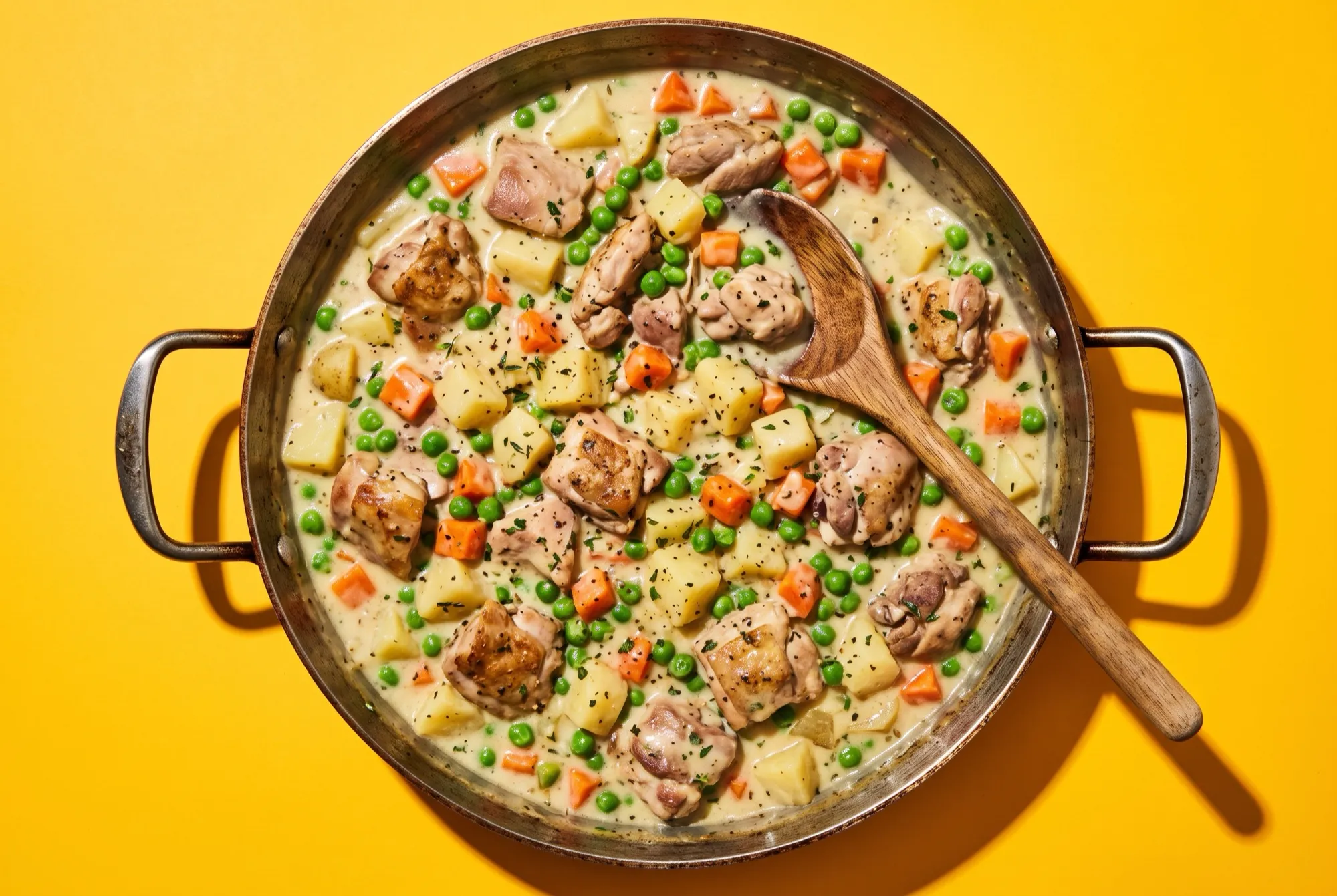
Stir in the cream and the frozen peas and simmer for 2 minutes more. Taste and season with salt. Drag a spoon across the base of the pan: the line should hold for a second or two. If the filling is loose, simmer uncovered for a few minutes; if it is stiff, loosen with a splash of stock.
08 Cool it fast, then chill
Spread the filling in a shallow tray or wide dish so it cools quickly. When it stops steaming, usually within 20-30 minutes, cover and refrigerate for at least 4 hours, ideally overnight, until cold right through. Do not leave it at room temperature for more than 2 hours in total.
Kitchen-nerd tips
- Season the filling a little more boldly than tastes right on its own. Pastry is unsalted-tasting and mutes everything.
- Use a wide, shallow tray to cool the filling. A deep pot of hot filling stays warm in the middle for a long time.
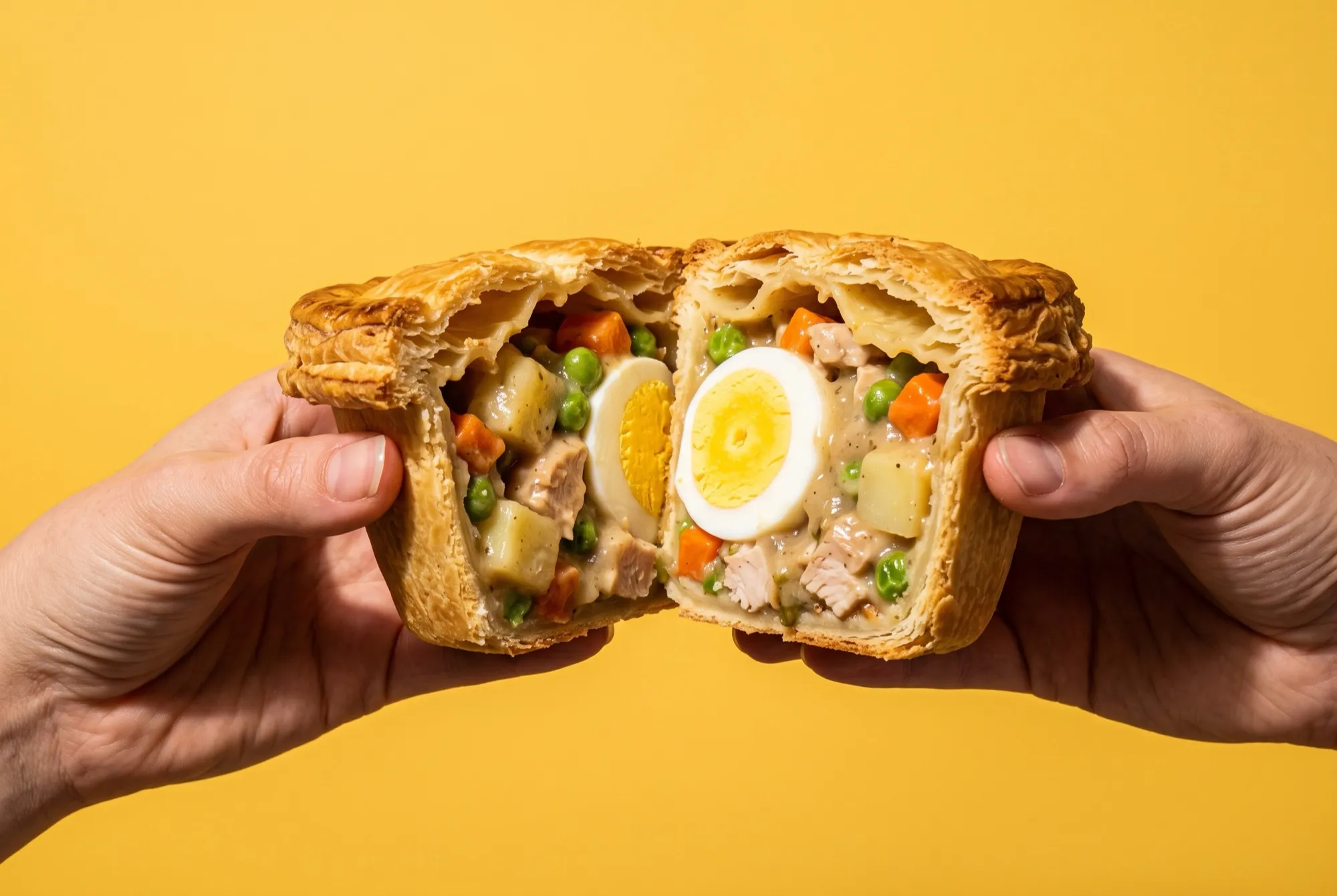
- Cold filling looks almost solid. That is correct: the sauce loosens again in the oven.
- Make a double batch and freeze half in pie-sized portions.
What makes this filling work?
A pie filling has a harder job than a stew. A stew only has to taste good in a bowl. A pie filling has to taste good, hold its shape when the pie is cut, stay inside the pastry in the oven, and not turn the base into wet bread. Almost every decision in this recipe is about thickness and temperature.
The thickener is a roux: equal weights of butter and flour cooked together before the liquid goes in (chickenpie.net’s glossary entry on roux explains why the flour is cooked in fat before any liquid goes in). Cooking the flour in fat coats each starch granule, so when the stock and milk arrive the starch swells evenly instead of clumping. Here, 40g butter and 40g flour thicken roughly half a litre of liquid into a sauce that is thicker than you would serve over rice. That is deliberate. Cream, chicken juices and the moisture from the vegetables all thin the sauce a little in the oven, so a filling that looks slightly too thick in the pan comes out silky in the pie. If you like to understand the ratios behind that, the guide to bechamel thickness for pie filling sets out thin, medium and pie-thick sauces side by side, with a simple spoon test.
Stock gives the savoury backbone. Milk gives body and a mild sweetness. The cream goes in at the end, briefly, for richness and gloss. Adding all the dairy at the start and boiling it for 15 minutes is how sauces split or catch on the bottom of the pan.
Why use chicken thigh and parboiled vegetables?
Chicken thigh stays moist through two cooks, once in the pan and again in the pie. Breast meat dries out and turns stringy. The thigh pieces only need to reach 75C at the centre in the pan; they will be heated again when the pie bakes.
The potato and carrot are parboiled separately because they cook at a different speed from the chicken. Raw potato dumped straight into the sauce either stays hard or, once soft, breaks up and turns the sauce gluey. Parboiling gives you even, tender cubes that keep their edges. Peas go in last, from frozen, so they stay sweet and bright.
Why does the filling need to cool before it meets the pastry?
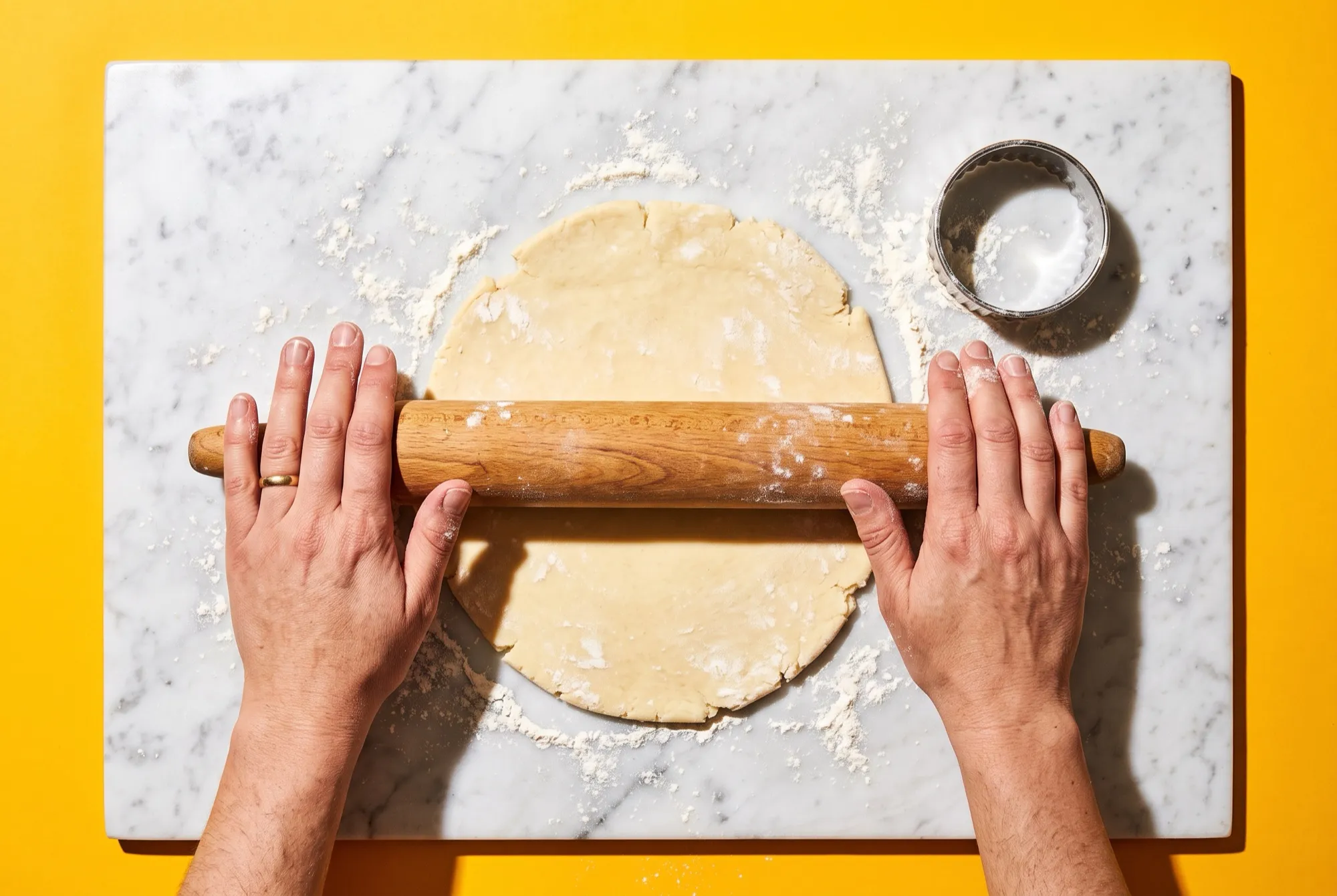
Raw pastry depends on cold fat. Hot filling melts the butter in the pastry before the oven can set it, so shortcrust turns greasy and puff pastry loses its lift. Hot filling also releases steam straight into the base, which is the main cause of a soggy bottom.
Cooling also matters for food safety. Cooked chicken should move through the warm zone quickly, which is why the method spreads the filling thin on a tray and chills it as soon as the steam stops. In Singapore heat, do not let it sit out for more than 2 hours, and sooner is better.
Why make it a day ahead?
- The sauce sets. Cold, set filling scoops cleanly and sits neatly in a pastry case.
- The flavour settles. Pepper, thyme and onion taste rounder the next day.
- The bake day gets easier. Pie day becomes pastry, fill, bake. No juggling a hot pan and cold dough in the same small HDB kitchen.
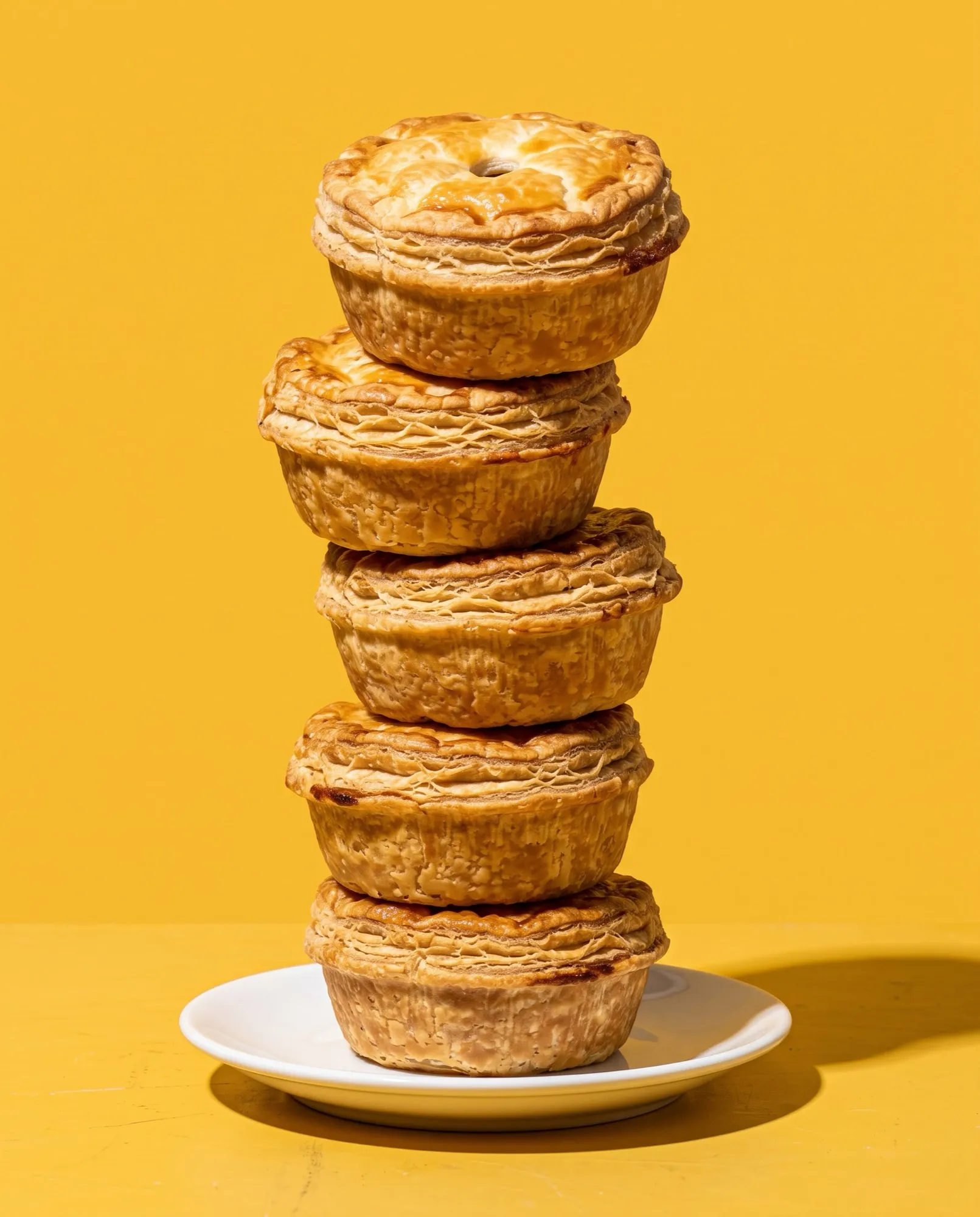
This filling works with our all-butter shortcrust pastry for a classic lidded pie, or scaled into a weeknight dinner with our puff pastry shortcut chicken pies.
What can you swap?
| Instead of | Use | What changes |
|---|---|---|
| Cooking cream | Evaporated milk | Slightly sweeter, old-school flavour; does not split |
| Milk and cream | All stock plus 2 tbsp butter | Lighter, more savoury, less creamy |
| Raw chicken thigh | Leftover roast chicken, shredded | Add with the peas and simmer until piping hot |
| Potato | Button mushrooms, quartered and sautéed | Earthier; add with the chicken |
| Peas | Sweetcorn kernels | Sweeter, pops nicely |
| Thyme | A pinch of nutmeg | Warmer, more old-school bakery |
For a Singapore twist, add 1 tbsp meat curry powder to the onions with the garlic and swap the cream for coconut milk. That turns this into something closer to a curry pie filling.
How long does the filling keep?
| Storage | How long | Notes |
|---|---|---|
| Fridge | Up to 2 days before baking | Covered, chilled fast after cooking |
| Freezer | About 3 months | Airtight, in pie-sized portions; thaw in the fridge overnight |
| Baked into pies | Eat within 3 days, chilled | Refrigerate within 2 hours of baking |
Use chilled filling within 2 days so the finished pies still have their full fridge life ahead of them. Frozen filling can weep a little liquid on thawing. Stir it well, and if it looks loose, warm it in a pan until bubbling, simmer to thicken, then cool and chill again before it goes near pastry. For the full picture on storing finished pies, see how long chicken pie lasts in the fridge.
Filling troubleshooting
| Problem | Likely cause | Fix |
|---|---|---|
| Runny filling | Too much liquid or roux undercooked | Simmer uncovered to reduce; next time measure the liquid |
| Gluey, stodgy sauce | Potato broke down, or too much flour | Parboil potato only until just tender; loosen with stock |
| Floury taste | Roux not cooked long enough | Cook the flour in butter for a full 2 minutes |
| Lumpy sauce | Liquid added too fast or cold | Add warm stock a ladle at a time, stirring hard; whisk out lumps |
| Bland filling | Underseasoned for pastry | Season boldly; add white pepper and salt at the end |
| Sauce split or grainy | Cream boiled hard | Add cream last and keep it to a gentle simmer |
This recipe belongs to our chicken pie recipes from a Singapore home kitchen. Curious about the pie that started it all? Read the complete Don chicken pie guide, or explore chicken pie anatomy layer by layer.