How Long Does Chicken Pie Last in the Fridge?
You bought a box of Don chicken pies, ate two, and now there are three left staring at you. The question every pie household eventually asks: how long can those pies live in the fridge? Here is our answer, the reasoning behind it, and a cheat sheet for telling a tired pie from a dangerous one.
What does the maker say about keeping a Don chicken pie?
The maker’s current published guidance has three parts:
- Best eaten within 4 hours of purchase. That is for quality: the crust is at its flakiest and the filling has not had time to soften the base. It matches the bakers’ habit of selling pies on the day they come out of the oven, which they explain in the kitchen’s no overnight pies policy.
- Chilled, up to 3 days. Keep the pie in the fridge and eat it within three days.
- Chicken Shepherd’s Pie: not beyond 3 days either. The mash-topped one gets the same limit, and it reheats differently from a pastry pie; shepherdpie.sg explains how to reheat shepherd’s pie so the mash browns and the middle gets hot.
An older reheating post from the maker once said 5 days in the fridge. The newer FAQ says 3 days, so we follow the newer, shorter number.
Why do we follow 3 days and not the usual 3-4?
General leftovers guidance from the USDA says cooked leftovers keep 3-4 days in the fridge. That is a sensible rule for leftovers across the board. The maker knows its own pie, though, and says 3 days. When two credible sources give different numbers, we pick the shorter one. Nobody ever got food poisoning from eating a pie a day early.
| Situation | How long | Whose guidance |
|---|---|---|
| Best quality, unrefrigerated | Within 4 hours of purchase | The maker |
| In the fridge | Up to 3 days | The maker (we follow this) |
| Cooked leftovers in general | 3-4 days | USDA |
| On the counter, cooked | No more than 2 hours, sooner in heat | General food safety (SFA, USDA) |
| In the freezer, baked and wrapped | About 3 months for best quality | General guidance |
How long can a chicken pie sit at room temperature?
Two hours, maximum. Cooked food should not sit in the temperature danger zone (roughly 5-60C) for more than 2 hours in total, and that total includes the bus ride home, the time on the counter while you finish dinner, and the hour it sat on the table at the party.
Singapore makes this harder. A kitchen without aircon on a hot afternoon is warmer than the “room temperature” most guidance assumes, and bacteria grow faster as it warms up. Our house rule: if we are not eating it in the next hour or so, the pie goes in the fridge. For carrying pies to work or school, see our chicken pie lunchbox tips.
How should you store a chicken pie in the fridge?
A few minutes of care here makes day two and day three noticeably better.
- Let it cool, briefly. A pie straight out of the oven can steam itself soggy in a sealed box. Let a hot pie cool on a rack for 20-30 minutes, well inside the 2-hour window, then chill it.
- Cover it. Use the original box, a lidded container, or loosely wrapped baking paper and foil. Covering stops the pastry drying out and keeps fridge smells out of the filling.
- Do not seal it airtight while warm. Trapped steam condenses on the lid and drips back onto the crust. Wait until the pie is cool, then close the container.
- Use the main shelves, not the door. The fridge door is the warmest part of the fridge.
- Label it. A strip of masking tape with the purchase date ends the “when did we buy this?” debate.
If three days is not going to be enough, freeze instead. Freeze baked, fully cooled pies wrapped airtight, ideally on day one rather than day three. Our freezing and thawing experiment covers the wrapping, thawing in the fridge and reheating steps.
How can you tell if a chicken pie has gone bad?
Use your nose and eyes, but remember they are a last line of defence, not a substitute for the time limits. Some bacteria that cause food poisoning do not change the smell or look of food at all.
Throw it out if you notice:
- A sour, tangy or “off” smell from the filling, especially once warmed
- A slimy or sticky film on the chicken or potato
- Any mould: fuzzy spots, white, green, blue or black, on crust or filling
- Odd colours in the filling: grey chicken, a greenish tinge, dark patches that were not there before
- Gravy that has turned watery and separated with a strange smell
- Bulging, fizzing or bubbles in a sealed container
Not a safety sign, just a quality one:
- A soft or “sweating” base after a day in the fridge. Moisture from the filling migrates into the pastry over time. That is texture, not spoilage, and a proper reheat helps. Our guide to fixing soggy reheated chicken pie has the rescue moves.
- A slightly darker egg yolk edge. A grey-green ring on a hard-boiled egg is a harmless reaction from cooking, not a sign of age.
And the rule that overrides everything else: when in doubt, throw it out. A pie costs a few dollars. A bad stomach costs a few days.
How should you reheat a chilled chicken pie?
Reheat until it is piping hot all the way through, 75C at the centre if you have a probe thermometer. The maker’s own guidance for the air fryer is 150C for 5 minutes, then 200C for 5 minutes. For the oven, the maker’s older reheating post gives 150-180C for 20-30 minutes. If you use a microwave, rest the pie and check the centre, because microwaves heat unevenly. Our reheat calculator and full reheating table works out the rest by appliance and starting state.
Reheat only the pie you are about to eat, and reheat it once. A pie that has been reheated and then left to cool again should not go back in the fridge for another round.
Filed in the chicken pie blog, where every post answers one question. New here? The Don chicken pie guide is the place to start.
Quick questions
Can I eat a chicken pie that was left out overnight?
No. A cooked chicken pie left at room temperature overnight has been in the temperature danger zone far longer than the 2-hour limit. Reheating does not make it safe again, because some bacterial toxins survive heat. Throw it away, even if it looks and smells fine.
Does the fridge clock start when I buy the pie or when I open the box?
Count from when you bought the pie, not from when you opened the box. The maker's 3-day guidance assumes the pie went into the fridge promptly. If it sat in a warm car or a bag for a while first, eat it sooner.
Is a soggy chicken pie from the fridge unsafe?
Not by itself. A soft, damp base after a day or two chilled is moisture from the filling moving into the pastry, which is a quality problem. A sour smell, slimy filling or mould are the safety warnings. A proper reheat on a rack brings much of the crispness back.
Sources we leaned on
Keep poking at this pie
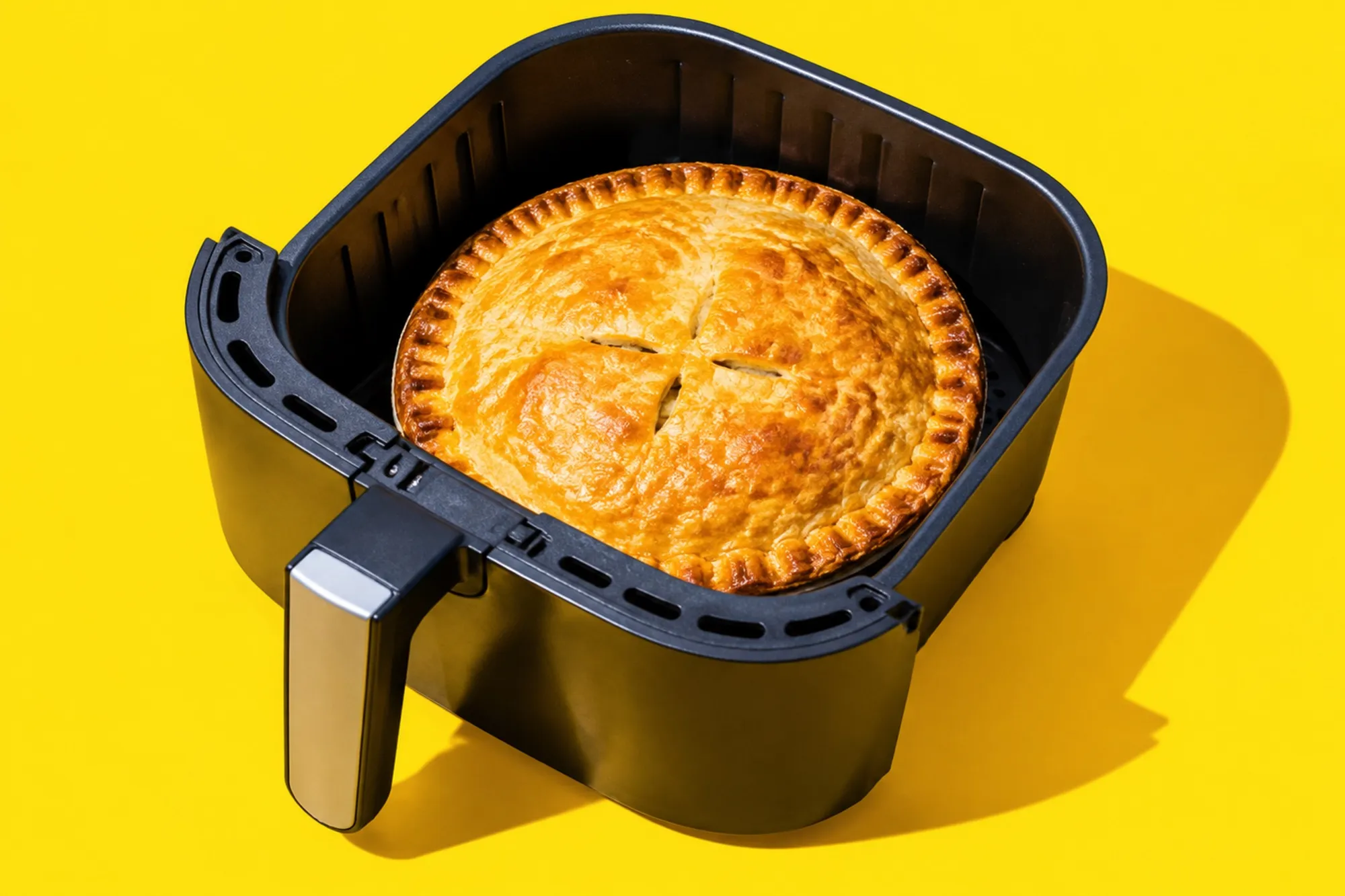 Calculator and guideHow to Reheat Chicken Pie: Oven, Air Fryer, Microwave
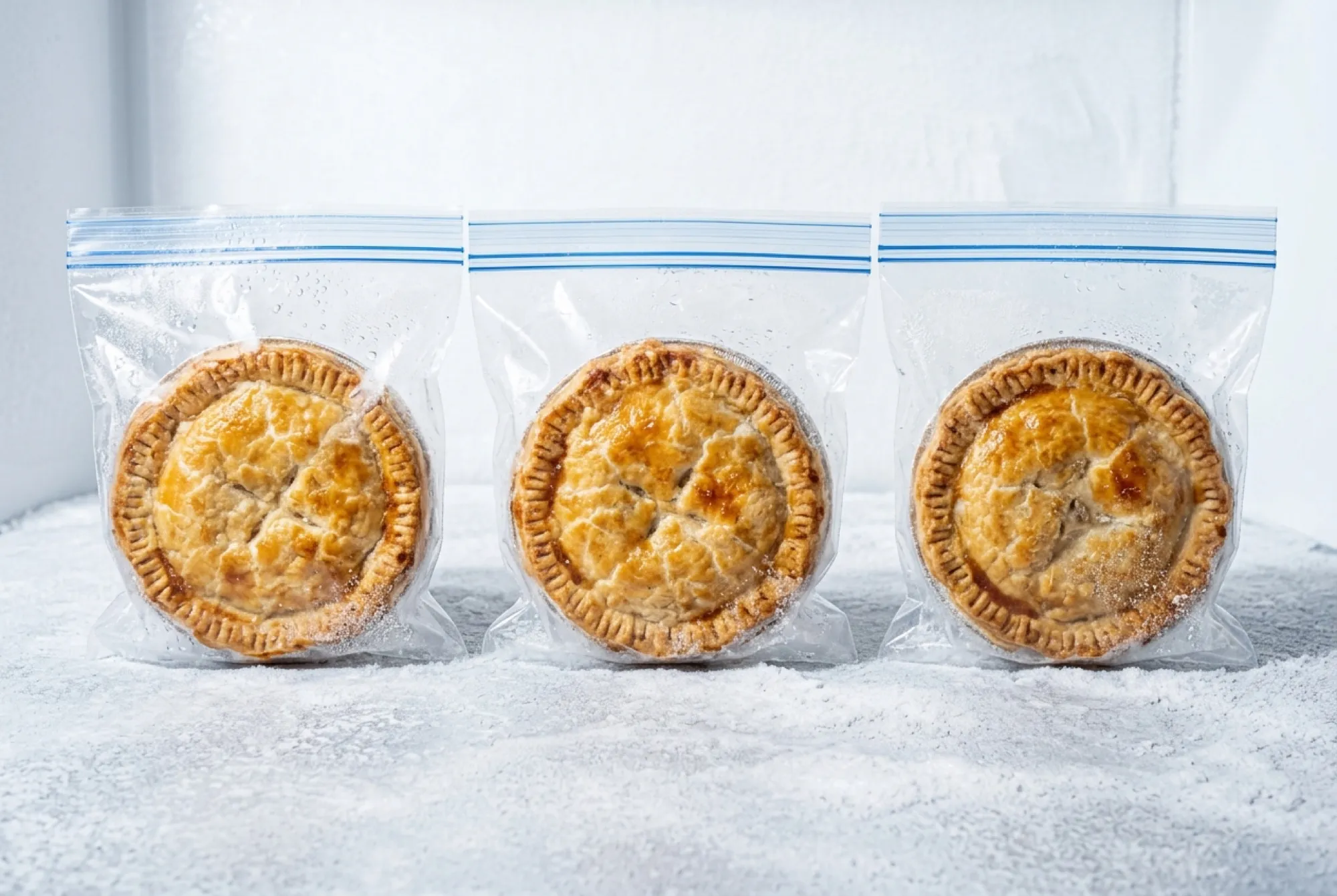 EXP-03Can You Freeze a Chicken Pie? We Froze, Thawed and Reheated
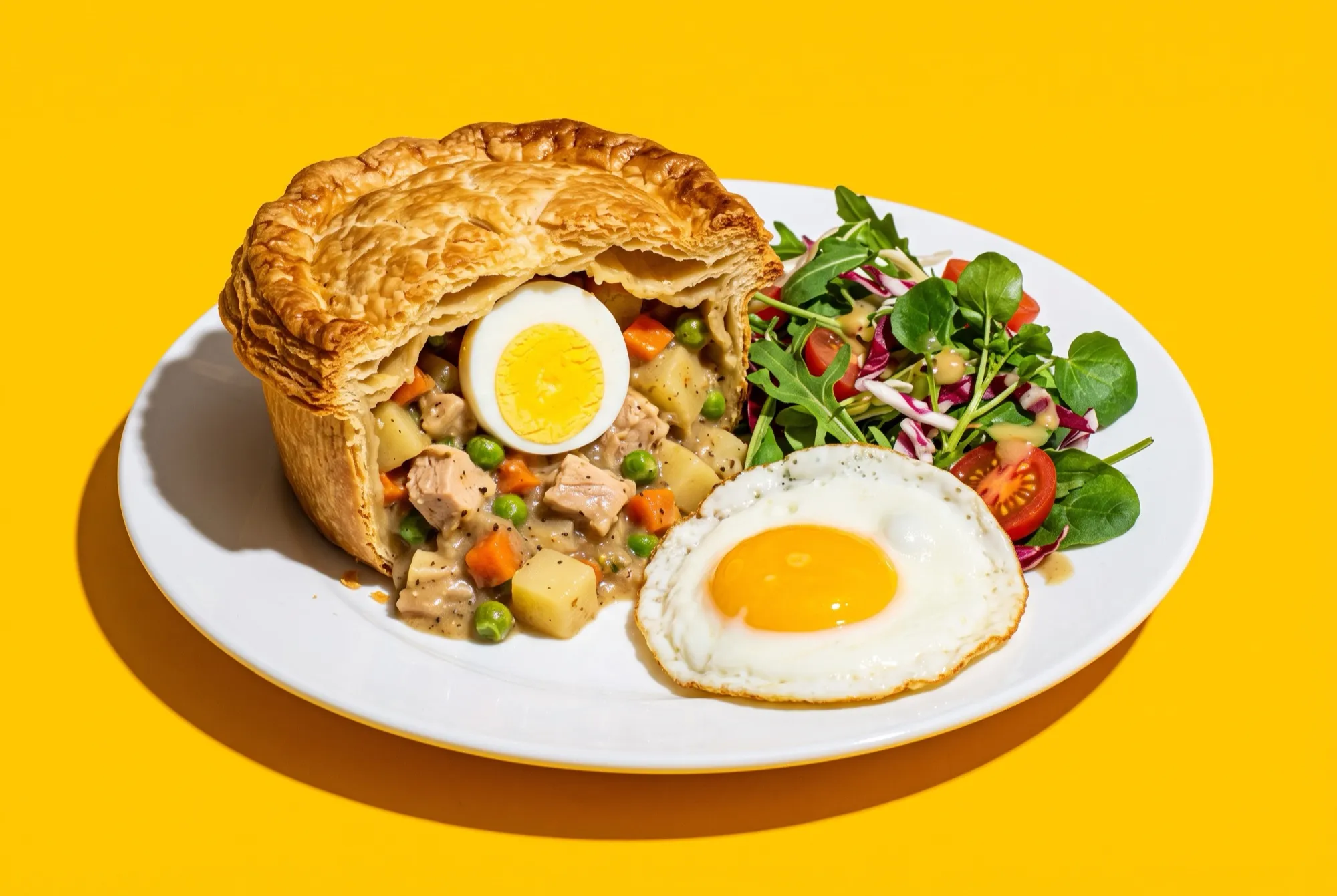 EXP-07Day-Two Chicken Pie: Six Ways to Eat Yesterday's Pie
- FAQDon chicken pie FAQ
Further reading elsewhere
- Pie Singapore's storage guide: fridge and freezer times for every kind of pie, not just chicken.