Why Is My Reheated Chicken Pie Soggy? Causes and Fixes
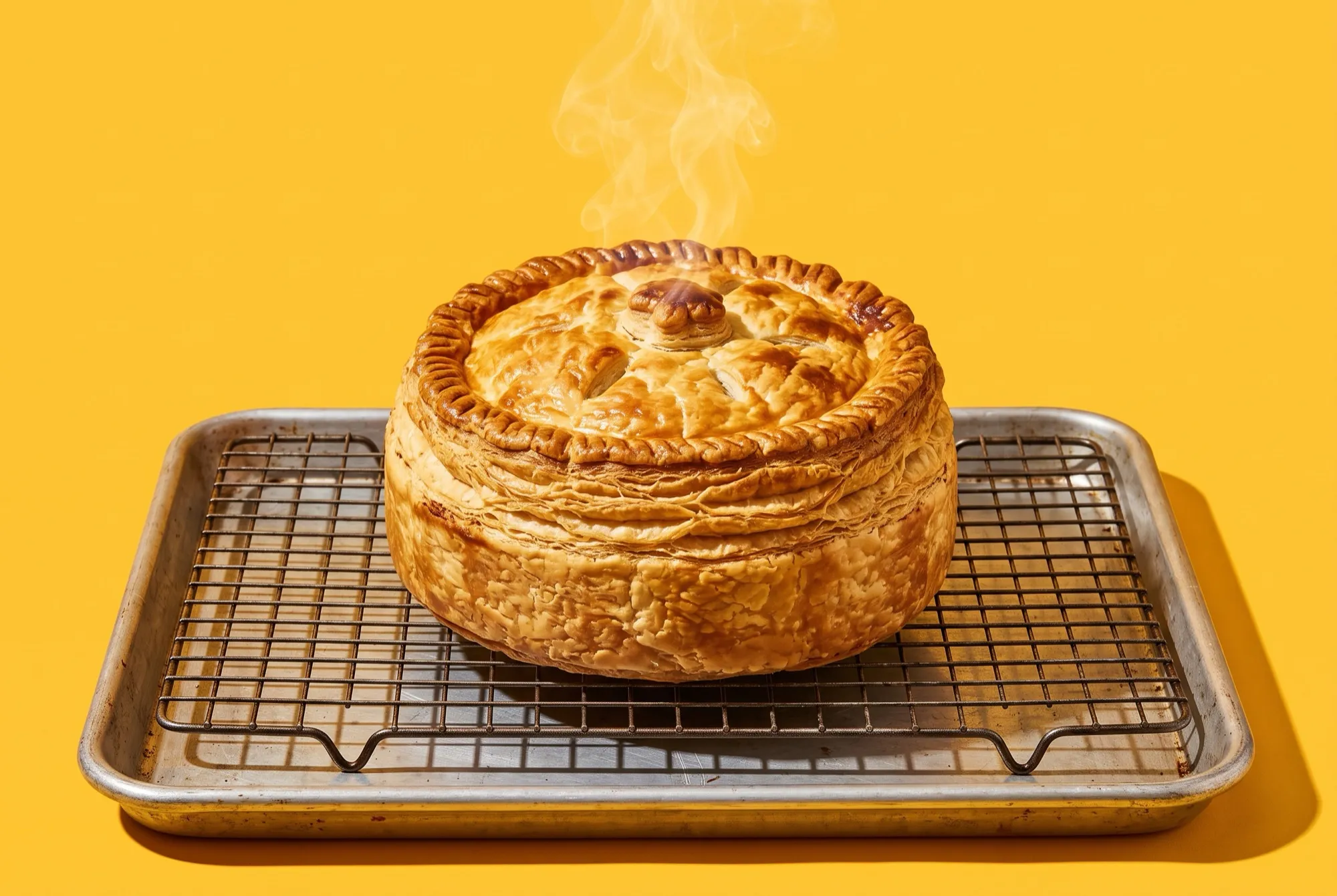
A fresh Don chicken pie has a golden, flaky crust that shatters a little when you bite it. A badly reheated one has a base like wet cardboard and a lid that could stop a door. Same pie, different afternoon. The good news: almost every reheating disaster has a single cause, and that cause is steam.
Why does a reheated chicken pie go soggy?
A chicken pie is a box of wet filling wrapped in dry pastry. Heat the filling and its moisture turns to steam. If that steam can escape, the pastry stays crisp. If the steam is trapped, it condenses straight back into the crust. Every soggy pie we have ever made traces back to one of these traps:
- The microwave. A microwave heats the water inside food. The filling steams from the inside out, the pastry softens, and nothing dries the surface. Microwave-only reheating is the number one cause of soggy pie.
- The sealed box. Closing a lid on a warm pie, in the fridge or in a bag, traps condensation. Drops form on the lid and fall back onto the crust.
- The covered dish. Reheating a pie tightly wrapped in foil or under a lid is basically steaming it.
- Condensation from cold. A chilled pie straight into a warm, humid kitchen picks up surface moisture. A pie wrapped in cling film while still warm sweats into the film.
- The flat plate. Put a hot pie on a plate and the base keeps steaming against a solid surface. Five minutes later, the base you crisped so carefully is soft again.
- Time. A pie stored for a day or two slowly passes moisture from the filling into the base. That is not spoilage, just physics, and a good reheat reverses most of it.
Puff pastry pies are even touchier than the flaky Don crust, because their thin layers collapse the moment they meet steam. If that is the pie on your plate, the technique guides on ovenmarvel.com go further into laminated pastry, bechamel thickness and reheating.
What is the fastest fix for a soggy base?
Dry heat that reaches the bottom of the pie, then a rest with air underneath.
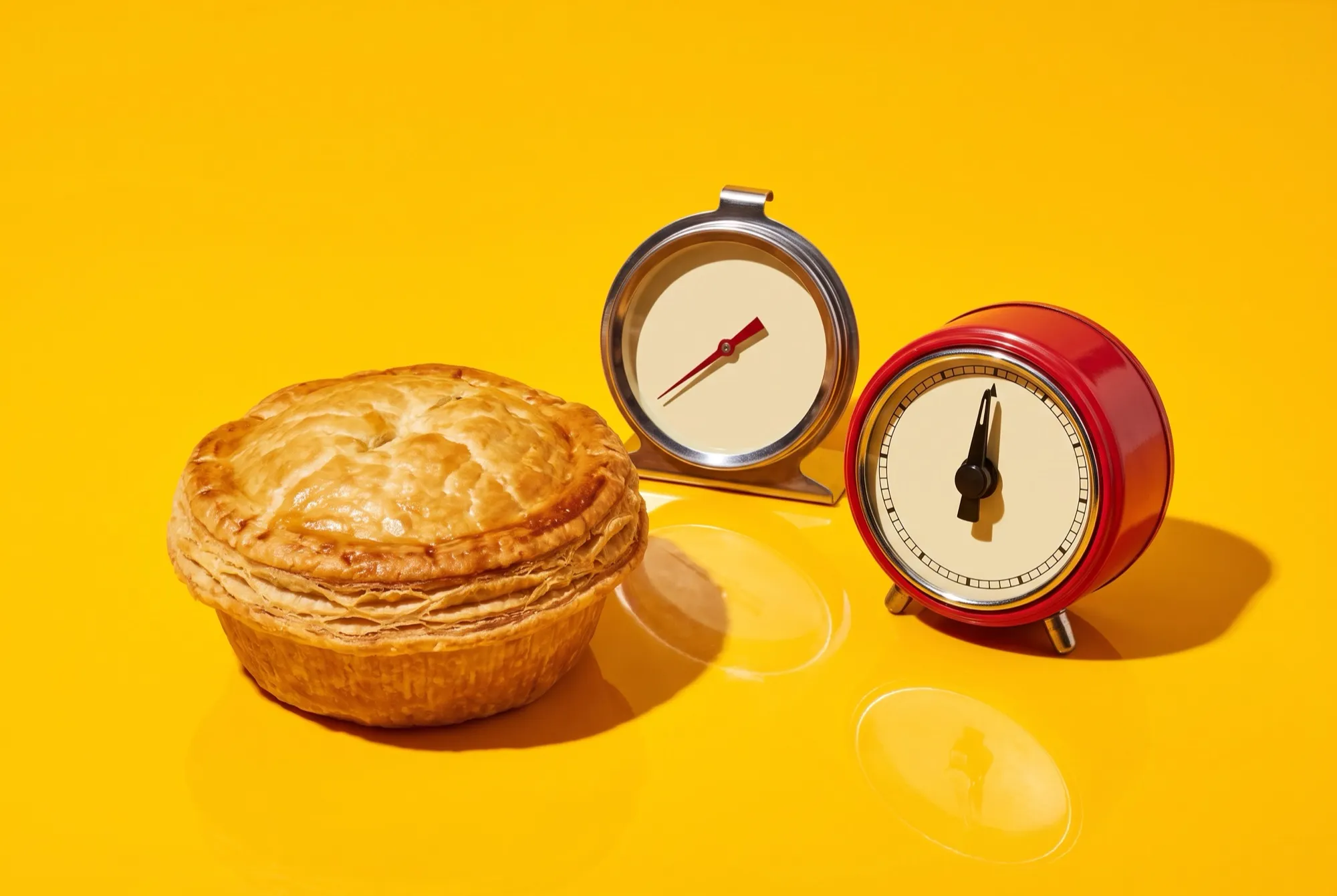
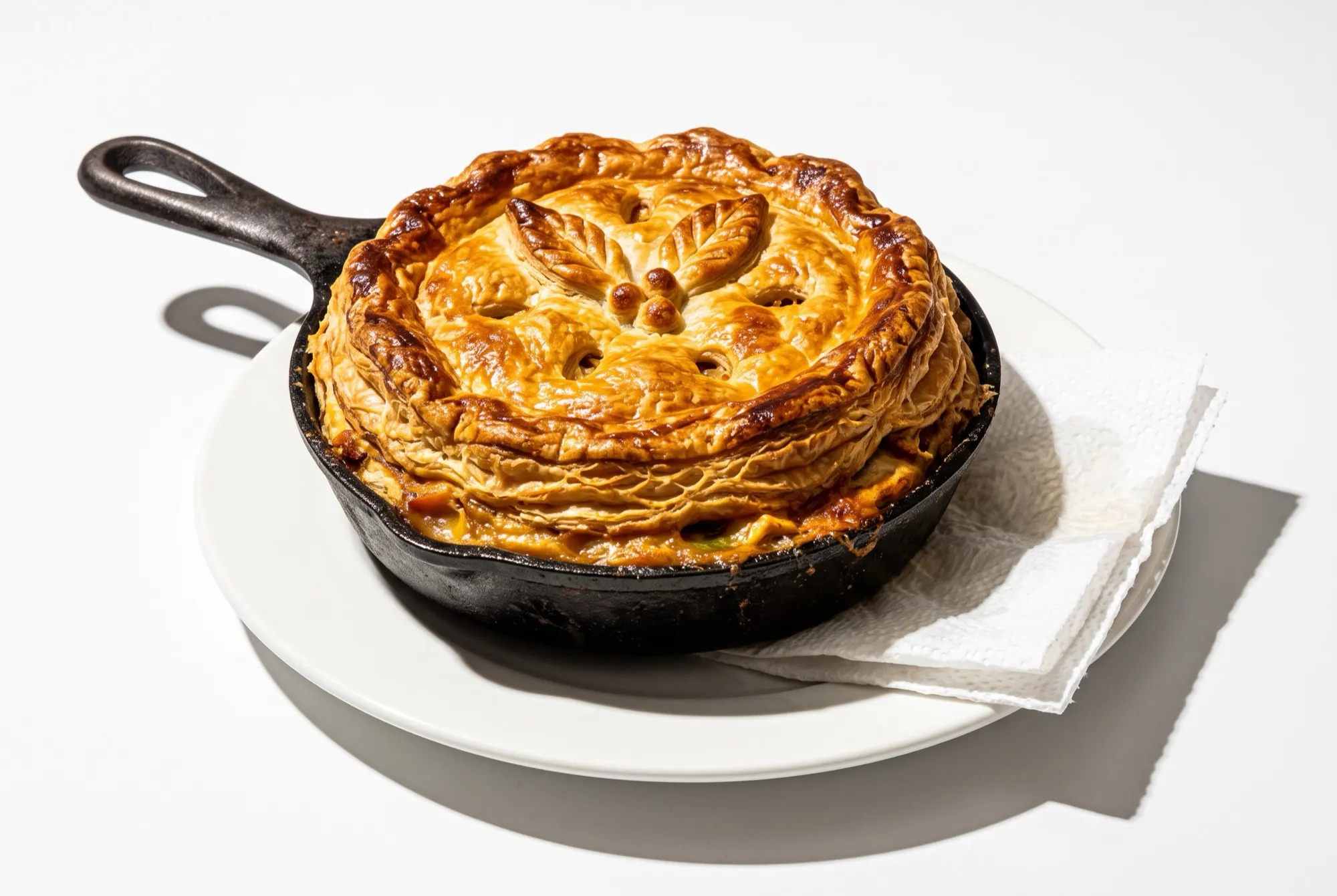
- Oven or toaster oven: put the pie on a wire rack, or on a tray you preheat with the oven so the base hits hot metal straight away. The maker’s older reheating post gives 150-180C for 20-30 minutes for its pies.
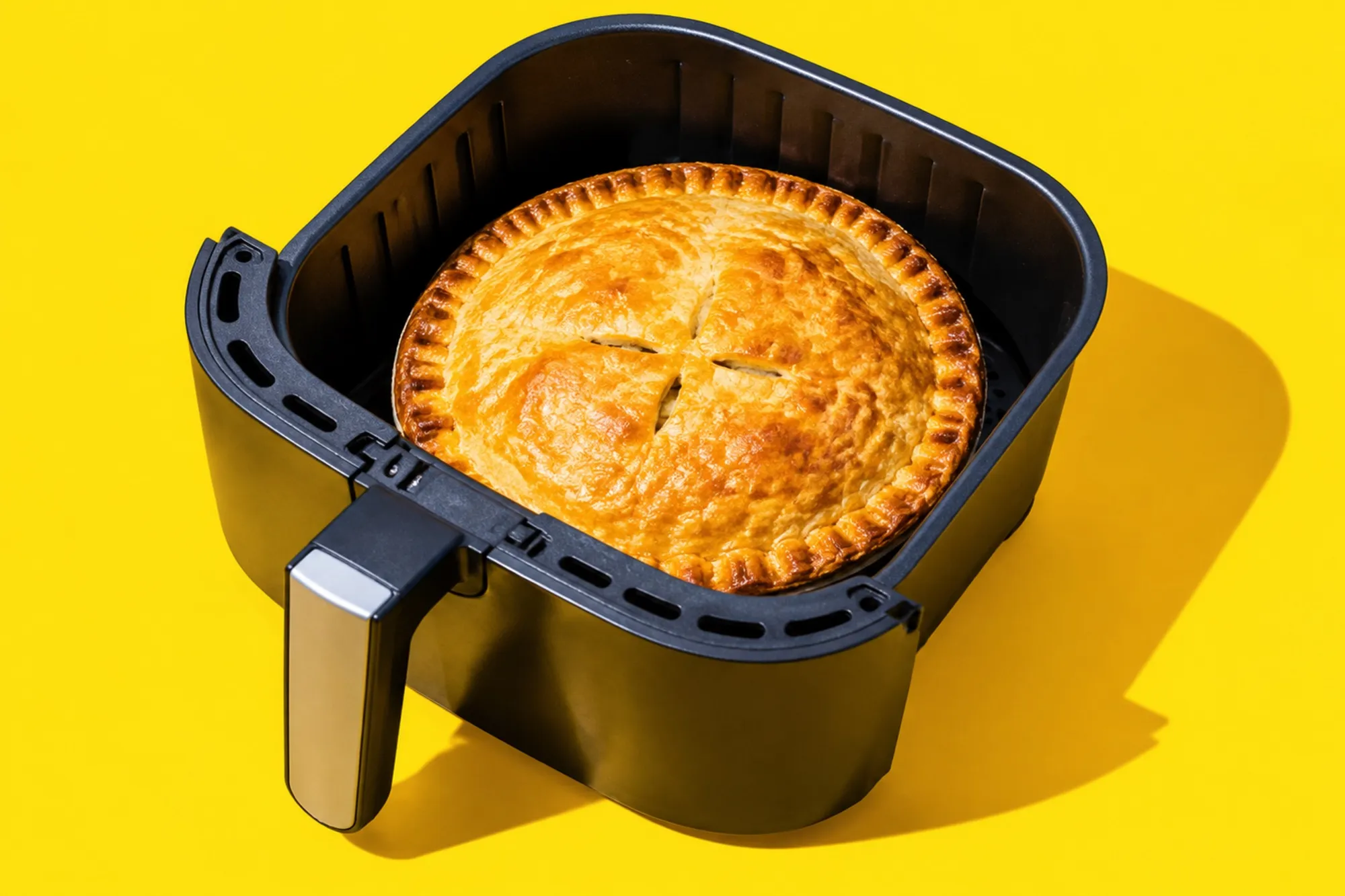
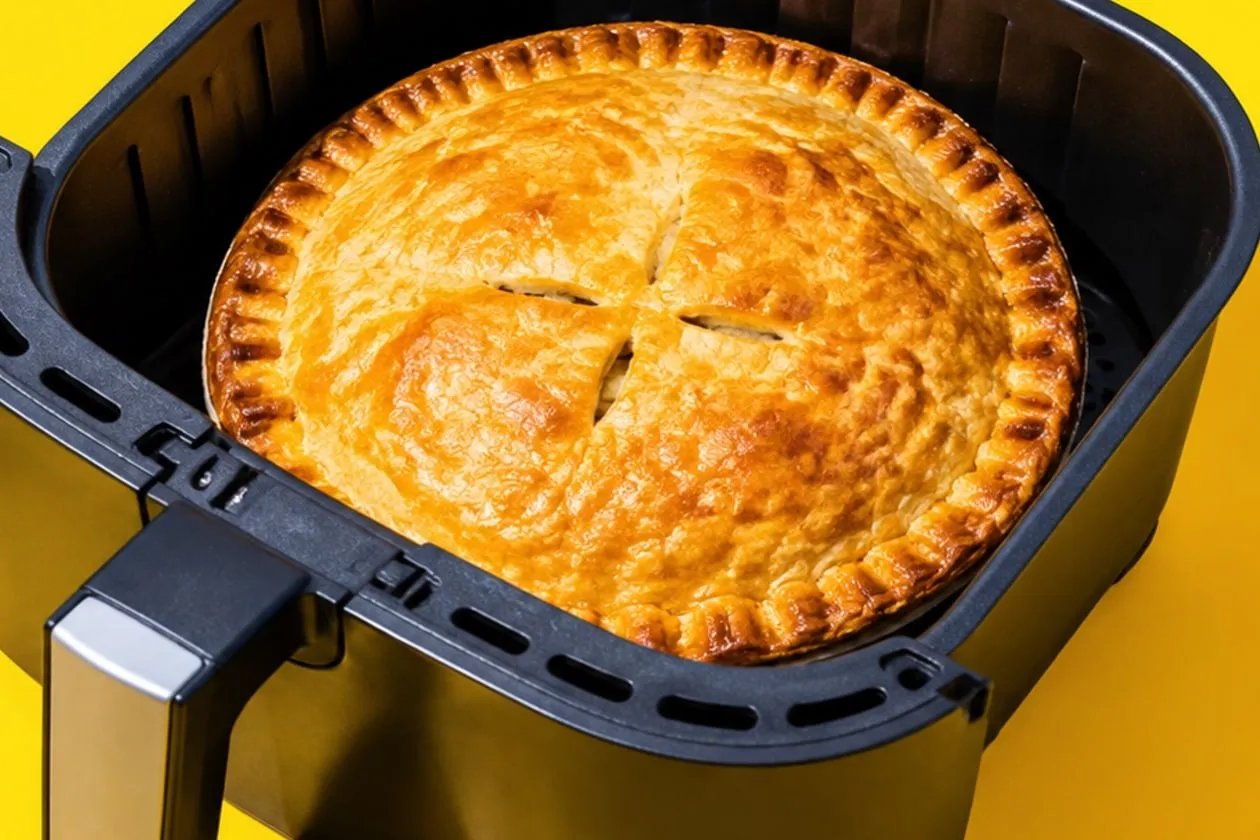
- Air fryer: the maker’s current guidance is 150C for 5 minutes, then 200C for 5 minutes. The basket lets hot air circulate under the base, which is exactly what you want. Our air fryer chicken pie settings experiment goes deeper.
- Microwave, then crisp: if you are short on time, use the microwave only to warm the centre at medium power, then finish in a hot oven, toaster oven or air fryer for a few minutes to dry the pastry. That combination is our own suggestion, not the maker’s. We tested it in the microwave chicken pie rescue experiment.
- Rest on a rack. Give the pie two or three minutes on a cooling rack before plating. That small pause lets steam escape downwards instead of soaking back in.
Whatever the method, the pie must be piping hot all the way through, 75C at the centre if you have a probe thermometer.
Troubleshooting table: what went wrong with my reheated chicken pie?
| Problem | Likely cause | Fix next time |
|---|---|---|
| Soggy base | Microwave only, sealed box, plate rest, or a pie sitting on a cold tray | Reheat on a rack or preheated tray, uncover at the end, rest on a rack |
| Hard, tough crust | Too long or too hot, or a pie that dried out uncovered in the fridge | Lower the temperature, shorten the time, store the pie covered |
| Burnt lid, cold centre | Heat too high for the size of pie, element too close (common in toaster ovens), or reheating from frozen without thawing | Drop the temperature, tent the lid loosely with foil, thaw frozen pies in the fridge first |
| Dry, tight filling | Overheated, especially long microwave blasts, or reheated more than once | Use medium power in short bursts, check the centre early, reheat only once |
| Greasy base | Fat from the pastry pooled under the pie on a flat tray during slow heating | Use a rack or a preheated tray, start in a properly preheated oven, blot gently with kitchen paper |
| Rubbery egg | The egg has been cooked three times now: boiled, baked, reheated | Gentler, shorter reheats; skip high-power microwave runs |
| Lid crisp, sides pale and soft | Air cannot reach the sides, for example a pie crammed in a small dish | Give the pie space in the oven or basket; do not crowd several pies together |
Why does a burnt lid come with a cold centre?
This one deserves its own section because it is the most frustrating. The outside of a pie heats much faster than the middle. Crank the oven up to save time and the lid races past golden while the filling is still lukewarm. Toaster ovens make it worse because the top element sits so close to the pie.
The fix is patience plus a foil hat. Use a moderate temperature, lay a loose sheet of foil over the lid once it looks nicely coloured, and keep going until the centre is hot. For a frozen pie, thaw it in the fridge first. Reheating from rock-hard frozen almost guarantees a burnt edge and a cold heart.
How do you stop a chicken pie going soggy in the first place?
Good reheating starts with good storage.
- Cool a fresh pie on a rack before boxing it, so it does not steam itself in the fridge.
- Store covered but not clingfilmed while warm.
- Take the pie out of its container before reheating. Do not reheat inside the takeaway box.
- Preheat the appliance fully before the pie goes in.
- Serve on a warm plate, or straight from the rack to the hand.
For a side-by-side look at oven, air fryer, toaster oven and microwave, read our reheating methods compared experiment. If you just want a time and temperature for your appliance, the chicken pie reheat calculator has the full table.
Is it ever fine to just eat it soft?
Honestly? Sometimes. A soft-based pie at 11pm, eaten over the sink, has its own charm. Just make sure it is hot all the way through. Soggy is a texture complaint. Lukewarm in the middle is a safety one.
Filed in the chicken pie blog, where every post answers one question. New here? The Don chicken pie guide is the place to start.
Quick questions
Can I fix a chicken pie that is already soggy?
Usually, yes. Put the pie on a rack in a preheated oven or air fryer and give it a few extra minutes uncovered. Dry heat drives moisture out of the pastry. A base that has turned to paste will firm up but will not become fully flaky again.
Should I cover a chicken pie with foil when reheating?
Cover the lid loosely with foil if it is browning before the centre is hot, which is common with whole pies and toaster ovens. Take the foil off for the last few minutes so the top can dry and crisp. Never wrap the pie tightly, which traps steam.
Why is the bottom soggy but the top crisp?
The base sits against the filling and on whatever surface holds the pie, so moisture has nowhere to escape. Heat from below on a rack or a preheated tray fixes most of it. Resting the hot pie on a flat plate afterwards undoes it.