Microwave Chicken Pie Rescue: From Soggy to Crisp in Two Steps
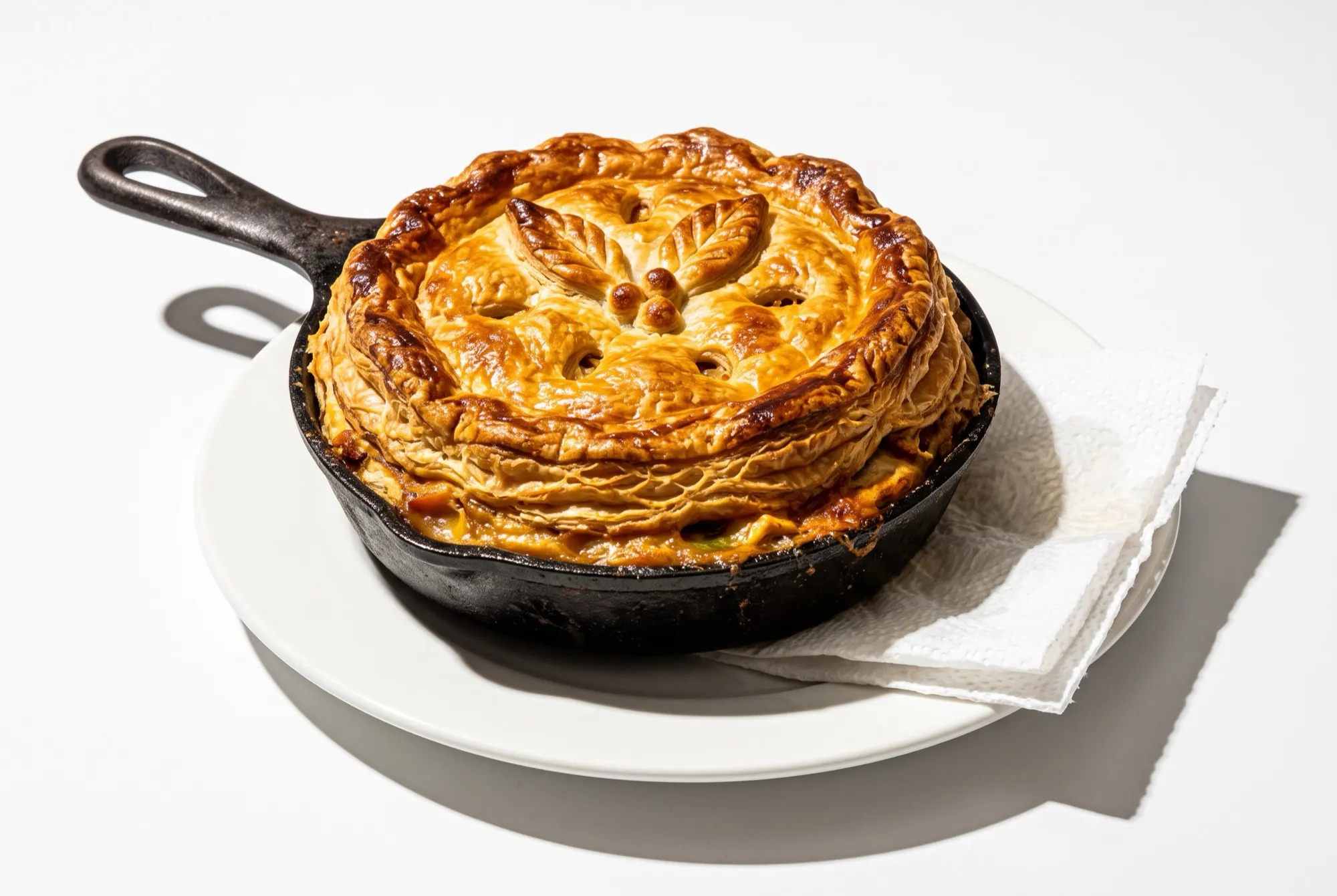
Hypothesis
Microwaving will heat the filling but steam the pastry from the inside. A short dry-heat finish straight after the microwave should drive that steam back out and bring the crust back.
Kit
- Chilled personal chicken pies
- Microwave with a power setting
- Microwave-safe plate
- Dry paper towel
- Non-stick or well-seasoned frying pan
- Air fryer
- Probe thermometer
- Thin spatula
Method
- Microwave only: we set a pie on a plate lined with a dry paper towel and heated it on full power until the lid felt hot, the way it usually happens at midnight, then rested it and probed the centre.
- Bursts: we heated a second pie on medium power in 30-60 second bursts, resting it for 30 seconds between bursts, until the centre reached 75C.
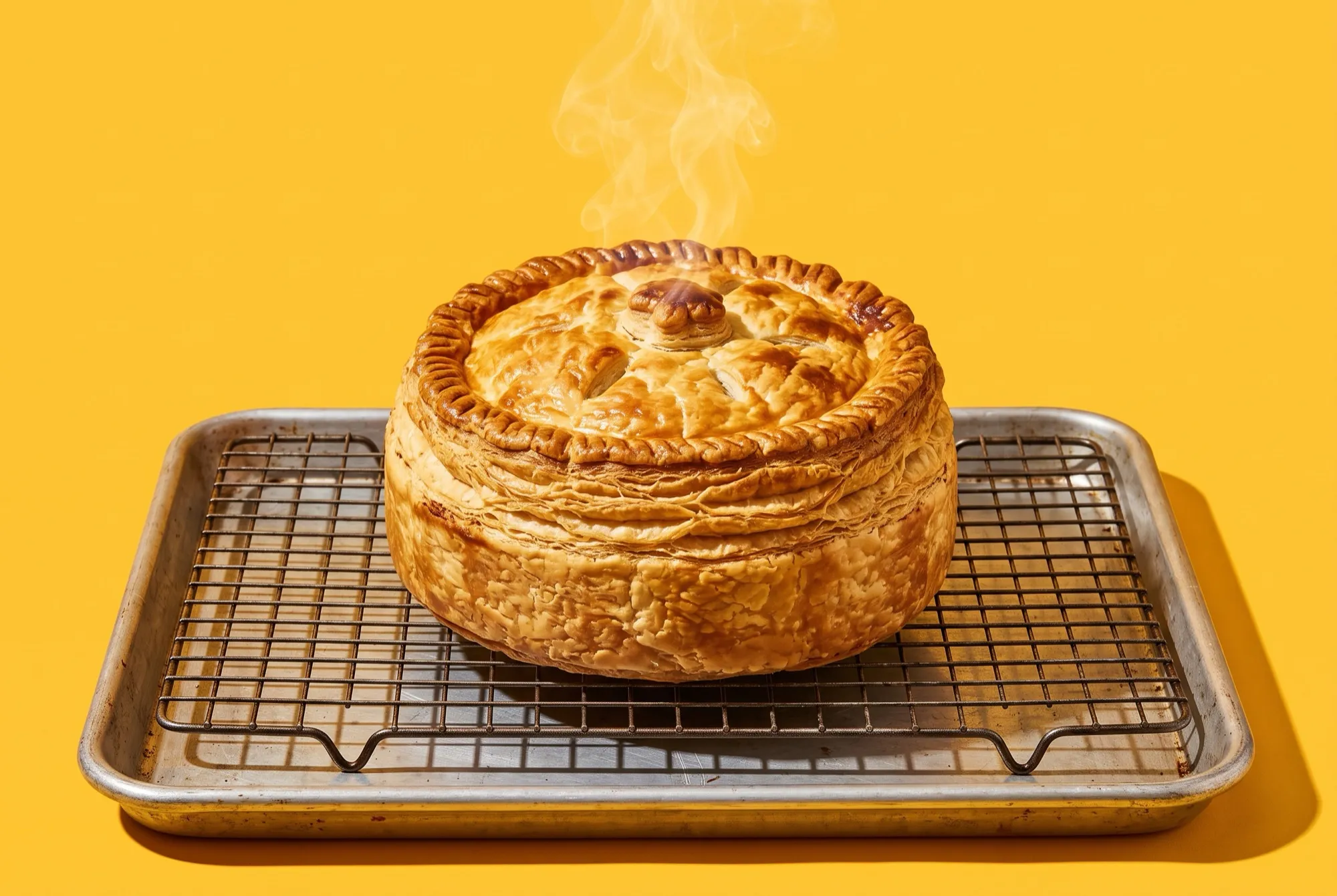
- Pan finish: we moved a burst-heated pie straight into a dry pan, no oil and no lid, over medium-low heat for 2-3 minutes, until the base felt firm and sounded crisp when tapped.
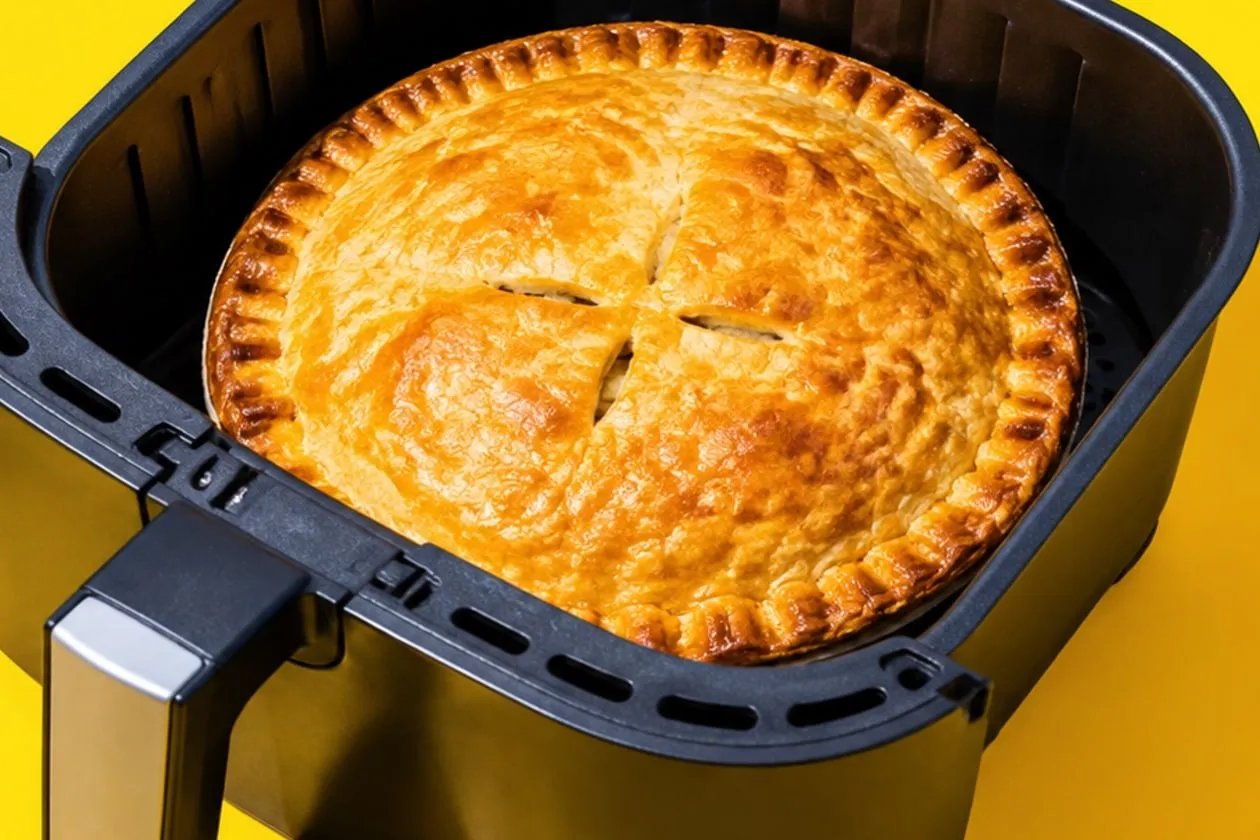
- Air fryer finish: we gave another burst-heated pie 3-4 minutes at 200C in a preheated air fryer to crisp the lid and base together.
- We rested each pie for 2 minutes, then cut it open to check the base, the lid and the middle of the filling.
What happened
Microwave only
Lid soft and steamy with a damp, chewy feel. Base wet where it met the plate. The edges were scalding while the middle was still only warm, so it went back in for more.
Microwave in bursts
More even heat and fewer molten gravy pockets, but the pastry was still soft. Bursts fix the centre, not the crust.
Bursts plus pan
The base came back properly crisp and the pan caught nothing but a few pastry flakes. The lid stayed soft, so this suits people who care most about the bottom.
Bursts plus air fryer
Lid and base both firmed up, and the lid got back some of its flake. Our favourite finish when an air fryer is in reach.
Paper towel
The dry towel underneath soaked up steam and stopped the base sitting in its own little puddle during the microwave stage.
Observations are qualitative: what a cook can see, hear and taste. We do not publish thermometer readings or scores we cannot stand behind. Your oven will differ, so run it yourself.
Verdict
Zap, then crisp
Our opinion: In our opinion, a microwave should start a pie's reheat, never finish it. Bursts for the heat, then a dry pan or air fryer for the crust, is the best fast pie we know.
Let us be honest about how most chicken pies get reheated. Not in a preheated oven with a probe thermometer. In a microwave, at speed, by someone hungry. This experiment is for that person. We are not here to ban the microwave. We are here to give it a sidekick.
Why does a microwaved chicken pie go soggy?
A microwave does not heat air. Microwaves make water molecules jostle, and jostling molecules get hot. A chicken pie’s water lives mostly in the gravy, the potato and the chicken, so those heat up fast. The pastry has comparatively little water, so it warms mainly by contact with the hot filling underneath.
Then the steam problem starts. Hot filling releases steam, and that steam pushes up into the lid and down into the base. In an oven, the hot dry air outside would carry it away. In a microwave the air in the cavity stays cool, so the steam hits the cooler outer layers of pastry and condenses right there. The pastry is being steamed from the inside.
A wet surface also cannot get much hotter than the boiling point of water, so there is no browning and no crisping. Once the pie cools a little, the soaked starch and gluten firm up into that familiar leathery chew. That is the microwave pie in one sentence: hot, wet, chewy.
Why is the middle still cold when the edges are scalding?
Microwaves only reach a few centimetres into food. The outer filling heats directly, and the very centre of the pie has to wait for that heat to conduct inward. Microwave ovens also have uneven energy patterns, which is why a turntable exists, and even with one there are hot and cold spots.
The egg and potato at the centre of a Singapore-style chicken pie are dense, so they are often the last to warm. Meanwhile a pocket of gravy near the edge can be hot enough to scald your mouth. Medium power and short bursts with rests give heat time to even out between zaps. The rest is not optional. Probe the centre, aim for 75C, and if you have no thermometer, check that the middle is steaming hot, not just the edges.
Why does a dry pan fix the base so well?
A hot pan delivers heat by direct contact, which is the most efficient way to move heat into a flat surface. The base presses against hot metal, its water is driven off as steam that escapes sideways, and the fat in the pastry re-fries itself. No oil needed: the pastry brought its own.
Two details matter. Keep the heat at medium-low, because a fierce pan scorches the base before it has dried out. And leave the lid off the pan. A lid traps the steam you are trying to get rid of, and you are back to steaming the pie.
Pan or air fryer: which finish is better?
| Finish | Fixes the base | Fixes the lid | Washing up | Best for |
|---|---|---|---|---|
| Dry pan | Very well | No | One pan | Base people, home kitchens, no air fryer |
| Air fryer | Well | Well | A basket | Anyone who wants the whole pie crisp |
| Toaster oven (our next test) | Probably fairly well | Probably well | A tray | Office pantries |
| No finish | No | No | Nothing | Emergencies only |
The air fryer wins for the whole pie, because hot moving air works on every surface at once. The pan is the more satisfying trick, though, and it is the one that works in any kitchen with a stove. If your main complaint is a soggy bottom, the pan is all you need. More fixes for soft pastry are collected in our post on soggy reheated chicken pie fixes.
Is the maker’s guidance any different?
The maker of the Don chicken pie publishes oven and air fryer guidance, not a microwave method. The microwave bursts, the dry pan and the microwave-then-air-fryer finish on this page are general kitchen practice and our own suggestions. If you have the time, the maker’s air fryer setting is covered in our air fryer chicken pie settings test. Puff pastry pies suffer even more in a microwave; a fan archive’s notes on reheating puff pastry pies reach the same verdict we did.
How to reproduce this at home
- Put the pie on a microwave-safe plate lined with a dry paper towel.
- Heat on medium power in 30-60 second bursts, resting for about 30 seconds between each.
- Check the centre. Keep going in short bursts until it is piping hot, 75C if you have a probe.
- Move the pie straight to a dry pan over medium-low heat, lid off, for 2-3 minutes. Or give it 3-4 minutes in a preheated air fryer at 200C.
- Rest for a couple of minutes before biting. The gravy is hotter than it looks.
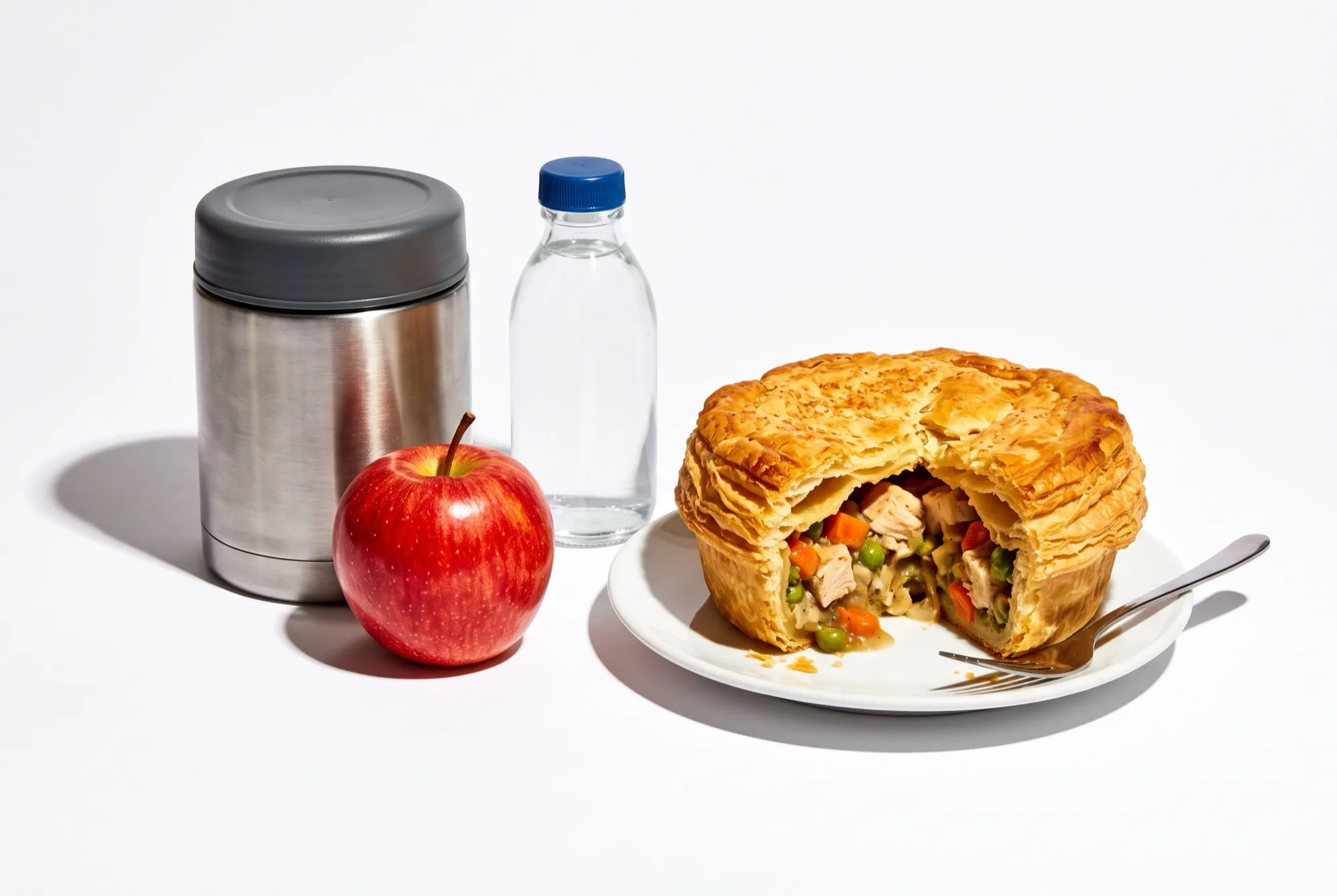
This rescue is also the best plan for an office lunch, where the pantry usually has a microwave and, if you are lucky, a toaster oven. Our chicken pie lunchbox tips cover the packing side.
What would we change next time?
- Test the toaster oven finish. Many office pantries and HDB kitchens have one. We expect a few minutes under a hot element to crisp the lid nicely, but that is a guess until we try it.
- Cut the pie in half first. Microwaving two halves cut side up should let steam escape and heat the centre faster. The cost is a messier pie, so it needs a fair trial.
- Try a damp towel on top. Some guides suggest a damp paper towel over the pie to stop the edges toughening. We used a dry one underneath because we were going to crisp the pie afterwards anyway, but the damp-towel camp deserves a hearing.
Whatever you try: reheat once only, and if a pie has sat out for more than 2 hours, do not try to rescue it at all.
EXP-04 is one of our chicken pie experiments, run on the Don chicken pie. For the settings without the story, use the chicken pie reheat calculator; for the pie itself, start with the Don chicken pie guide.