Chicken Pie Anatomy: What Every Layer Does
Take the pie apart, layer by layer
Tap a numbered sticker on the cross-section, or use the layer buttons. Arrow keys step through the layers.
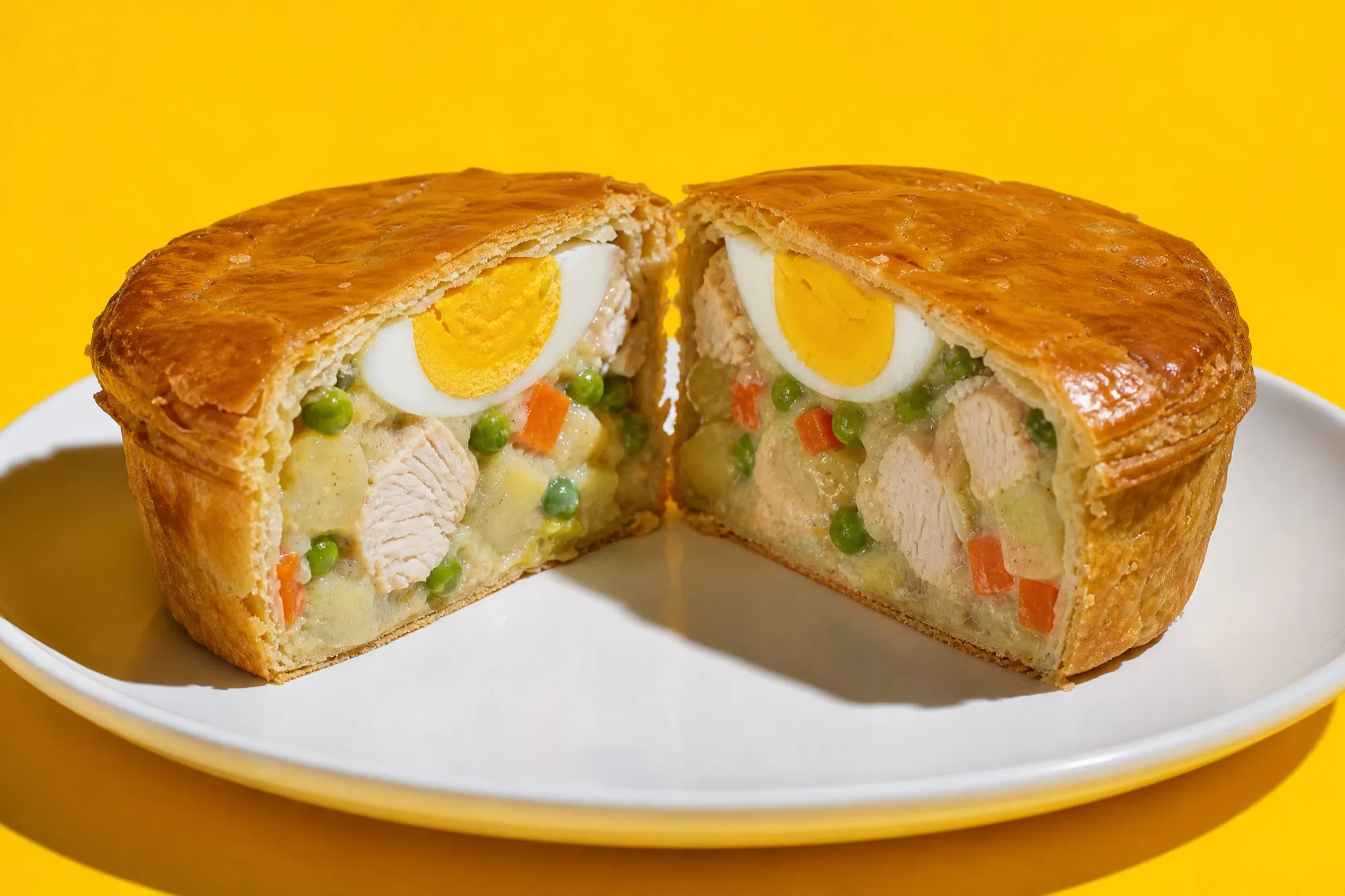
The lid
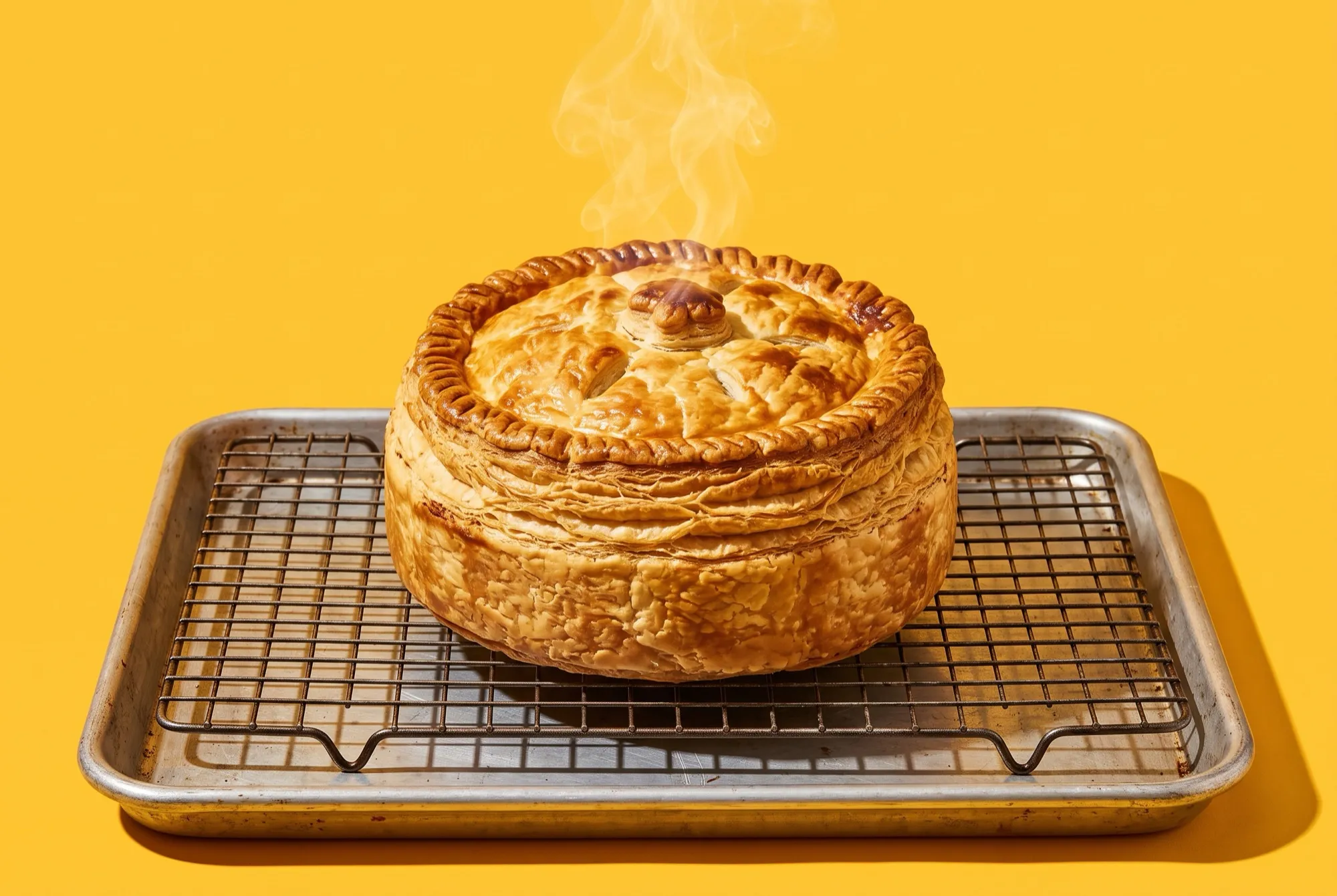
What it does. The lid is the top sheet of pastry and takes the most direct heat in the oven. The lid seals the filling in, traps steam while the pie bakes, and gives you the first shattering bite.
What to look for. Even golden colour from edge to centre, layers that crackle rather than bend, and no pale or doughy patch in the middle where the filling sits closest.
In a Don pie The kitchen describes its own crust as a golden, flaky pastry made in-house. Reviewers disagree on whether to call it puff or something sturdier, so we just call it flaky.
The rim and seal
What it does. The rim is where the lid is pressed onto the wall. A good seal keeps gravy inside during baking and stops the lid lifting off in one sheet when you bite.
What to look for. A tight, slightly thicker band with no dried gravy trails down the side. Gravy leaking at the rim usually means overfilling or a seal that opened in the heat.
The wall
What it does. The wall is the side crust that holds the pie upright. The wall has to be sturdy enough to carry the filling from paper bag to mouth without folding.
What to look for. Crisp outside, cooked through on the inside face. A wall that is raw or gummy against the filling means the pie was underbaked or reheated too fast.
The base
What it does. The base is the bottom crust and the hardest part of any pie to get right. Steam and gravy from the filling soak downwards, so the base fights sogginess from the moment the pie leaves the oven.
What to look for. A base that holds flat when you lift the pie by its edge. When reheating, put the pie on a rack or straight on the oven tray, never on a plate, so heat reaches the bottom.
Half a boiled egg
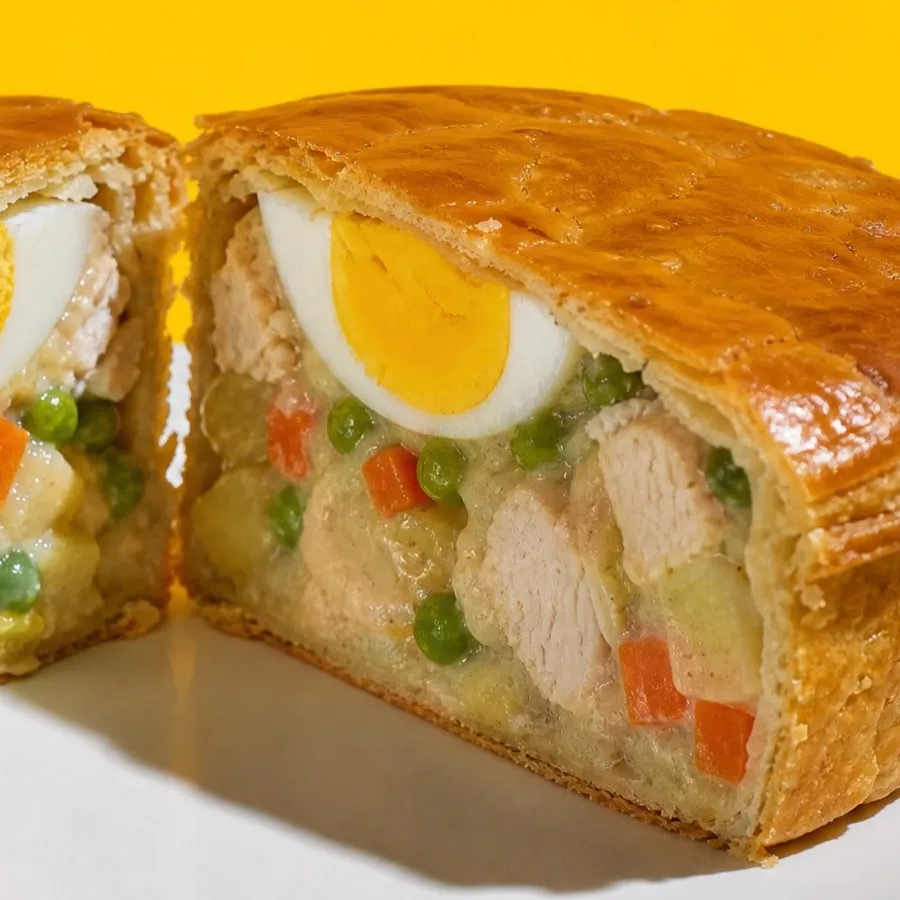
What it does. Half a hard-boiled egg is the signature of the old-school Singapore chicken pie. The egg adds richness, a soft contrast to the chunky filling, and a bright yolk that makes every cross-section look good.
What to look for. A yolk that is set and golden, without a grey-green ring (a sign the egg was boiled too long). The white should be tender, not rubbery.
In a Don pie Reviewers consistently describe half a hard-boiled egg in each Don chicken pie, and the kitchen itself talks about its signature egg.
Chicken chunks
What it does. Chicken is the main event. Chunks, rather than shreds, give the filling bite and make each mouthful feel substantial.
What to look for. Tender pieces that hold their shape and are juicy, not stringy. Thigh meat stays moist through baking and reheating better than breast.
In a Don pie The kitchen describes tender chunks of chicken. One food blog reported boneless chicken leg meat in the filling.
Potato
What it does. Potato cubes bulk out the filling, soak up gravy and add a soft, starchy body that makes a chicken pie feel like a meal.
What to look for. Cubes that are soft right through but still cubes. Potato that has collapsed into mash usually means it was overcooked before baking.
Peas and carrot
What it does. Peas and diced carrot bring colour, sweetness and a little freshness against the rich gravy.
What to look for. Bright green peas and carrot that is tender, not crunchy. Dull grey peas suggest long holding or repeated reheating.
In a Don pie Reviewers mention peas and carrots alongside the chicken, potato and egg.
The gravy
What it does. The gravy is the creamy binder that carries the seasoning and holds everything together. Too thin and the base drowns; too thick and the filling tastes pasty.
What to look for. A sauce that clings to the chunks and moves slowly when the pie is cut, without flooding the plate.
In a Don pie The kitchen says its filling uses a secret spice blend. The blend is not public, so we can only describe what we taste: savoury, gently peppery, rounded.
The explorer above walks you through a chicken pie one layer at a time. That is the parts list. This page is the wiring diagram. A chicken pie only works when nine layers cooperate, and most of the ways a pie goes wrong (soggy base, burst rim, lukewarm middle) happen where two layers meet.
How do the layers of a chicken pie work together?
A chicken pie is a dry pastry shell wrapped around a wet filling. Everything else follows from that. The pastry wants to stay crisp. The filling wants to stay juicy. Heat turns some of the filling’s moisture into steam, and that steam goes looking for the nearest exit. Every layer in the pie is either holding moisture in, letting it out, or soaking it up.
What is the right crust-to-filling ratio?
There is no official number. What matters is a balance you can feel. Too much pastry and the pie eats like a bread roll with a rumour of chicken. Too little and the wall folds, the base tears and gravy runs down your wrist. A good ratio gives you crust and filling in nearly every bite, which is what one food reviewer singled out for praise in the Don chicken pie: an even crust-to-filling ratio.
Size changes the maths. A personal pie has wall all the way round, so each bite carries a fair amount of crust. A slice of a whole family pie has wall only on its outer edge, so the bites near the point are mostly lid, filling and base. Crust fans tend to love personal pies. Filling fans fight over the centre of the whole pie. Our crew contains both, and the arguments are loud.
Why is the base the weak point of every pie?
The base sits underneath the filling, so gravy and condensed steam settle onto it from above. The base sits on a tray, so in many ovens it gets less direct heat than the lid. And the base is insulated by the filling above it, so it heats last and dries last.
Bakers fight back with sturdy pastry, a hot tray and a gravy thick enough to cling rather than pool. At home, when you reheat: heat from below on a rack or a preheated tray, and never let a hot pie rest on a flat plate. Our chicken pie reheat calculator and full table is built around protecting the base.
Where does all the steam go?
While a pie bakes, steam from the filling pushes up against the lid and helps the pastry layers lift. Some steam escapes through a vent or through the seam at the rim. The rest condenses back inside as the pie cools, which is why a pie boxed while still hot goes soft on the journey home.
Steam management is the whole game when reheating. Wrap a pie tightly and the steam stays trapped against the pastry. Give it dry, circulating heat and a rest on a rack, and the steam leaves.
Why does an egg in the middle change how a pie reheats?
Gravy is a liquid, so heat moves through it partly by circulation. A hard-boiled egg is solid. Heat crawls through an egg by conduction alone, and slowly. Put a cold, dense half egg in the middle of a filling and you have built a cool spot that warms after everything around it. The area next to the egg is often the last part of the pie to get hot.
Two practical results follow. First, when you reheat an egg pie, check the centre close to the egg, not just the edge of the filling. Reheat until piping hot all the way through, 75C at the centre if you have a probe thermometer. Second, the egg has already been cooked twice (boiled, then baked), so long blasts of high heat turn the white rubbery. Moderate heat for a little longer beats fierce heat for less time. For the backstory, read why Singapore chicken pies have a boiled egg.
How can you read a chicken pie from the outside?
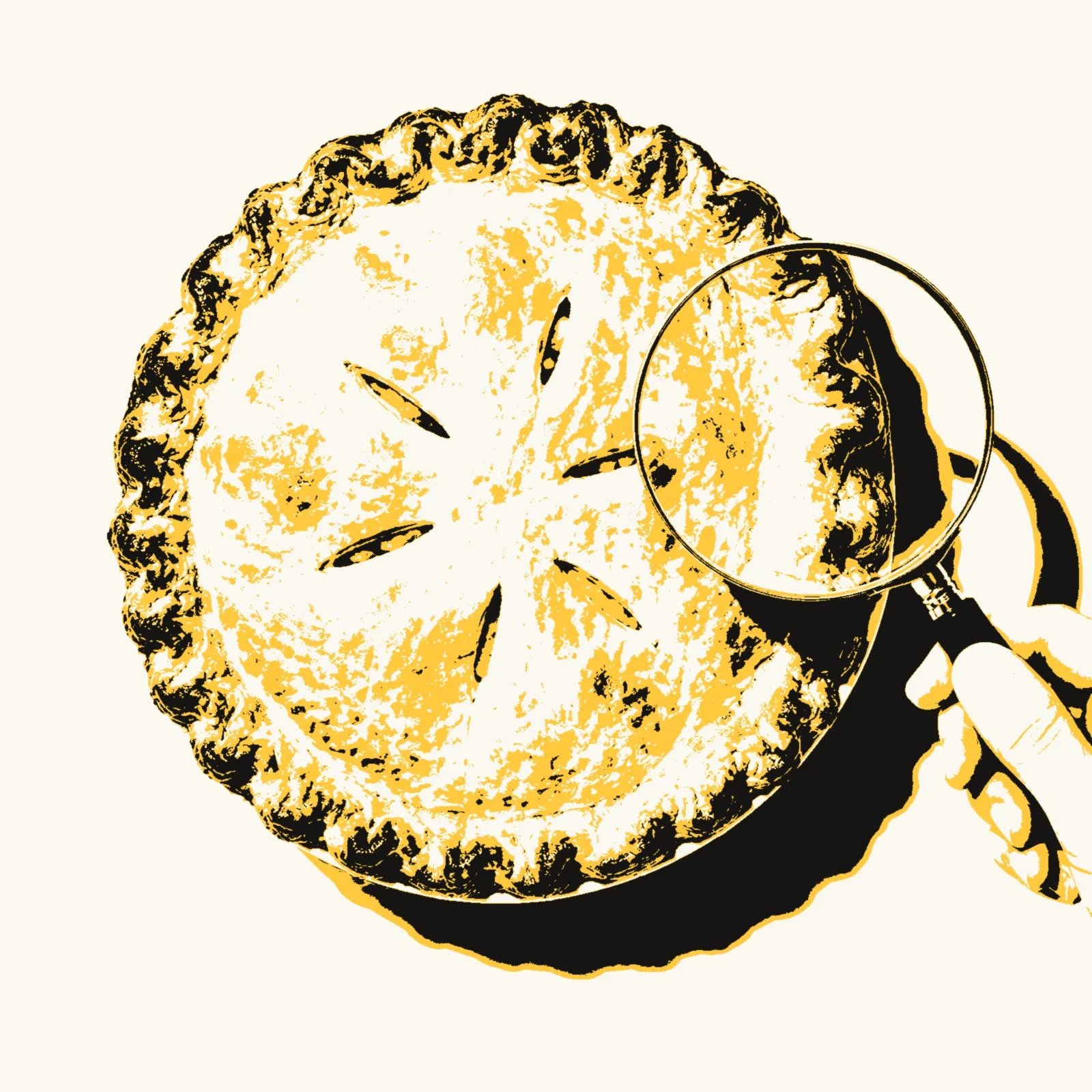
Here is our five-point inspection, done in the time it takes a kopi to cool enough to drink.
- Colour. Look for even gold from rim to centre. A pale, matte patch in the middle of the lid suggests underbaking or a pie that steamed in its box.
- Weight in the hand. A pie that feels heavy for its size usually has a generous filling. A surprisingly light pie may hide an air gap under the lid.
- Gravy at the rim. A clean seam means the seal held. Dried gravy trails down the wall mean the filling bubbled over, often from overfilling or a seal that opened in the heat.
- The tap test. Flick the lid gently with a fingernail. A crisp, hollow tick means dry, flaky pastry. A dull, soft thud means the lid has absorbed moisture and wants a few minutes of dry heat.
- The base check. Lift the pie by its edge. A base that stays flat and firm is a happy base. A base that sags in the middle needs a rack and a hot oven before anything else.
What is inside a Don chicken pie?
The Don chicken pie is DonChef’s Original Chicken Pie. It follows the recipe Chef Don Lim, the founder of Don Pie, created in 1983, and Chicken Pie Kitchen & Don Signature Crab, which he co-founded, bakes it today under the DonChef name. Going by the maker’s own descriptions and published reviews, the anatomy looks like this:
- Crust: a golden, flaky crust, with the dough made in-house. Reviewers describe the pastry in different ways, so we do not call it puff or shortcrust.
- Chicken: tender chunks rather than shreds. One food blog reported boneless chicken leg meat.
- Potato: soft cubes that bulk out the filling and drink up the gravy.
- Vegetables: the maker says vegetables; reviewers mention peas and carrots.
- Seasoning: a spice blend the kitchen keeps to itself.
- Egg: half a hard-boiled egg, which the kitchen calls its signature.
That is the classic old-school Singapore line-up, and it is a style with its own entry in the international record: see chicken pie in Singapore on chickenpie.net. The kitchen’s own anatomy of the original Don chicken pie walks through the same parts from the baker’s side, including the crimp and the same-day bake. Our complete Don chicken pie guide covers flavours, sizes and where the pie fits in Chef Don Lim’s story.
Chicken pie anatomy cheat sheet: what goes wrong, and how do you fix it?
| Layer | Job | Failure mode | Fix |
|---|---|---|---|
| Lid | Seals the filling in, traps steam while baking, gives the first crisp bite | Pale centre, or burnt before the filling is hot | Moderate heat; tent loosely with foil once golden |
| Rim and seal | Joins lid to wall and keeps the gravy inside | Gravy leaks out and scorches down the side | Do not overfill; crimp firmly; chill the pie before baking |
| Wall | Holds the pie upright from paper bag to mouth | Raw or gummy on the inside face | Bake fully; give pies space in the oven or basket |
| Base | Carries the filling and fights sogginess | Soft, wet or greasy | Bake and reheat on a hot tray or rack; rest on a rack, not a plate |
| Half a boiled egg | Richness, contrast, the signature cross-section | Grey-green ring, rubbery white, a cool spot when reheating | Do not overboil; reheat gently; check the centre near the egg |
| Chicken chunks | The main event: bite and substance | Dry or stringy meat | Use thigh at home; reheat once only |
| Potato | Body, and a sponge for the gravy | Collapses into mash | Cook the cubes until just tender before filling |
| Peas and carrot | Colour, sweetness, freshness | Grey peas, hard carrot | Add peas late; dice carrot small and cook it through |
| Gravy | Carries the seasoning and binds the filling | Too thin (soggy base) or too thick (pasty) | Cool the filling fully before it goes in; aim for a sauce that clings |
Which layer should a home baker fix first?
The base, every time. A brilliant filling in a soggy base is a sad pie. A decent filling in a crisp base is a happy one. If you bake your own, start with a dough that can take a wet filling: our shortcrust pastry from scratch recipe is built to hold its shape. Cool the filling completely before it goes in, bake on a preheated tray, and let the pie rest on a rack. Get those right and the other eight layers mostly behave.
Quick questions
What are the layers of a chicken pie?
A chicken pie has a pastry shell of lid, rim, wall and base wrapped around a filling. In the old-school Singapore style the filling is chicken chunks, potato, peas and carrot in a creamy gravy, plus half a hard-boiled egg. Each layer has a job, from sealing in steam to carrying the filling.
Why is the bottom of a chicken pie always the soggiest part?
The base sits under the wet filling, rests on a tray and heats last, so moisture settles into it from above while heat struggles to reach it from below. Bake or reheat on a rack or a preheated tray, and rest the pie on a rack rather than a plate.
Is the Don chicken pie made with puff pastry or shortcrust?
The maker describes a golden, flaky pastry made in-house. Reviewers describe the crust in different ways, so we do not label it as puff or shortcrust. For eating purposes, what matters is a flaky lid and a crust sturdy enough to carry a generous filling.
Where should I check the temperature of a reheated chicken pie with egg?
Check the centre of the filling, close to the egg. The dense egg warms more slowly than the gravy around it, so the area beside it is often the last part to heat. Aim for piping hot all the way through, or 75C at the centre with a probe thermometer.