The chicken pie lab: every experiment we have run
One pie, eight questions, a lot of crumbs. Each experiment has a hypothesis, a method you can copy, what happened, and a verdict stamp you can flip.
Filter experiments by tag
Showing all 8 experiments.
EXP-01: We Reheated One Chicken Pie Five Ways
Hypothesis: Dry heat from an oven, air fryer or toaster oven will re-crisp the pastry the fridge softened, while the microwave will heat the filling fastest and wreck the crust. A microwave start with a short dry-heat finish might get the best of both.
Verdict, EXP-01
Oven wins the crust
Our pick for the best-tasting pie is the oven, if you have the time. On a weekday we happily take the air fryer, and the microwave-then-crisp combo is our favourite move in an office pantry that has both machines.
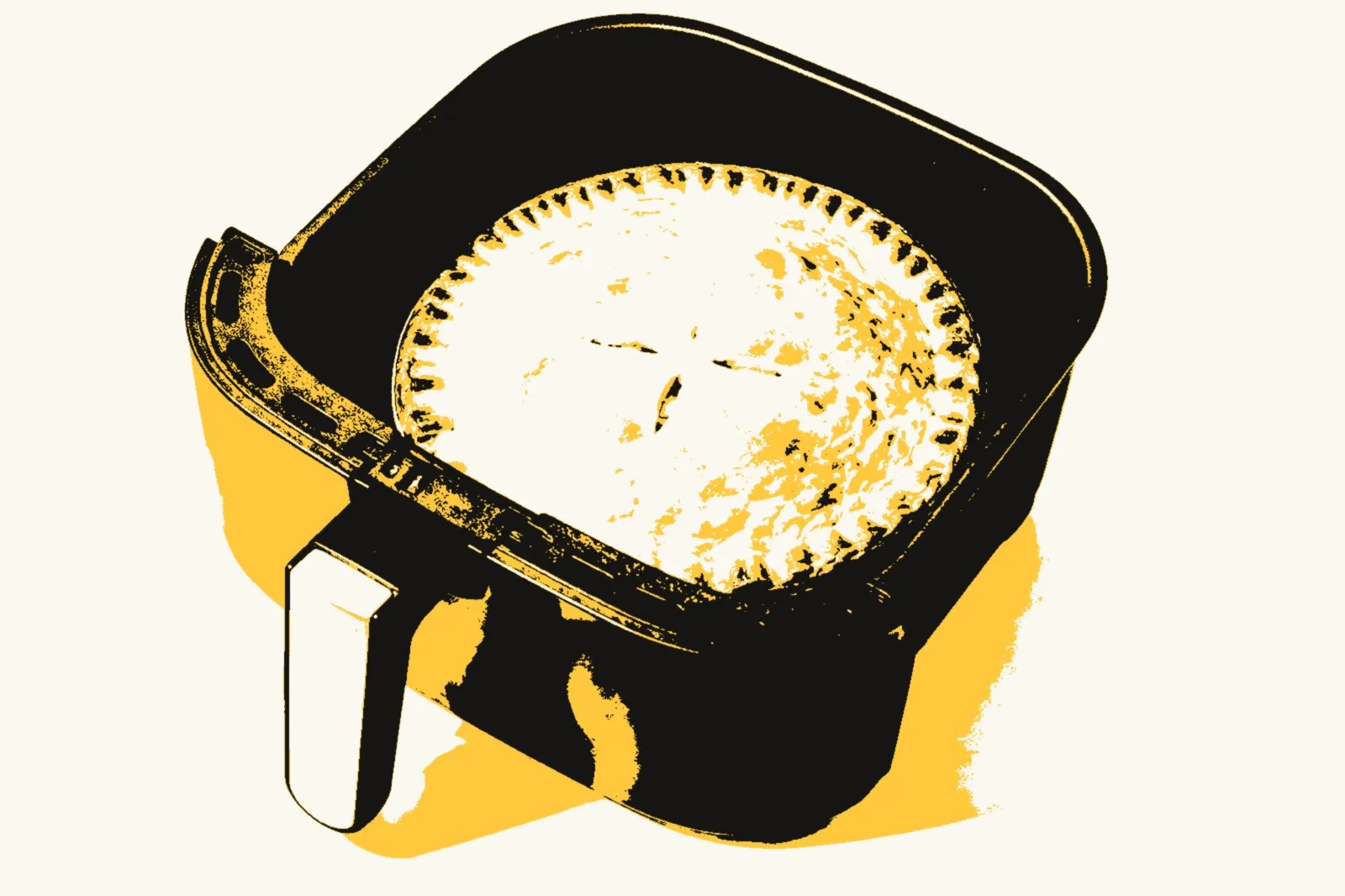
EXP-02: Air Fryer Chicken Pie: Two Stages Beat One Blast
Hypothesis: A single blast at 200C will brown the lid before the centre warms, and a long low setting will heat through without crisping. Splitting the job into a gentle stage and a hot stage, as the maker suggests, should do both.
Verdict, EXP-02
Two stages, every time
We think the maker's two-stage setting is the one to beat. Add a foil collar if your crimp browns fast, lift the pie on a rack, and save whole pies for the oven.
EXP-03: Can You Freeze a Chicken Pie? We Froze, Thawed and Reheated
Hypothesis: Pastry should survive the freezer well, but the wetter parts of the filling may not: we expected the hard-boiled egg and the potato to change texture. A fridge thaw should reheat more evenly than going straight from frozen.
Verdict, EXP-03
Thaw it overnight
We prefer the overnight fridge thaw: same pastry, more even heat, less hovering at dinnertime. From frozen is a perfectly good plan B, and if rubbery egg bothers you, eat your pies fresh and freeze only the spares.
EXP-04: Microwave Chicken Pie Rescue: From Soggy to Crisp in Two Steps
Hypothesis: Microwaving will heat the filling but steam the pastry from the inside. A short dry-heat finish straight after the microwave should drive that steam back out and bring the crust back.
Verdict, EXP-04
Zap, then crisp
In our opinion, a microwave should start a pie's reheat, never finish it. Bursts for the heat, then a dry pan or air fryer for the crust, is the best fast pie we know.
EXP-05: How to Keep a Chicken Pie's Base Crisp for a Picnic
Hypothesis: Most soggy picnic pies are made soggy by their packaging, not by time. Trapped steam and condensation, more than the filling itself, should be the main culprit.
Verdict, EXP-05
Cool it, paper it
In our opinion the biggest win is patience: a fully cooled pie in paper or a vented box beats any clever gadget. If you want a hot pie at lunch, reheat it at the office rather than packing it hot.
EXP-06: What Goes With Chicken Pie? Our Sauce and Drink Line-Up
Hypothesis: A rich, buttery pie with a mild, savoury filling wants something sharp, hot or bitter beside it. Sweet sauces should please kids, while acidic and spicy ones should make the last bite taste as good as the first.
Verdict, EXP-06
Chilli on the side
Our pick is chilli sauce on the side with a kopi or an iced lemon tea, but this is the most personal page on the site. The mustard faction in our crew wants it noted that they disagree.
EXP-07: Day-Two Chicken Pie: Six Ways to Eat Yesterday's Pie
Hypothesis: A pie that has spent a night in the fridge has a softer lid and a firm, set filling. Instead of fighting that, some dishes can use it: the set filling as a sandwich spread, the re-crisped pastry as a crunchy topping.
Verdict, EXP-07
Toastie for the win
Our favourite day-two move is the pie toastie, with the fried-egg pie a close second. If you only have ten minutes, though, a proper reheat still beats any trick.
EXP-08: Serving Chicken Pies Warm for a Crowd
Hypothesis: A home oven can reheat a party's worth of pies if they go in as two well-spaced trays and swap shelves halfway. A loose foil tent in a low oven should then keep them hot without turning the pastry to mush.
Verdict, EXP-08
Two trays, one swap
Our opinion: the halfway swap and the foil tent matter more than any exact time. Reheat in waves if you can, so the last guests get pies as good as the first.
How do we run a chicken pie experiment?
A donchickenpie.com experiment is a home-kitchen test with one question, one change at a time, and an honest write-up. We start from a pie the way most people buy it: a personal Don chicken pie, bought fresh, eaten or chilled according to the kitchen's own advice. Then we change one thing, such as the appliance, the starting temperature or the wrapping, and compare.
We write down what a cook can see, hear, smell and taste: whether the base holds flat, whether the lid shatters or bends, whether the centre steams when cut, where the hot spots are. We do not publish thermometer readings, crispness scores or sample sizes, because we are a few home cooks with ordinary ovens, and numbers would suggest a precision we do not have. Where a temperature or time appears, it is a setting you can copy, and it follows standard food-safety practice: reheat until piping hot, 75C at the centre if you have a probe.
Verdicts are opinions. They are stamped, flippable and arguable. If your air fryer disagrees with ours, your air fryer wins in your kitchen.
Which experiment should you read first?
- EXP-01, reheating methods compared: the master test that the others build on.
- EXP-02, air fryer settings: the kitchen's two-stage setting against the alternatives.
- EXP-03, freezing and thawing: if you buy pies in bulk.
Want the quick version for your appliance? Use the reheat calculator, which turns these experiments and the kitchen's published advice into a temperature, a time and a method.