Serving Chicken Pies Warm for a Crowd
Hypothesis
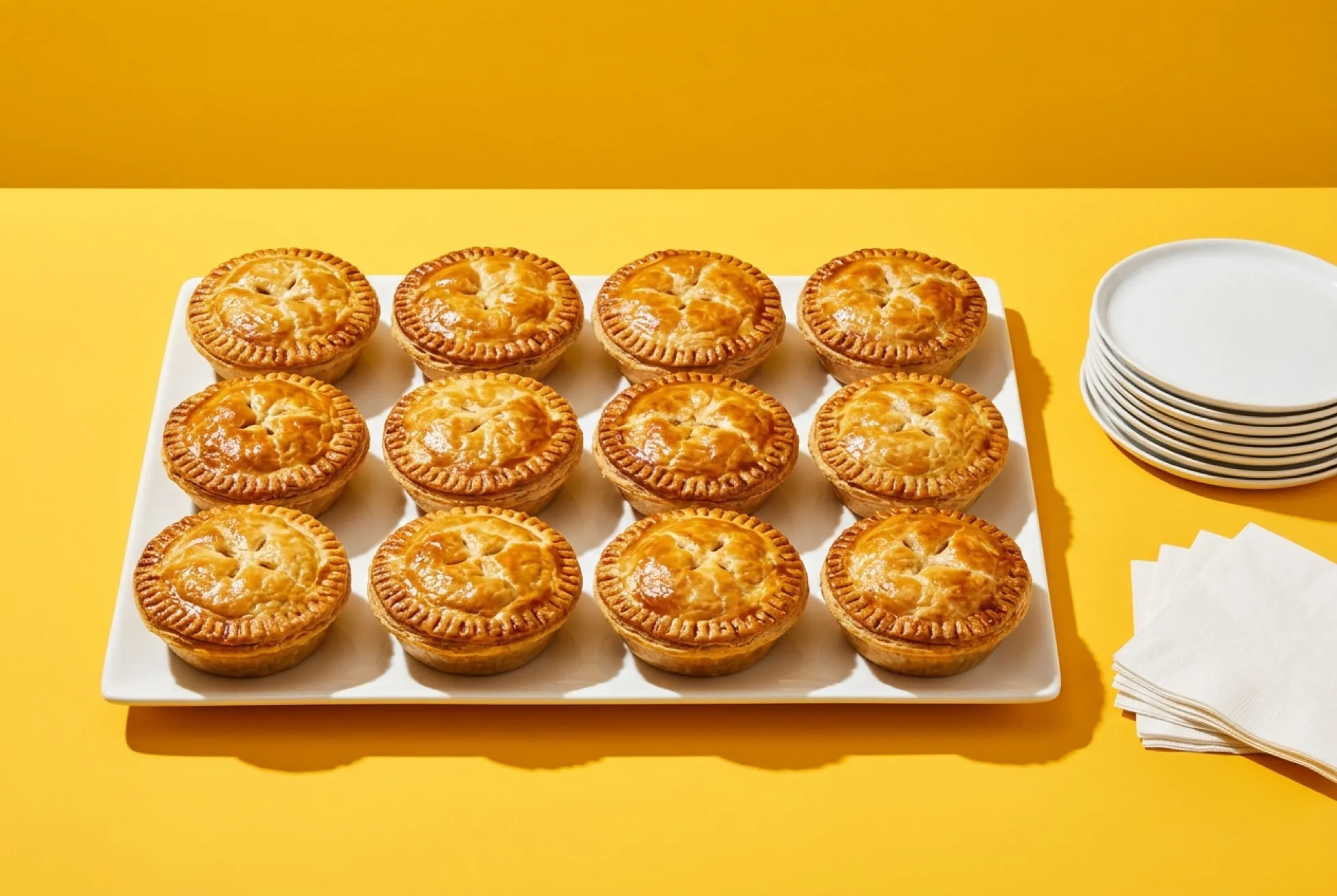
A home oven can reheat a party's worth of pies if they go in as two well-spaced trays and swap shelves halfway. A loose foil tent in a low oven should then keep them hot without turning the pastry to mush.
Kit
- Chilled personal chicken pies, enough for the party
- Two chilled whole chicken pies
- Home oven with two shelves
- Two large baking trays, lined with baking paper
- Foil
- Oven gloves
- Probe thermometer
- Long serrated knife and a pie server
- Kitchen timer
Method
- We preheated the oven to 175C (about 155C with the fan on) and gave it a full 15 minutes so both shelves were properly hot.
- We spaced the personal pies on two trays with at least a finger's width between them, so hot air could reach every side.
- Both trays went in together, one on the upper-middle shelf and one on the lower-middle shelf, and we started the timer.
- Halfway through, we swapped the trays between shelves and turned each one back to front.
- From 25 minutes we probed the pies in the middle of each tray first, and gave the trays more time until every pie we checked reached 75C at the centre.
- In a second wave, the whole pies went in on their own tray, loosely covered with foil, at 170C for 30-45 minutes, with the foil off for the last 10 minutes.
- To hold, we turned the oven down to its lowest setting, at least 60C, opened the door briefly to let it cool, and tented the finished pies loosely with foil.
- We cut one whole pie straight out of the oven and rested the other for 10 minutes, then cut both into six slices with a serrated knife, wiping the blade between cuts.
What happened
Two trays
Before the swap, the top tray was clearly browner and the pies at the back of each tray were darker than those at the front. The halfway swap evened that out.
Crowded middle
Pies in the middle of a tray lagged behind the ones at the edges. Probing the middle pies first meant we never served a lukewarm one.
Holding warm
Under a loose foil tent in a low oven the pies stayed hot. The lids softened the longer they waited, so the first trays out were the best ones.
Whole pies
The foil kept the lid from overbrowning while the deep centre caught up. Whole pies took clearly longer than personal ones.
Cutting
The rested pie cut into tidy slices with the gravy staying put. The pie cut straight from the oven slumped and the gravy ran across the board.
Observations are qualitative: what a cook can see, hear and taste. We do not publish thermometer readings or scores we cannot stand behind. Your oven will differ, so run it yourself.
Verdict
Two trays, one swap
Our opinion: Our opinion: the halfway swap and the foil tent matter more than any exact time. Reheat in waves if you can, so the last guests get pies as good as the first.
One perfect pie is a cooking problem. Twenty perfect pies at the same moment is a logistics problem. Birthday parties, office potlucks, a Christmas or Chinese New Year open house, a family gathering where three aunties have opinions about pastry: at some point you will need to get 10-20 personal pies, or a few whole ones, hot and crisp in an ordinary home oven. This is how we would do it.
Why does a full oven reheat unevenly?
An oven full of cold pies behaves very differently from an oven with one pie in it.
- Cold food soaks up heat. A tray of chilled pies pulls a lot of heat out of the oven air the moment it goes in, and the oven needs time to recover. Opening the door to load two trays makes it worse.
- Shelves are not equal. In most home ovens the top shelf gets more radiant heat from the roof of the oven and any top element, and the back of the oven usually runs hotter than the door end.
- Pies shade each other. Pies packed tightly together block the hot air from reaching their sides. The ones in the middle of the tray are surrounded by cold neighbours and heat last.
None of this is a fault. It is just physics in a box, and the fixes are simple: preheat properly, space the pies out, and swap the trays halfway.
How many pies fit in a home oven at once?
As many as fit with a finger’s width of space around each one, on two trays, and no more. Squeezing in a third tray or packing pies edge to edge slows everything down and guarantees lukewarm pies in the middle. If your guest list is bigger than two trays, reheat in waves, and if it is much bigger than that, a bulk order timed to arrive in batches may beat any home oven. The first wave gets eaten while the second wave heats, which also means nobody is stuck with the soft, long-held pies from the bottom of the pile.
Personal pies are the easier party food. Each guest gets a whole pie with its own crimp, no cutting needed. Whole pies look generous on a table and take longer to reheat. Our comparison of personal versus whole Don chicken pies helps with the ordering decision.
What does a party reheating timeline look like?
Here is our plan for one oven and two waves, counting backwards from when you want people eating.
| When | What to do |
|---|---|
| 50 minutes before | Preheat the oven to 170-180C (about 20C lower with a fan). Line two trays. Pies stay in the fridge. |
| 35 minutes before | Wave one in: two trays of spaced-out personal pies. |
| About 20 minutes before | Swap the shelves and turn each tray back to front. |
| About 10 minutes before | Probe the middle pies on each tray. Give more time if any are under 75C. |
| Serving time | Wave one out and onto the table. Wave two in: whole pies under loose foil, or more personal pies. |
| About 30-45 minutes later | Wave two out. Whole pies rest 10 minutes, then slice. Turn the oven to its lowest setting for anything that needs holding. |
The times are starting points. Ovens vary a lot, which is why the probe thermometer has the final say, not the clock.
How do you keep chicken pies warm without making them soggy?
Hot food is safe when it stays at 60C or above. Below that, it is in the danger zone of roughly 5-60C, and the usual 2-hour limit for food sitting out starts to apply.
The best way to hold pies at home is in the oven at its lowest setting, as long as that setting is at least 60C, with a loose foil tent over the trays. Loose is the key word. A tight foil wrap traps steam and softens the lids. A loose tent keeps the heat in while letting moisture escape.
A note on tea towels, because the internet loves them: never put a tea towel in the oven, at any temperature. It is a fire risk. Some people cover a tray of pies with a tea towel on the counter to keep them warm. That traps steam, softens the pastry, and does not keep the pies above 60C for long, so they quickly fall under the 2-hour room-temperature rule. Use foil in the oven instead.
Even with perfect holding, pastry softens the longer it waits. Plan to serve within the hour if you can, which is another reason to work in waves.
How do you cut a whole chicken pie into six neat slices?
- Rest it. Give a whole pie 10 minutes out of the oven. The gravy thickens as it cools slightly, so it stays inside the slice instead of flooding the board.
- Use a serrated knife. Saw gently through the lid first, then press straight down through the filling and base.
- Think clock face. Cut from the centre to 12 o’clock, then 2, 4, 6, 8 and 10. Six even slices, no maths required.
- Wipe the blade. A quick wipe with a damp cloth between cuts keeps the edges clean.
- Sacrifice the first slice. Slide a pie server under it and lift. The first slice is always the messiest. The cook eats it.
If a cut lands on a piece of egg, keep sawing gently rather than pressing, or the egg will skid sideways.
How to reproduce this at home
- Preheat fully and space your pies with room around each one.
- Run two trays, swap shelves and turn them halfway.
- Probe the middle pies first, aiming for 75C.
- Work in waves for a big crowd.
- Hold at 60C or above under loose foil, never a tea towel.
- Rest whole pies before cutting.
Our reheat calculator has settings for single pies and other appliances, and if you are ordering a party’s worth, see where to buy a Don chicken pie.
What would we change next time?
- Test a buffet warming tray. A proper hot-holding tray might beat a low oven for keeping pies hot on the table, but only if it holds them above 60C.
- Bake our own minis. Smaller pies reheat faster and serve easier. Our mini party chicken pies recipe is the obvious next trial.
- Try a third wave with the fan on. A fan oven should even out the shelves better, which might make the halfway swap less critical.
EXP-08 is one of our chicken pie experiments, run on the Don chicken pie. For the settings without the story, use the chicken pie reheat calculator; for the pie itself, start with the Don chicken pie guide.
Sources we leaned on
Keep poking at this pie
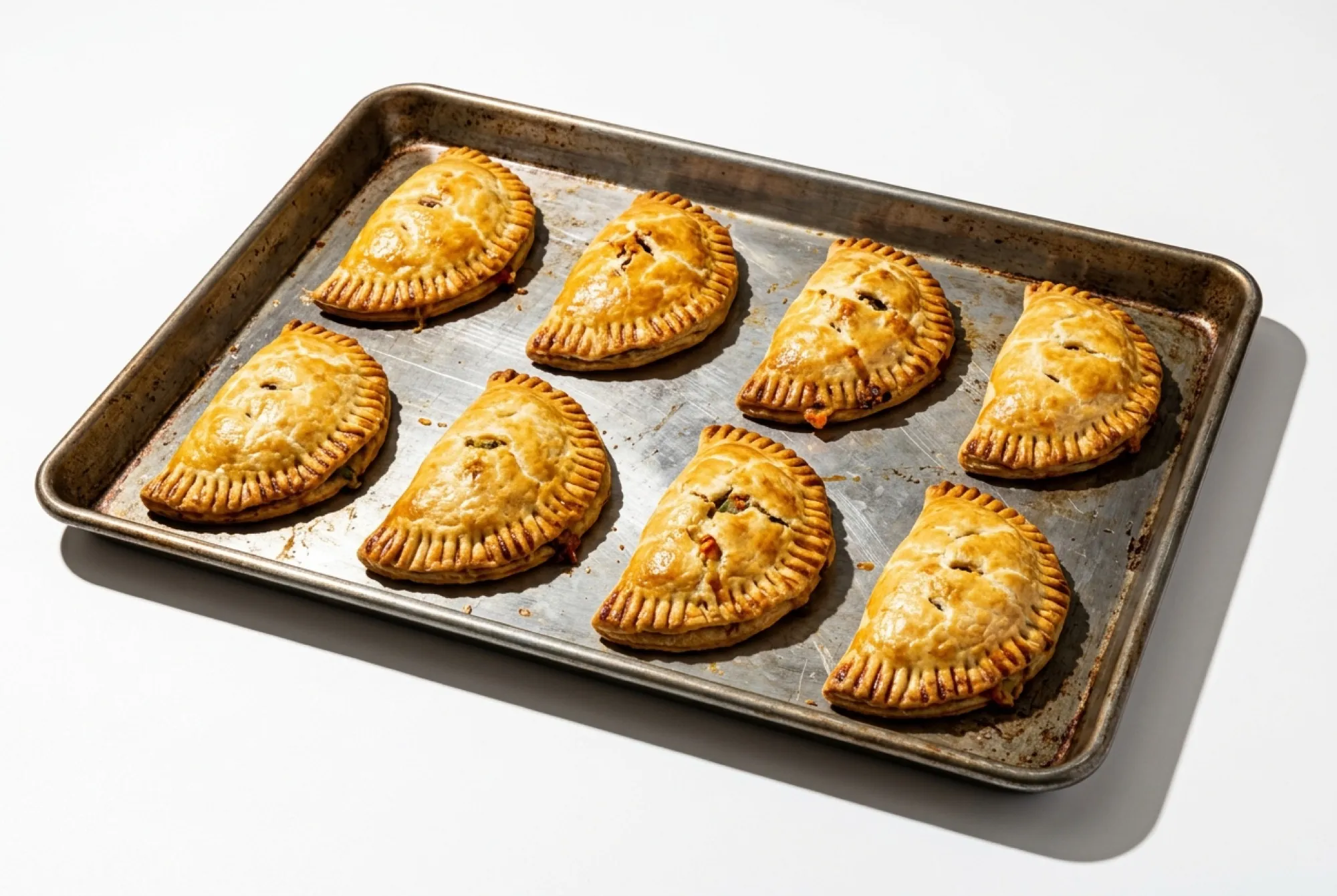 RecipeMini Party Chicken Pies (Freeze Now, Bake From Frozen)
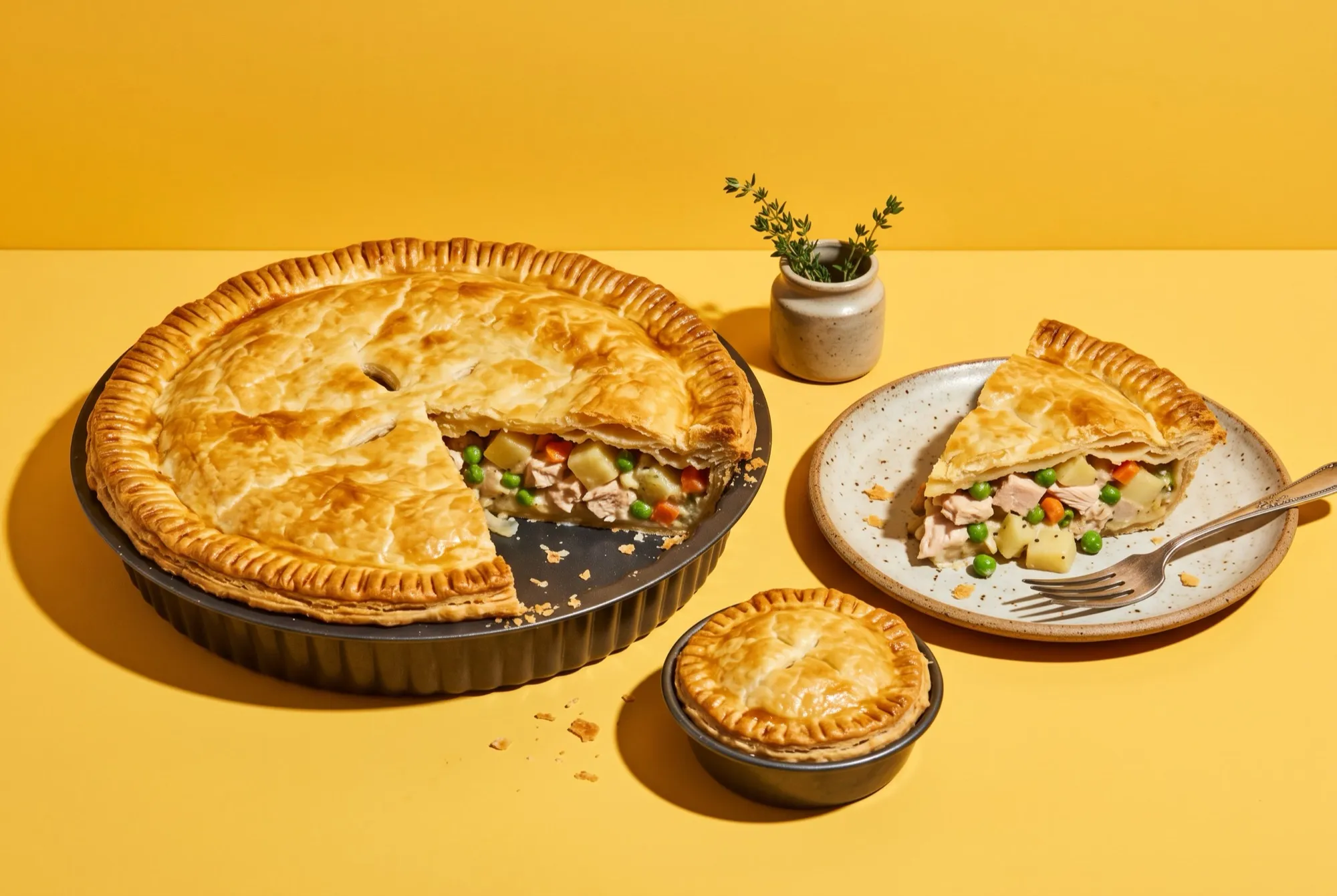 Buying notePersonal or Whole Don Chicken Pie: Which Should You Buy?
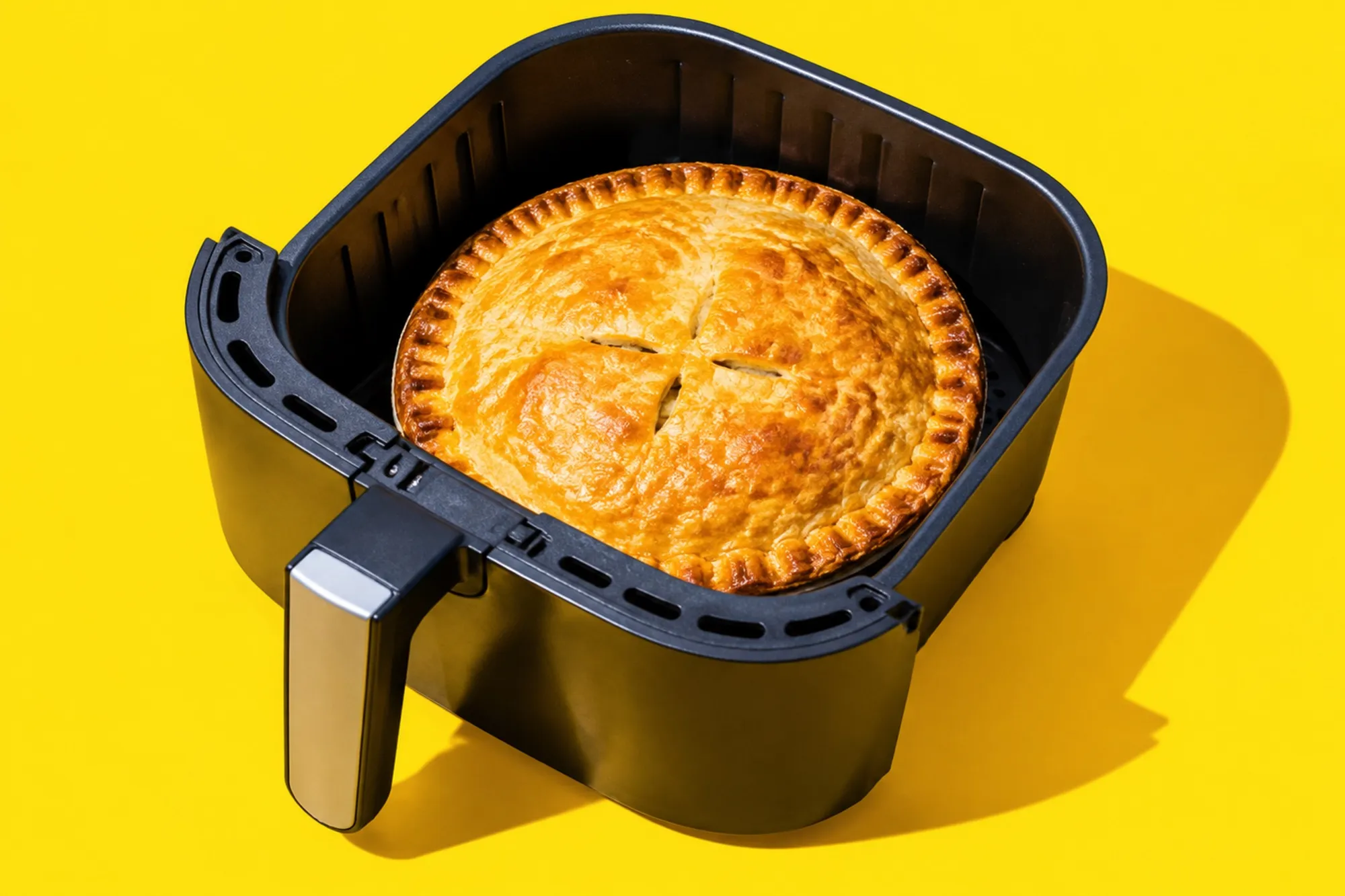 Calculator and guideHow to Reheat Chicken Pie: Oven, Air Fryer, Microwave
- Buying noteWhere to buy a Don chicken pie
Further reading elsewhere
- donpieshop.com's party pie calculator: works out personal and whole pie quantities for a headcount.