All-Butter Shortcrust Pastry From Scratch (Tropical Kitchen Edition)
- Prep
- 20 min
- Cook
- 22 min
- Chill / rest
- 1 h 30 min
- Makes
- About 700g pastry (6 personal pies with lids, or one 23cm double-crust pie)
- Oven
- 200C (for blind baking)
Ingredients
servings
Base recipe: About 700g pastry (6 personal pies with lids, or one 23cm double-crust pie). Scaling changes quantities only; check tin sizes and bake times.
Pastry
- 375g plain flour, chilled for 30 minutes, plus extra for rolling
- 3/4 tsp fine salt
- 225g cold unsalted butter, 1cm cubes, frozen for 15 minutes
- 1 egg yolk, cold
- 75ml ice-cold water, add the last 15ml only if needed
For blind baking (optional)
- 1 egg white, lightly beaten, to seal the base
- 500g baking beans or uncooked rice, reusable for blind baking only
Method
0 of 8 steps ticked
01 Get everything cold
Put the flour in the fridge for 30 minutes and the butter cubes in the freezer for 15 minutes. Add ice cubes to a jug of water. Switch on the aircon if you have it, and if your worktop is warm, chill a large tray to work on.
02 Rub in the butter
Whisk the flour and salt in a wide bowl. Add the butter and rub it in quickly with your fingertips, lifting the flour as you go, until the mix looks like coarse breadcrumbs with a few pea-sized bits of butter left. This takes 3-4 minutes. If the butter turns soft or shiny, put the bowl in the fridge for 10 minutes. A food processor works too: pulse in short bursts, 8-10 pulses, and stop at the breadcrumb stage.
03 Bind with yolk and water
Beat the egg yolk with 60ml of the ice water (leave the ice cubes behind) and sprinkle it over the crumbs. Stir with a table knife until clumps form. Squeeze a handful: if the dough holds together, stop; if it crumbles, add the remaining water a teaspoon at a time. In humid weather you will often need less water than you expect.
04 Bring together without kneading
Tip the clumps onto the worktop and press them into a mass with the heel of your hand, using two or three short pushes. Do not knead. Divide into two discs, one slightly larger (about 60:40 if you are making bases and lids), flatten each to about 2cm thick and wrap tightly.
05 Chill for at least an hour
Refrigerate the discs for at least 1 hour, or up to 2 days. In a Singapore kitchen without aircon, give the dough the full hour even if it feels firm sooner, because the butter in the centre warms more slowly than the outside.
06 Roll between baking paper
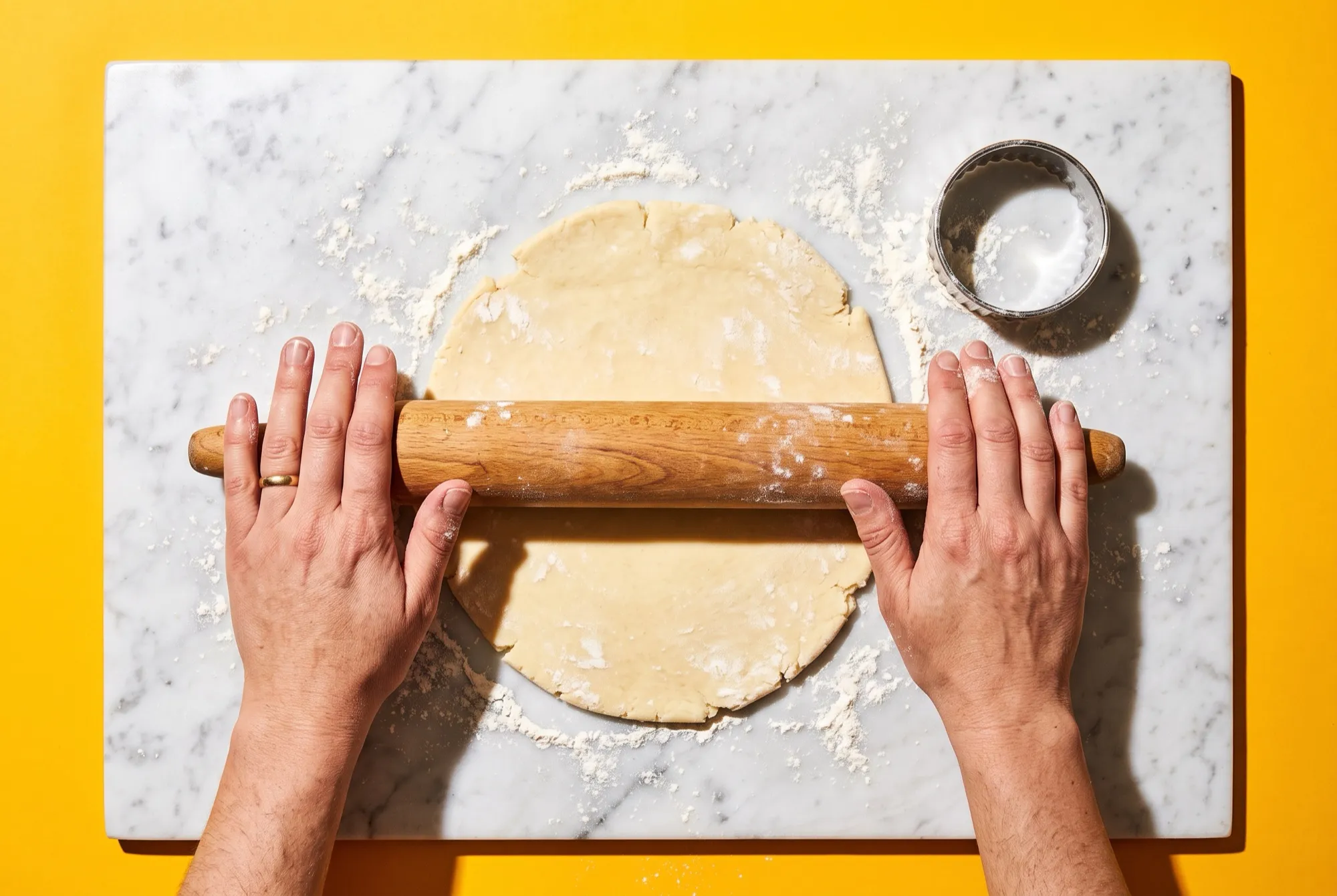
Let the dough sit for 5 minutes so it does not crack, then roll it between two sheets of baking paper to about 3mm thick, giving it a quarter turn every few rolls. Peel off the top sheet, flip the pastry over your tin and peel off the second sheet. Ease the pastry into the corners by lifting the edge and letting it drop; do not stretch it.
07 Chill the lined tins
Trim the edges, leaving a little overhang, and chill the lined tins for 20-30 minutes. This second chill relaxes the gluten and is the main defence against shrinking.
08 Blind bake if you want a crisp base (optional)
Heat the oven to 200C with a baking tray inside. Line the chilled pastry case with crumpled baking paper and fill with baking beans or rice. Bake for 15 minutes, lift out the paper and beans, brush the base with egg white and bake for 5-7 minutes more until dry and pale golden. Cool before filling with cold filling.
Kitchen-nerd tips
- If the dough cracks when rolled, it is too cold or too dry. Wait 5 minutes, or patch it with a scrap and a dab of water.
- Weigh the flour. Cups vary too much for pastry.
- Keep pastry scraps, press them together, chill and use them for decorative leaves or a mini pie.
- A metal pie tin conducts heat better than ceramic and gives a crisper base.
What makes shortcrust “short”?
Shortcrust is short because fat gets in the way of gluten. When you rub cold butter into flour (the technique bakers call rubbing in), the butter coats the flour particles. Coated flour cannot link up into the long, stretchy gluten strands that make bread chewy, so the baked pastry snaps and crumbles instead of bending. “Short” is an old baking word for exactly that crumbly tenderness.
The little lumps of butter you leave in the crumbs do a second job. In a hot oven, the water in those lumps turns to steam and opens tiny pockets, which is why good shortcrust has a faint flakiness rather than a biscuit-dense crumb. This is also why the butter must stay cold: once it melts into the flour before baking, you lose both the tenderness and the flake.
The egg yolk adds richness, colour and a little structure, which helps a base hold a heavy, saucy chicken filling without cracking. The salt matters more than it looks. Unsalted pastry tastes flat next to a well-seasoned filling.
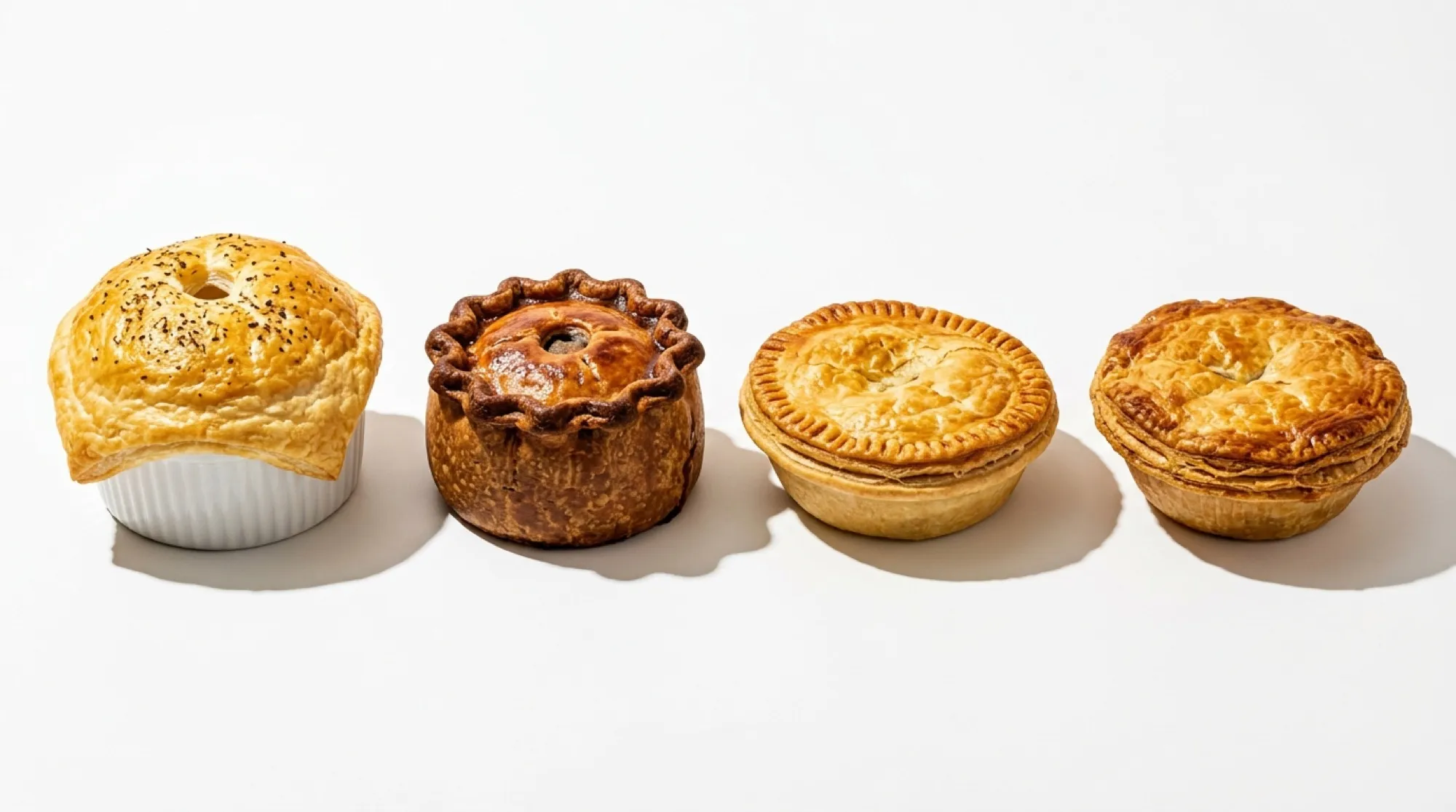
A note on the pie this site is obsessed with: we are not claiming this is how the Don chicken pie crust is made. Descriptions of that golden, flaky crust differ, and we do not know the recipe. This is simply a reliable all-butter shortcrust for savoury pies at home. If you want to compare crust styles across pie traditions, our guide to chicken pie styles compared lays them out side by side.
Why is pastry harder to make in Singapore?
Three things work against you in a tropical kitchen:
- Heat. Butter starts to soften well below a typical Singapore room temperature on a non-aircon afternoon. Warm hands make it worse.
- Humidity. Flour stored in a humid kitchen has already absorbed some moisture from the air, so it needs less water to come together. Follow a recipe written for a dry winter kitchen and you will add too much, and wet dough bakes tough and shrinks.
- Time. Everything softens faster, so the window for rolling is shorter.
The fixes are simple. Chill the flour as well as the butter. Freeze the cubed butter for 15 minutes. Turn the aircon on and give it ten minutes before you start. Roll between baking paper so your hands touch the dough less. Chill longer than the recipe in an old British cookbook tells you, and chill again after lining the tins. If the dough goes soft at any point, stop and put it back in the fridge. Nothing about pastry rewards rushing. Laminated doughs are fussier still: if you ever graduate from shortcrust to puff, read up on laminating puff pastry in Singapore heat before you start folding.
Why does pastry shrink in the tin?
Pastry shrinks because the gluten strands were stretched and then snap back in the heat. Stretching happens when you pull the pastry into the tin instead of lifting and dropping it, or when you roll it hard in one direction. The two-stage chill in this recipe (after mixing and again after lining) gives the gluten time to relax. Leaving a small overhang and trimming after baking also helps for open tarts, though for lidded pies a firm crimp keeps everything in place.
Do you need to blind bake for a chicken pie?
For a deep pie with a wet, creamy filling, a quick blind bake gives you the crispest base. For small personal pies with a thick, cold filling, baking on a preheated heavy tray on the lower shelf is usually enough. The egg white seal after blind baking works like a raincoat: it cooks into a thin layer that slows gravy from soaking in. If you only change one habit, make sure the filling going into the case is cold, which is the whole point of our make-ahead creamy chicken pie filling.
What can you substitute?
- Salted butter: use it and drop the added salt.
- Part ghee: replacing a quarter of the butter with chilled ghee gives a slightly crisper, nuttier crust. Ghee is softer when warm, so chill well.
- Vegetable shortening: a half-and-half mix with butter makes a more tender, less flavourful pastry that is a little easier to handle in heat.
- Wholemeal flour: swap up to a quarter of the plain flour. More than that and the pastry turns crumbly and hard to roll.
- No egg: replace the yolk with 15-20ml more ice water. The pastry will be a little paler and less sturdy.
We do not recommend a straight swap to gluten-free flour here. Gluten-free pastry needs its own tested recipe.
How long does shortcrust keep?
| Form | Fridge | Freezer |
|---|---|---|
| Wrapped dough discs | Up to 2 days | About 3 months |
| Lined, unbaked tins | Up to 1 day, covered | About 1 month, wrapped |
| Blind-baked cases | Best the same day | About 1 month in an airtight box |
Thaw frozen dough in the fridge overnight, not on the counter, so the butter stays cold and the dough does not sweat.
Once baked and filled, a chicken pie follows the usual rules for cooked food: refrigerate within 2 hours, eat within 3 days, and reheat until piping hot. For a full party-scale use of this dough, see our mini party chicken pies.
Shortcrust troubleshooting
| Problem | Likely cause | Fix |
|---|---|---|
| Tough, chewy pastry | Too much water, or overworked | Add water slowly; press together, never knead |
| Crumbly, will not roll | Too dry or too cold | Rest 5 minutes; add a teaspoon of water next time |
| Shrinks in the oven | Stretched or under-chilled | Lift and drop into the tin; chill lined tins 20-30 minutes |
| Greasy, heavy pastry | Butter melted before baking | Chill the flour and butter; work in a cool room |
| Soggy base | Warm filling or a cool oven floor | Cold filling, hot tray, lower shelf, or blind bake |
This recipe belongs to our chicken pie recipes from a Singapore home kitchen. Curious about the pie that started it all? Read the complete Don chicken pie guide, or explore chicken pie anatomy layer by layer.