Can You Freeze a Chicken Pie? We Froze, Thawed and Reheated
Hypothesis
Pastry should survive the freezer well, but the wetter parts of the filling may not: we expected the hard-boiled egg and the potato to change texture. A fridge thaw should reheat more evenly than going straight from frozen.
Kit
- Personal chicken pies, baked and cooled completely
- Cling film and foil, or zip-top freezer bags
- Marker pen and labels
- Freezer running at -18C or colder
- Fridge
- Oven, baking tray and foil
- Probe thermometer
- A chilled, never-frozen pie as the control
Method
- We cooled the pies on a wire rack, uncovered, then chilled them in the fridge, keeping their total time out of the fridge under 2 hours.
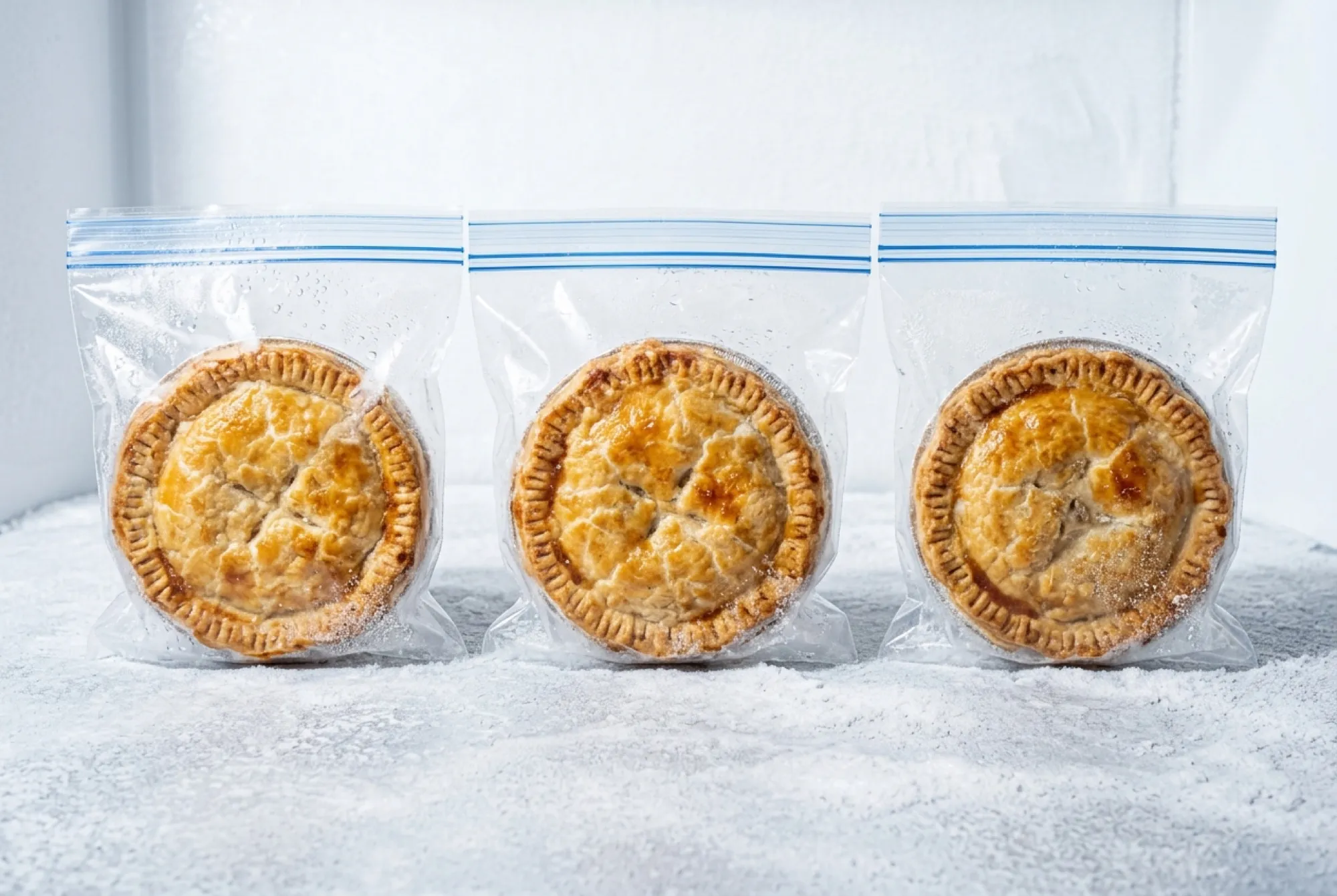
- We wrapped each pie tightly in cling film, then in foil, or slid it into a freezer bag with the air pressed out, labelled it with the date and froze it flat on a tray.
- Thawed route: we moved one pie to the fridge the night before, on a plate, and reheated it next day in a preheated oven at 170C for 20-30 minutes, as for a chilled pie.
- From-frozen route: we unwrapped a second pie, covered the top loosely with foil and heated it at 160C for 40-50 minutes, then removed the foil for the last 5-10 minutes to crisp the lid.
- We probed both centres for 75C and gave any pie that fell short more time, still covered.
- We reheated the never-frozen control pie in the oven alongside, then cut all three open and compared pastry, potato and egg.
What happened
Pastry
The golden, flaky crust came through the freezer in good shape on both routes. The thawed pie's lid crisped as well as the control's.
Potato
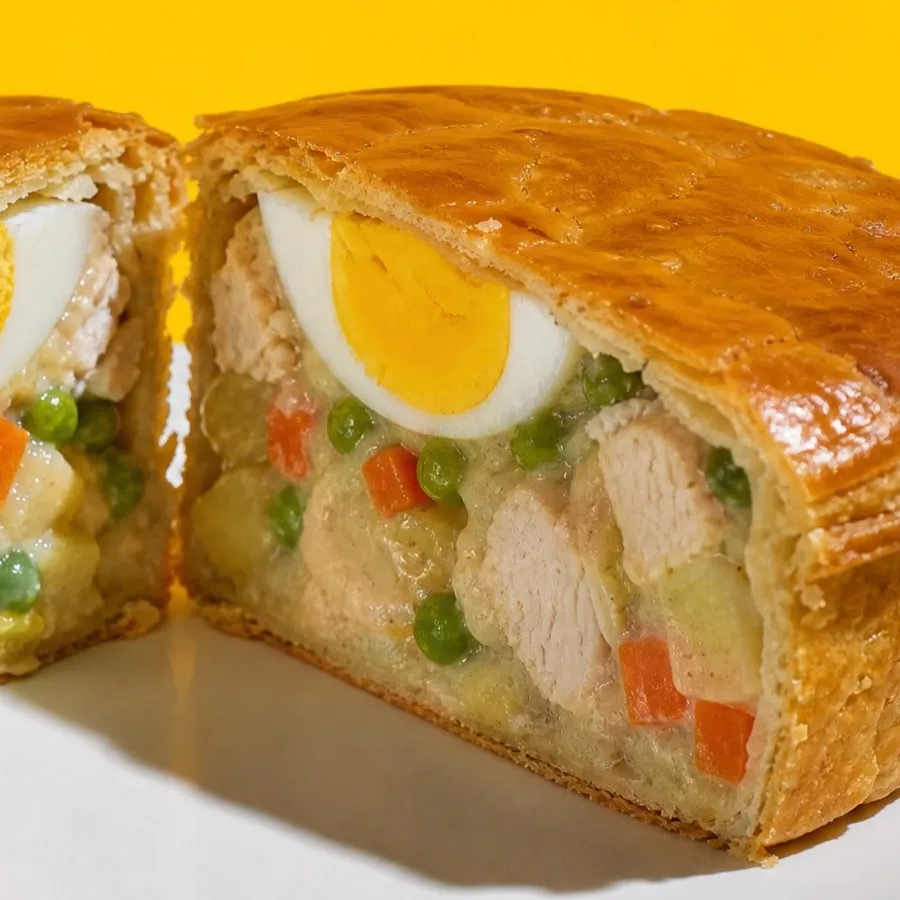
Slightly grainier and softer at the edges than in the control, a change home cooks commonly notice in frozen cooked potato. Nobody at the table complained.
Egg
The egg white was firmer and more rubbery than in the control, the classic freezer complaint about hard-boiled egg. The yolk was largely unbothered.
Thawed in the fridge
Even heat, centre hot in normal oven time, base dry. The closest thing to an ordinary reheated pie.
From frozen
Worked, but slow. The lid needed foil for most of the time or it would have overbrowned before the middle thawed, and the base was a touch softer from the melting ice.
Observations are qualitative: what a cook can see, hear and taste. We do not publish thermometer readings or scores we cannot stand behind. Your oven will differ, so run it yourself.
Verdict
Thaw it overnight
Our opinion: We prefer the overnight fridge thaw: same pastry, more even heat, less hovering at dinnertime. From frozen is a perfectly good plan B, and if rubbery egg bothers you, eat your pies fresh and freeze only the spares.
Every chicken pie household eventually faces the same maths problem: the box holds more pies than the family can eat in 3 days. The freezer is the obvious answer. The question we wanted to settle is what the freezer costs you, and which works better: thawing first or reheating straight from frozen.
Does the maker say you can freeze the pies?
Not that we could find. The maker’s own published guidance covers eating within 4 hours of purchase for best results, chilling for up to 3 days, and reheating in the oven or air fryer. The kitchen also describes a strict zero overnight pies policy and bakes in small batches, so these pies are made to be eaten fresh.
Everything on this page about freezing is therefore general food practice plus our own experiment, not the maker’s instruction. If you want pies designed for the freezer from the start, that is a different product: see this buyer’s guide to frozen pies in Singapore, with bake-from-frozen notes. One practical upshot: if you know a pie is heading for the freezer, freeze it on the day you buy it. A pie that has already used up its 3 days in the fridge is not a good candidate.
What does freezing actually do to a chicken pie?
Freezing turns water into ice, and ice crystals are sharp. In a home freezer, food freezes fairly slowly, which gives the crystals time to grow large. Large crystals pierce cell walls and push water out of gels. When the pie thaws, some of that water does not go back where it came from.
The different parts of a chicken pie react very differently, which is exactly what we saw on the cutting board.
| Part of the pie | What freezing does | What you notice |
|---|---|---|
| Pastry | Mostly flour and fat with little water, so ice does little damage | Comes back crisp after a proper reheat |
| Chicken | Some moisture loss from ruptured fibres | Slightly drier, still tender in gravy |
| Potato | Ice squeezes water out of the cooked starch | Can turn grainy or spongy at the edges |
| Hard-boiled egg white | The protein network tightens and weeps water | Firmer, rubbery, sometimes a little watery |
| Gravy | Starch-thickened sauces can separate slightly | Usually comes back together once hot |
The egg is the one that matters for a Singapore-style pie, because half a hard-boiled egg is a signature of the old-school chicken pie. We go into why it is there at all in why Singapore chicken pie has a boiled egg. Frozen egg white turning rubbery is one of the most widely reported freezer problems in home cooking, and our pies were no exception. Edible, just bouncier.
What is freezer burn, and how do you stop it?
Freezer burn is ice evaporating straight from the surface of the food into the air of the freezer, leaving dry, pale, leathery patches. The cure is no air. Wrap each pie tightly so the film touches the surface, then add a second layer of foil or a freezer bag with the air pressed out. Two layers beat one.
Why thaw in the fridge and not on the counter?
A pie thawing on a kitchen counter in Singapore warms from the outside in. The outer layers sit in the food-safety danger zone, roughly 5-60C, for hours while the middle is still frozen. A fridge keeps every part of the pie below 5C while it thaws, so nothing gets a head start on you.
Put the pie on a plate, still wrapped, overnight. Once thawed, reheat it within a day and treat it exactly like a chilled pie.
Why does reheating from frozen need a lower oven?
Melting ice soaks up a surprising amount of energy without getting any warmer. While the centre of a frozen pie is busy melting, its temperature sits stubbornly around zero, even as the lid races towards brown. A hot oven makes that gap worse.
A lower oven and a foil cover narrow the gap. The foil reflects heat away from the lid, and the gentler air gives the centre time to thaw and heat through. Only at the end does the foil come off so the lid can crisp. Expect it to take far longer than a chilled pie, and trust the probe, not the clock.
How to reproduce this at home
- Cool baked pies completely on a rack, then chill them. Keep the time out of the fridge under 2 hours.
- Wrap each pie individually: cling film tight to the surface, then foil or a freezer bag with the air pressed out.
- Label with the date and freeze flat. Use within about 3 months for best quality.
- For the thawed route, move a pie to the fridge the night before and reheat at 170-180C until piping hot.
- For the frozen route, unwrap, cover the top loosely with foil, heat at about 160C for 40-50 minutes, then uncover for the last 5-10 minutes.
- Check for 75C at the very centre, where the egg sits.
Two rules that are not optional: never thaw on the counter, and never refreeze a pie that has been thawed and reheated. Reheat once, eat it, done. Our guide on how long chicken pie lasts in the fridge covers the chilled side of the timeline, and the reheat calculator has frozen settings for other appliances.
What would we change next time?
- Freeze a whole pie. A whole pie is a much bigger block of filling. It will freeze more slowly, which means bigger ice crystals, and thaw more slowly too. We expect the potato and egg changes to be more obvious.
- Freeze faster. Spreading pies out on a cold metal tray in an empty freezer should freeze them quicker than stacking them in a crowded one. Faster freezing means smaller crystals, which might be kinder to the egg.
- Try the air fryer on a thawed pie. We suspect the maker’s two-stage air fryer setting will work fine on a fully thawed pie, with a few extra minutes at the low stage.
EXP-03 is one of our chicken pie experiments, run on the Don chicken pie. For the settings without the story, use the chicken pie reheat calculator; for the pie itself, start with the Don chicken pie guide.