We Reheated One Chicken Pie Five Ways
Hypothesis
Dry heat from an oven, air fryer or toaster oven will re-crisp the pastry the fridge softened, while the microwave will heat the filling fastest and wreck the crust. A microwave start with a short dry-heat finish might get the best of both.
Kit
- A chilled personal chicken pie per method, all from the same batch
- Conventional oven
- Air fryer
- Toaster oven
- Microwave with a power setting
- Baking tray, foil and a wire rack
- Probe thermometer
- A sharp knife for the cross-section check
Method
- We chilled all five pies overnight in the fridge, covered, so every pie started from the same cold state.
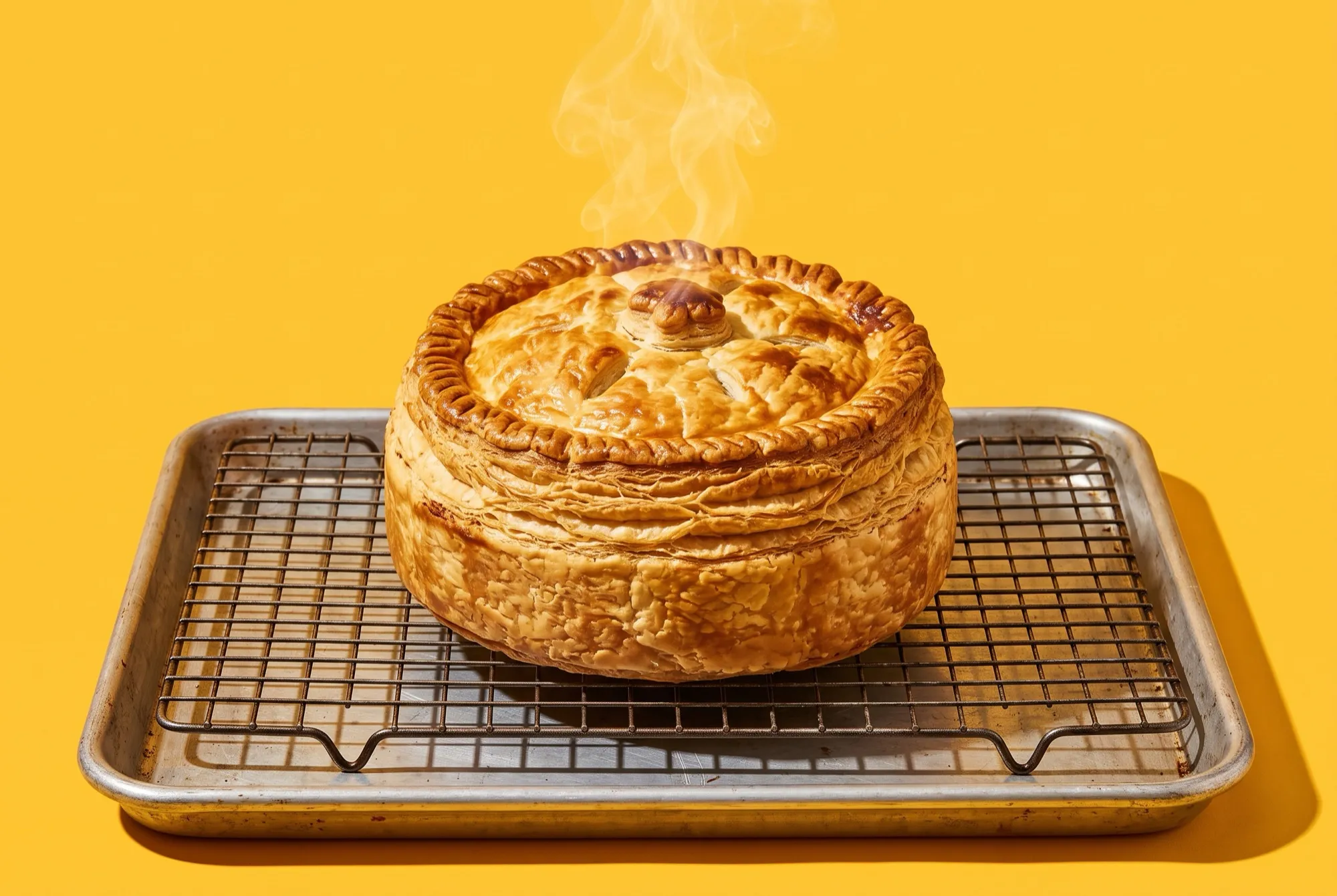
- Oven: we preheated to 170C, set the pie on a tray on the middle shelf and heated it for 20-30 minutes, laying foil loosely over the top once the lid was golden.
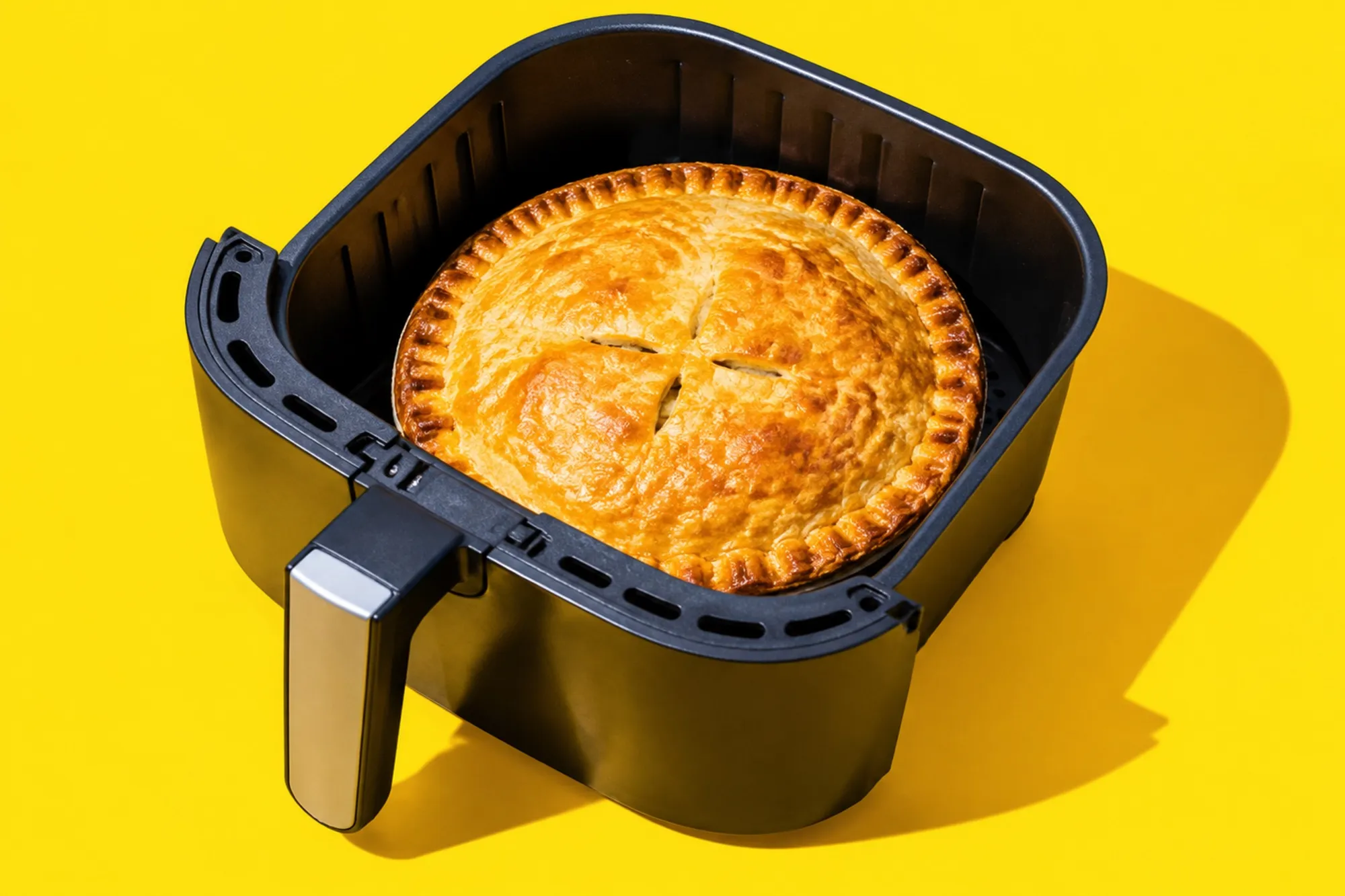
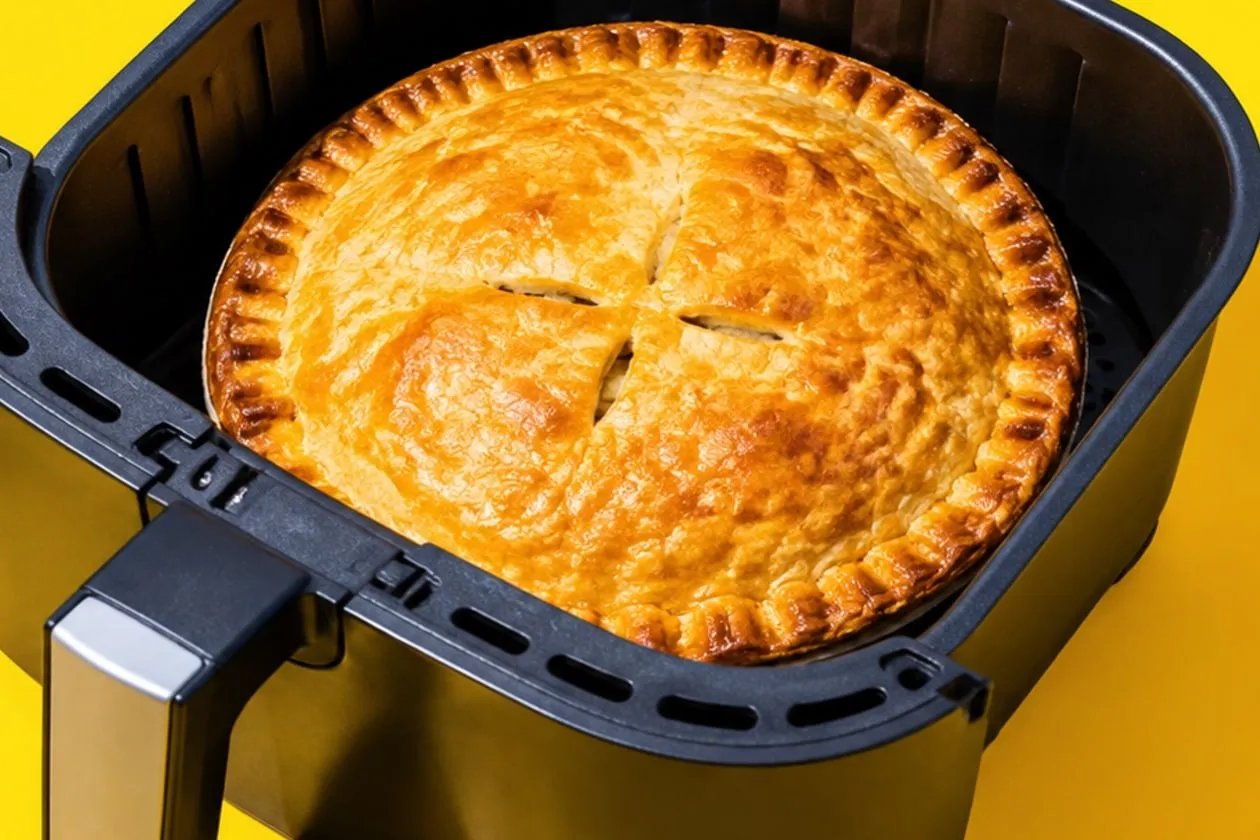
- Air fryer: we used the maker's two-stage setting of 150C for 5 minutes then 200C for 5 minutes, and added a few more minutes at 150C because the centre was not yet piping hot.
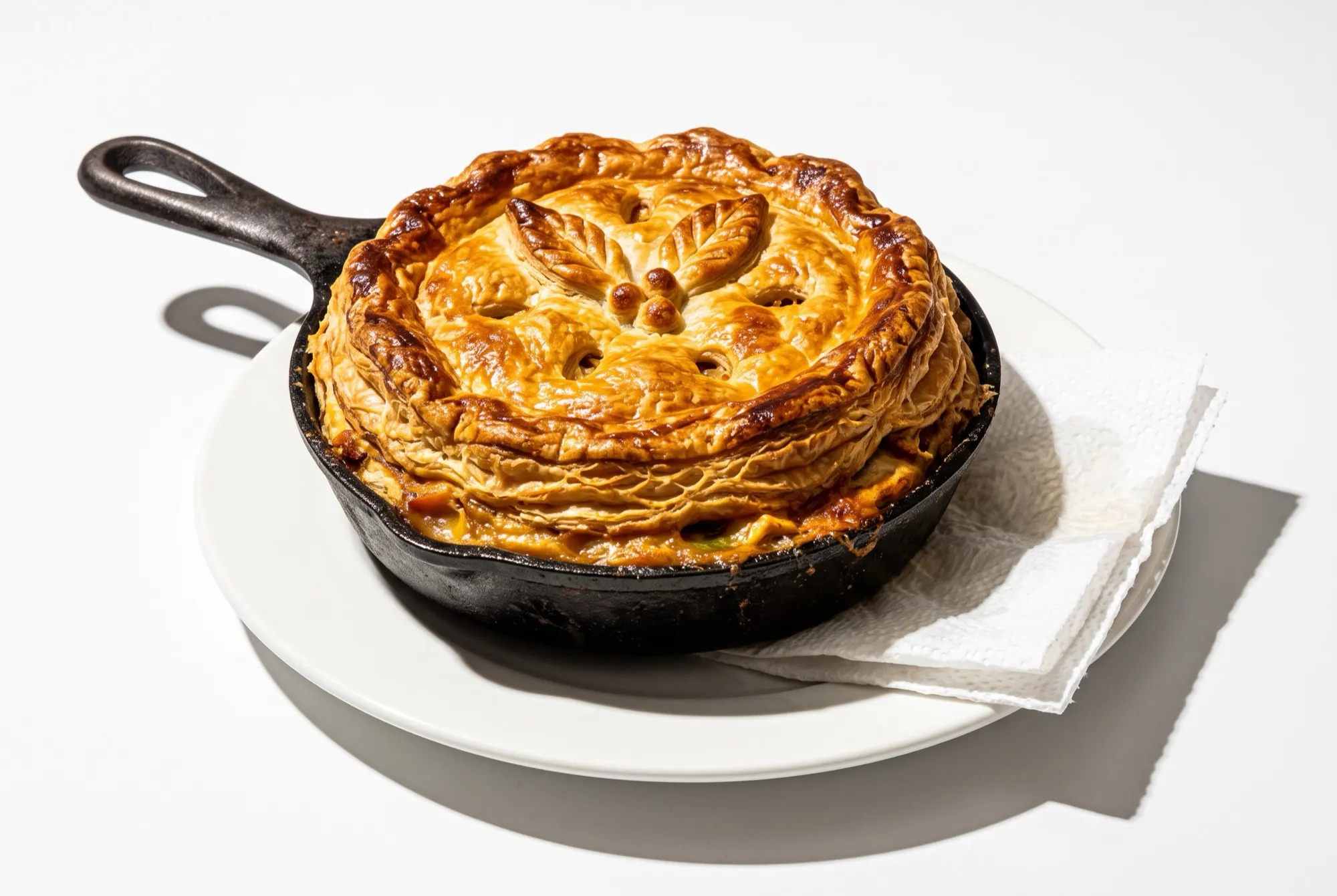
- Toaster oven: we heated the pie at about 160C for 15-20 minutes under a loose foil tent, because the top element sits very close to the lid.
- Microwave only: we heated the pie on medium power in 30-60 second bursts, resting it between bursts, until the centre was piping hot.
- Microwave then crisp: we microwaved a pie in bursts until hot through, then gave it 3-4 minutes in a preheated air fryer at 200C to dry and crisp the pastry.
- We probed every centre for 75C, rested each pie for 2 minutes, then cut each one in half to inspect the lid, the base and the middle of the filling.
What happened
Oven
The most even pie of the five. Lid crisp and flaky, base dry enough to hold its shape when lifted, filling hot right to the middle. Also the slowest by a distance once you count the preheat.
Air fryer
Lid crisper and darker than the oven pie, base nearly as dry. The fan browns the crimp fast, so the edge needs watching in the hot second stage.
Toaster oven
Good crust, but the lid coloured well ahead of the centre. Without the foil tent the top would have scorched before the potato in the middle got hot.
Microwave only
Hot filling, sad pastry. Lid soft and slightly leathery, base damp, and the gravy noticeably hotter on one side than the other until the pie rested.
Microwave then crisp
The surprise contender. Centre hot from the microwave, then the short air-fryer blast brought back a crisp lid and firmed up most of the base. Not quite oven level, but close.
Observations are qualitative: what a cook can see, hear and taste. We do not publish thermometer readings or scores we cannot stand behind. Your oven will differ, so run it yourself.
Verdict
Oven wins the crust
Our opinion: Our pick for the best-tasting pie is the oven, if you have the time. On a weekday we happily take the air fryer, and the microwave-then-crisp combo is our favourite move in an office pantry that has both machines.
A chicken pie straight from the bakery is a perfect machine. Crisp lid, sturdy base, hot gravy, everything in balance. A night in the fridge throws all of that out of tune, and reheating is the job of tuning it back. This experiment started because five people in our crew swore by five different appliances, and nobody would back down.
Why does a chicken pie go soft in the fridge?
A chilled chicken pie is not just a cold version of a fresh one. Three slow changes happen overnight.
- Water moves. The filling is wet and the pastry is dry, and water always drifts from wet to dry. By morning the underside of the lid and the top of the base have soaked up moisture from the gravy.
- Fat sets. The fat that made the pastry flaky turns firm and waxy in the cold. Cold pastry tastes greasy because that fat is no longer melting on your tongue.
- Starch firms up. Cooked starch in the pastry, the potato and the gravy slowly re-crystallises as it cools. Bakers call this staling. The potato goes dense and the gravy turns into a jelly.
So a good reheat has three jobs: get the centre safely hot, drive the extra water back out of the pastry, and melt the fat again so the layers separate. Every method we tried is good at some of those jobs and bad at others.
What does each appliance actually do to a pie?
The five methods heat the pie in very different ways, which explains almost everything we saw on the cutting board.
| Method | How the heat arrives | Crust | Centre | Attention needed |
|---|---|---|---|---|
| Oven | Hot still air plus radiant heat from the walls | Crisp and even | Hot, slowly | Low, but slow |
| Air fryer | Hot air blown hard by a fan | Crispest lid, darker crimp | Hot, quickly | Medium: watch the edge |
| Toaster oven | Radiant heat from elements very close to the pie | Browns fast, top first | Lags behind the lid | High: foil tent needed |
| Microwave only | Microwaves heat the water inside the filling | Soft and steamy | Hot, unevenly | Medium: bursts and rests |
| Microwave then crisp | Microwave for the inside, dry heat for the outside | Mostly crisp | Hot, quickly | Medium: two machines |
The pattern is simple once you see it. Dry heat works from the outside in, so it is brilliant at pastry and patient with the centre. The microwave works from the inside out, so it is brilliant at the centre and terrible at pastry, because a wet surface cannot get much hotter than the boiling point of water and never browns. Combining the two is just giving each machine the half of the job it is good at.
Why did the toaster oven brown so fast?
A toaster oven has its elements a few centimetres from the food. Radiant heat drops off sharply with distance, so the lid of a pie gets blasted while the filling in the middle barely notices. A loose foil tent reflects most of that heat away from the top and lets the centre catch up. In an HDB kitchen without a full oven, the toaster oven is still a perfectly good pie tool: just treat the foil as compulsory.
Why did the microwave pie feel leathery?
Steam from the hot filling pushes up into the lid, and the air inside a microwave stays cool, so that steam condenses inside the pastry instead of escaping. Gluten and starch that get soaked and then cooled turn chewy. We go deeper into this, and how to undo it, in our microwave chicken pie rescue experiment.
What is the maker’s guidance, and what is ours?
Some of the settings above come straight from the people who bake the Don chicken pie, and some are general kitchen practice. Here is the split, so you know whose advice you are following.
- The maker’s guidance: eat within 4 hours of purchase for best results; chill for up to 3 days; air fryer at 150C for 5 minutes then 200C for 5 minutes (current FAQ); oven at 150-180C for 20-30 minutes (the maker’s older reheating blog).
- General food practice and our own suggestions: the toaster oven setting, the microwave bursts, the microwave-then-crisp combo, and the foil tent.
The maker’s air fryer setting is short and sharp, which suits a pie bought the same day. From the fridge, we found it needed a little extra time at the lower temperature before the centre was properly hot. The full breakdown of that is in our air fryer chicken pie settings test.
How to reproduce this at home
- Buy or bake pies from the same batch and chill them overnight, covered.
- Preheat every dry-heat appliance fully before the pie goes in. A cold oven slowly steams a pie before it starts to crisp it.
- Use the settings in the method above, and treat the times as a starting range. Ovens and air fryers vary a lot.
- Probe the very centre, where the egg and potato sit, not the gravy near the edge. You want 75C, or piping hot all the way through if you have no thermometer.
- Rest for 2 minutes, cut in half and compare lid, base and middle side by side.
If you just want the answer for your own appliance and pie size, our chicken pie reheat calculator does the sums and shows the full table.
What would we change next time?
- Add a whole pie. A whole pie has a much deeper centre, so the gap between a browned lid and a lukewarm middle should be far wider. We expect the foil to matter even more.
- Preheat the tray. A tray already hot when the pie lands on it should push heat straight into the base. We suspect this would close most of the gap between oven and air fryer bases.
- Start some pies at room temperature. Plenty of people reheat a pie bought a few hours earlier. That is a different, easier starting point and deserves its own row.
The non-negotiable bit
Whatever method wins your heart, the food-safety rules do not change. Reheat until piping hot all the way through, 75C at the centre if you own a probe. Reheat a pie once only. Microwaves heat unevenly, so rest the pie and check the middle before you bite. And a pie that has spent longer than 2 hours sitting out in Singapore heat belongs in the bin, not the oven. If you are reheating something other than a chicken pie, the wider guide on how to store and reheat pies at Pie Singapore covers fridge and freezer times for the other kinds too.
EXP-01 is one of our chicken pie experiments, run on the Don chicken pie. For the settings without the story, use the chicken pie reheat calculator; for the pie itself, start with the Don chicken pie guide.